Open Banking: Complete Guide to Open Banking in 2026
Learn what open banking is, how it works, its benefits, security, APIs, and how fintech companies are transforming financial services in 2026.
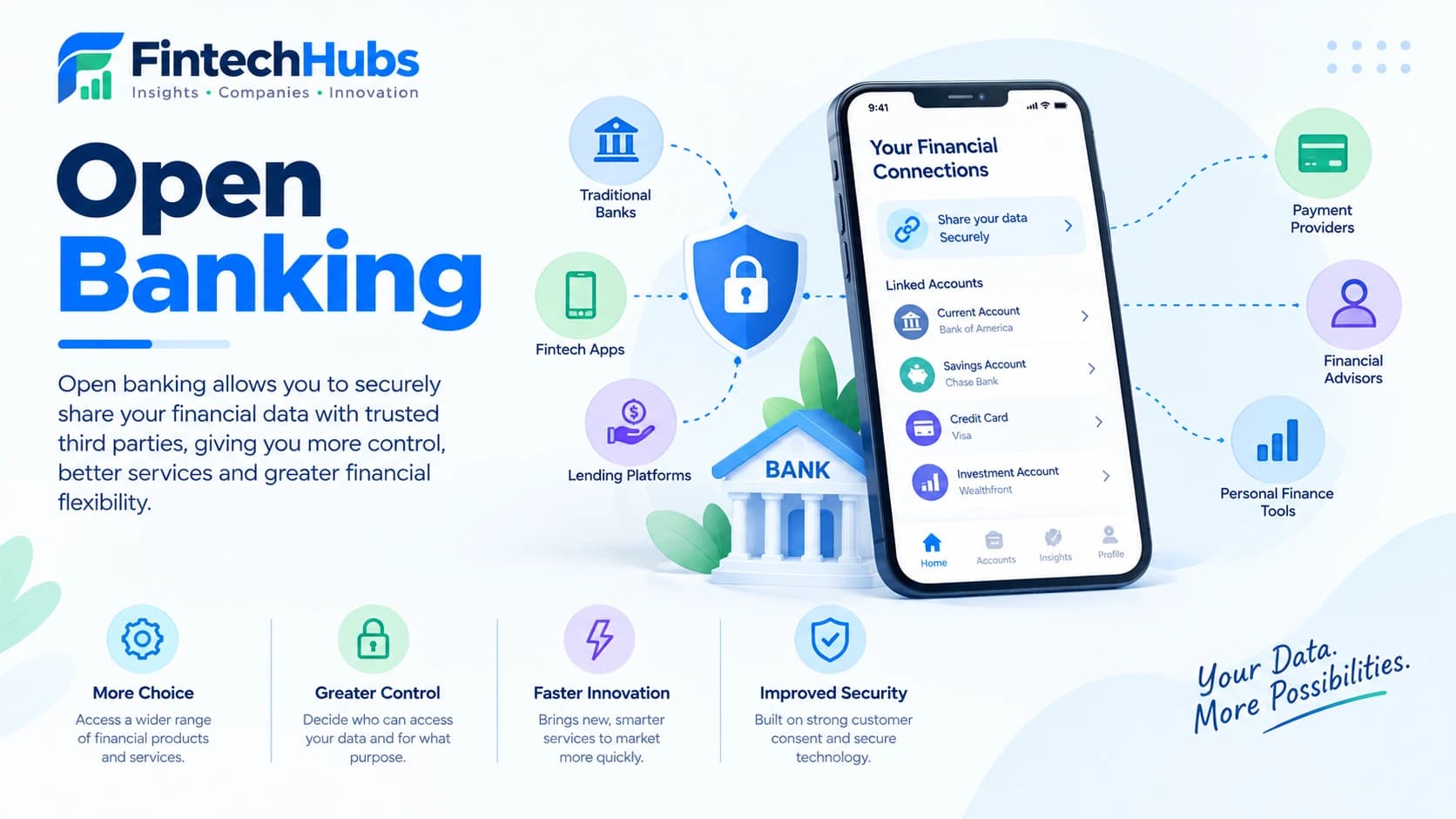
Open Banking: A Complete Guide to Financial Technology in 2026
For most of banking history, your financial data belonged, in practice, to your bank. Your transaction history, account balances, and spending patterns sat locked inside a single institution's systems, accessible only through that bank's own app or branch. Open banking upended that model. It is the regulatory and technological framework that allows consumers and businesses to securely share their financial data with third-party providers and, increasingly, to initiate payments directly from their bank accounts all with explicit consent and without needing a traditional card network or manual bank transfer.
By 2026, open banking has moved from a regulatory experiment into a foundational layer of financial technology, powering everything from budgeting apps to lending decisions to instant account-to-account payments. This guide explains what open banking is, how it works, its major branches, why it matters, and where it's headed next.
1. What Is Open Banking, Exactly?
Open banking is a system that allows banks and other financial institutions to open up access to customer financial data with the customer's explicit permission to authorized third-party providers through secure, standardized technology called Application Programming Interfaces (APIs).
Instead of a customer manually downloading a bank statement and uploading it somewhere, or handing over their online banking username and password to a third-party app (a risky and now largely outdated practice called "screen scraping"), open banking lets that data flow securely and directly, governed by consent, encryption, and regulatory oversight.
Open banking rests on three foundational ideas:
Data belongs to the customer: Not exclusively to the institution holding it.
Access requires explicit, revocable consent: Customers choose what to share, with whom, and for how long.
Secure APIs replace insecure workarounds: Reducing the need to share banking credentials with outside apps.
2. How Open Banking Actually Works
Step 1: Consent
A customer using a third-party app say, a budgeting tool or a lending platform is prompted to connect their bank account. They're redirected to their bank's own secure login (never entering banking credentials into the third-party app itself) and explicitly agree to share specific data or grant specific permissions.
Step 2: Secure API Connection
Once consent is granted, the bank exposes the relevant data or payment-initiation capability through a secure API. This is a controlled, standardized channel rather than an open door the third party only receives what was explicitly authorized, and only for the time period agreed to.
Step 3: Data Sharing or Payment Initiation
Depending on the use case, this connection either:
Shares account data: (balances, transaction history, account details) with the third-party app, or
Initiates a payment: Directly from the customer's bank account to another account, bypassing card networks entirely.
Step 4: Ongoing Consent Management
Customers can typically view, modify, or revoke access at any time, either through the third-party app or directly through their bank, keeping control firmly in the customer's hands rather than being a one-time, irreversible grant.
3. The Branches of Open Banking
Open banking is not a single product it's a broad ecosystem of use cases and business models built on top of shared financial data and payment rails.
A. Account Information Services (AIS)
Services that aggregate and display financial data from one or more bank accounts in a single place. This includes personal finance and budgeting apps, net-worth trackers, and multi-bank dashboards that let users see checking, savings, credit cards, and loans all in one view.
B. Payment Initiation Services (PIS)
Services that let customers pay directly from their bank account to a merchant or another individual, without routing through a card network. This branch has grown rapidly because it can reduce transaction fees for merchants and offer near-instant settlement compared to traditional card payments.
C. Open Banking-Powered Lending
Lenders use permissioned access to a borrower's real transaction history and cash flow data to make faster, more accurate credit decisions particularly valuable for individuals and small businesses with thin or nonexistent traditional credit files.
D. Embedded Finance and Banking-as-a-Service
Non-bank companies retailers, software platforms, gig-economy apps embed banking-like features (accounts, payments, lending) directly into their own products by building on top of open banking infrastructure and licensed banking partners.
E. Personal Financial Management (PFM) Tools
Budgeting apps, savings tools, and spending-insight platforms that rely on open banking data feeds to give consumers real-time, automated financial insights instead of manual expense tracking.
F. Small Business and Accounting Integrations
Open banking connects business bank accounts directly to accounting, invoicing, and cash-flow management software, automating reconciliation and giving business owners real-time visibility into their finances.
G. Identity Verification and Fraud Prevention
Because bank-verified data is inherently trustworthy, open banking is increasingly used to confirm identity, verify income, and detect fraudulent account activity replacing slower, less reliable manual document checks.
H. Open Finance (the Next Layer)
An expanding branch that extends the open banking model beyond checking and savings accounts to pensions, insurance, investments, mortgages, and other financial products, aiming to give consumers a single consent-based view and control over their entire financial life, not just their bank account.
4. Why Open Banking Matters
Consumer Empowerment and Data Ownership
Open banking shifts control over financial data away from institutions and toward the individual, allowing people to decide who can see their financial information and for what purpose, rather than being locked into whatever their bank chooses to offer.
Increased Competition
By making it easier for new entrants to access the same customer data as incumbent banks (with consent), open banking lowers barriers to entry for fintech startups, driving competition that tends to benefit consumers through better products, lower fees, and more choice.
Financial Inclusion
Open banking-powered lending allows people without extensive traditional credit histories including gig workers, recent immigrants, and young adults to be assessed based on their actual cash flow and financial behavior rather than being excluded by conventional credit scoring alone.
Faster, Cheaper Payments
Account-to-account payments initiated through open banking can settle faster and more cheaply than card-based transactions, benefiting both merchants (lower processing fees) and consumers (often faster refunds and transfers).
Better Financial Decision-Making
Aggregated, real-time visibility into spending and saving across multiple accounts helps consumers and small businesses make more informed financial decisions than they could with fragmented, manually tracked information.
Innovation Ecosystem
Open banking acts as foundational infrastructure that other financial innovations build on top of much like how open internet protocols enabled an explosion of unrelated applications, standardized financial data access has enabled a wave of new financial products that wouldn't have been economically viable otherwise.
5. Challenges and Criticisms
Security and fraud risk: While APIs are far more secure than credential-sharing, any system that increases data connectivity also increases the attack surface, making robust API security and fraud monitoring essential.
Consumer understanding of consent: Many users click through consent screens without fully understanding what data they're sharing or for how long, raising questions about whether "informed consent" is functioning as intended.
Inconsistent standards across regions: Different countries and regions have implemented open banking with different technical standards, regulatory requirements, and timelines, complicating efforts to build products that work seamlessly across borders.
Uneven bank participation and API quality: Not all financial institutions have invested equally in high-quality, reliable APIs, leading to inconsistent user experiences depending on which bank a customer uses.
Liability questions. When something goes wrong a fraudulent transaction, a data breach, an incorrect payment determining whether the bank, the third-party provider, or the customer bears responsibility can be legally and operationally complex.
Monetization pressure: Some banks have been reluctant participants, viewing open banking as eroding a data advantage they once held exclusively, which has occasionally slowed adoption or resulted in higher fees for third-party access in certain markets.
6. The Competitive and Regulatory Landscape
Open banking has developed differently around the world, generally falling into a few models:
Regulation-led markets: Where governments or financial regulators mandate that banks provide open API access, setting specific technical and consent standards.
Market-led adoption: Where banks and fintechs voluntarily build open banking partnerships without a specific legal mandate, often driven by competitive pressure rather than regulation.
Hybrid approaches: Combining baseline regulatory requirements with market-driven innovation on top of that foundation.
Within these markets, the ecosystem includes:
Banks and financial institutions: That expose data and payment rails through APIs
API aggregators and infrastructure providers: That standardize connections across many different banks, reducing the technical burden for fintechs
Consumer-facing fintech apps: Built on top of this infrastructure (budgeting tools, lenders, payment apps)
Enterprise and embedded finance platforms: That let non-financial businesses offer banking-like features
7. Where Open Banking Is Headed
Expansion into open finance: The scope of shared, consent-based data access is broadening well beyond checking and savings accounts to include investments, pensions, insurance, and mortgages, giving consumers a genuinely holistic view of their financial life.
AI-powered financial insights: As open banking data feeds mature, AI systems are increasingly able to analyze real-time cash flow and spending patterns to offer personalized financial guidance, proactive alerts, and automated savings strategies.
Growth of account-to-account payments: As infrastructure matures and consumer trust builds, direct bank-to-bank payments are expected to take a larger share of everyday transactions away from traditional card networks, particularly for bill payments and larger purchases.
Stronger, more consistent global standards: Ongoing regulatory efforts aim to harmonize technical and consent standards across regions, making it easier for financial products to work consistently for users regardless of which country or bank they're dealing with.
Deeper embedded finance integration: More non-financial companies are expected to weave banking, payments, and lending features directly into their existing products, built on open banking rails rather than requiring users to leave the app they're already in.
Increased focus on security and liability clarity: As adoption grows, expect continued regulatory attention to strengthening API security standards and clarifying liability frameworks so that trust in the system keeps pace with its expanding use.
Conclusion
Open banking represents a fundamental rewiring of how financial data and money move from closed, institution-controlled systems to secure, consent-based, interoperable infrastructure. Its branches, spanning account aggregation, direct payments, lending, embedded finance, and the emerging frontier of open finance, all share a common thread: putting individuals and businesses in control of their own financial data while enabling a wider, more competitive ecosystem of financial products to be built on top of it. The benefits greater competition, financial inclusion, faster payments, and better financial decision-making come alongside real challenges around security, consent clarity, and consistent global standards. As open banking matures into open finance and increasingly integrates with AI-driven tools, it is set to remain one of the most consequential shifts in how the financial system operates.
Share this article
Related Articles
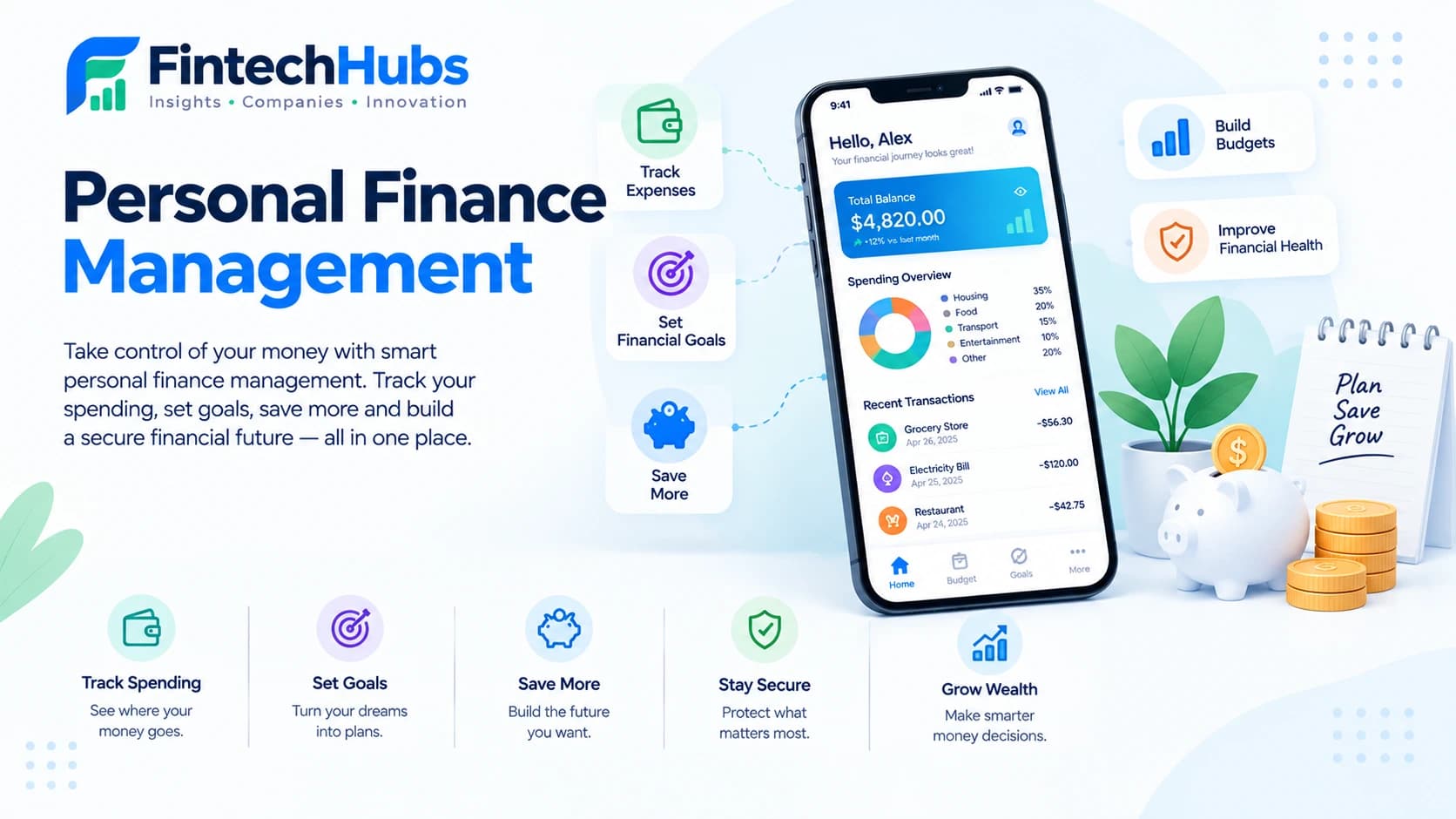
Personal Finance Management
Learn how personal finance management works in 2026, including budgeting, saving, investing, digital banking, fintech apps, and smarter ways to manage your money.
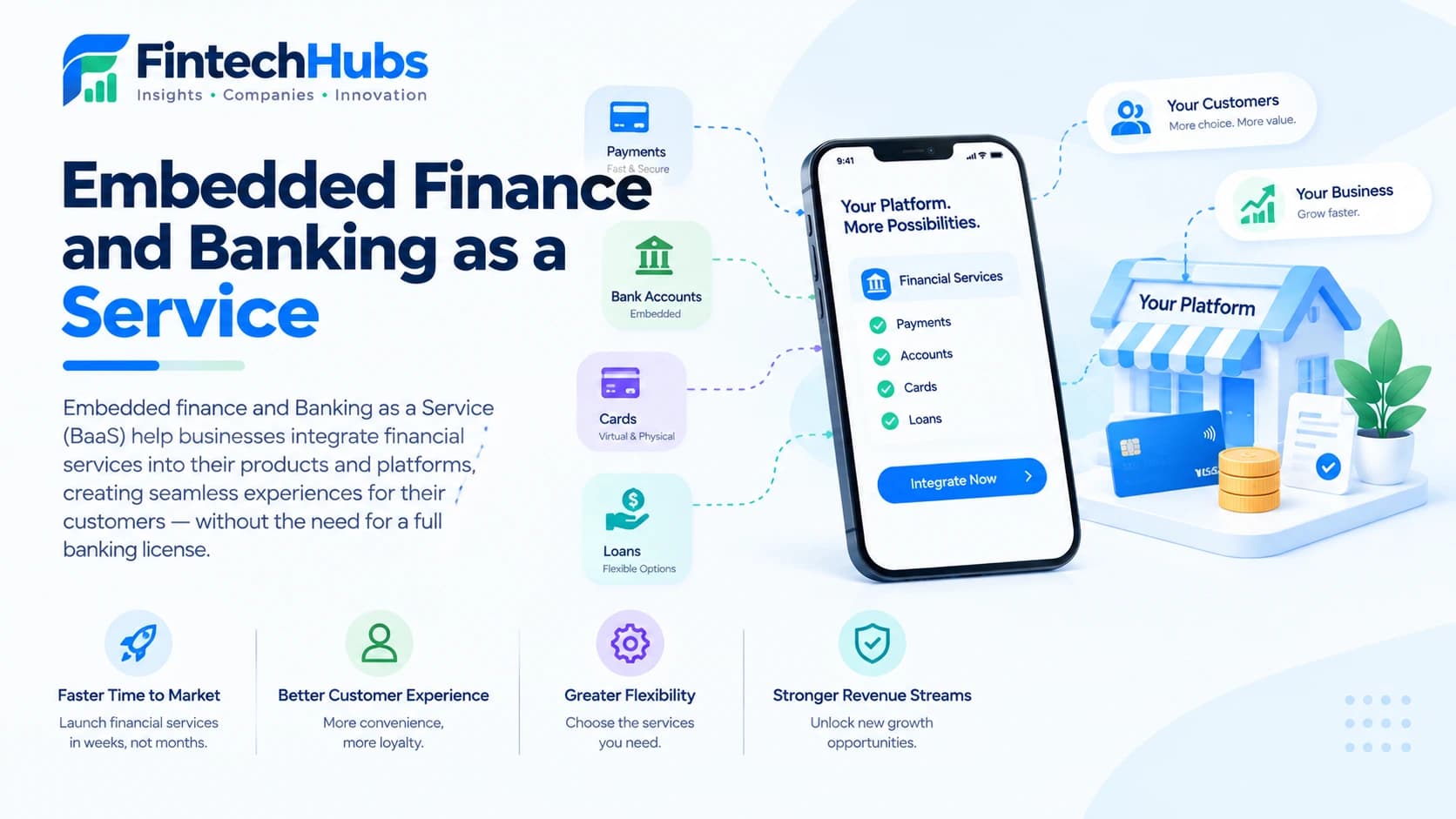
Embedded Finance and Banking-as-a-Service
Learn how embedded finance and Banking-as-a-Service work in 2026 — key branches, real-world use cases, benefits, risks, and where the industry is headed.
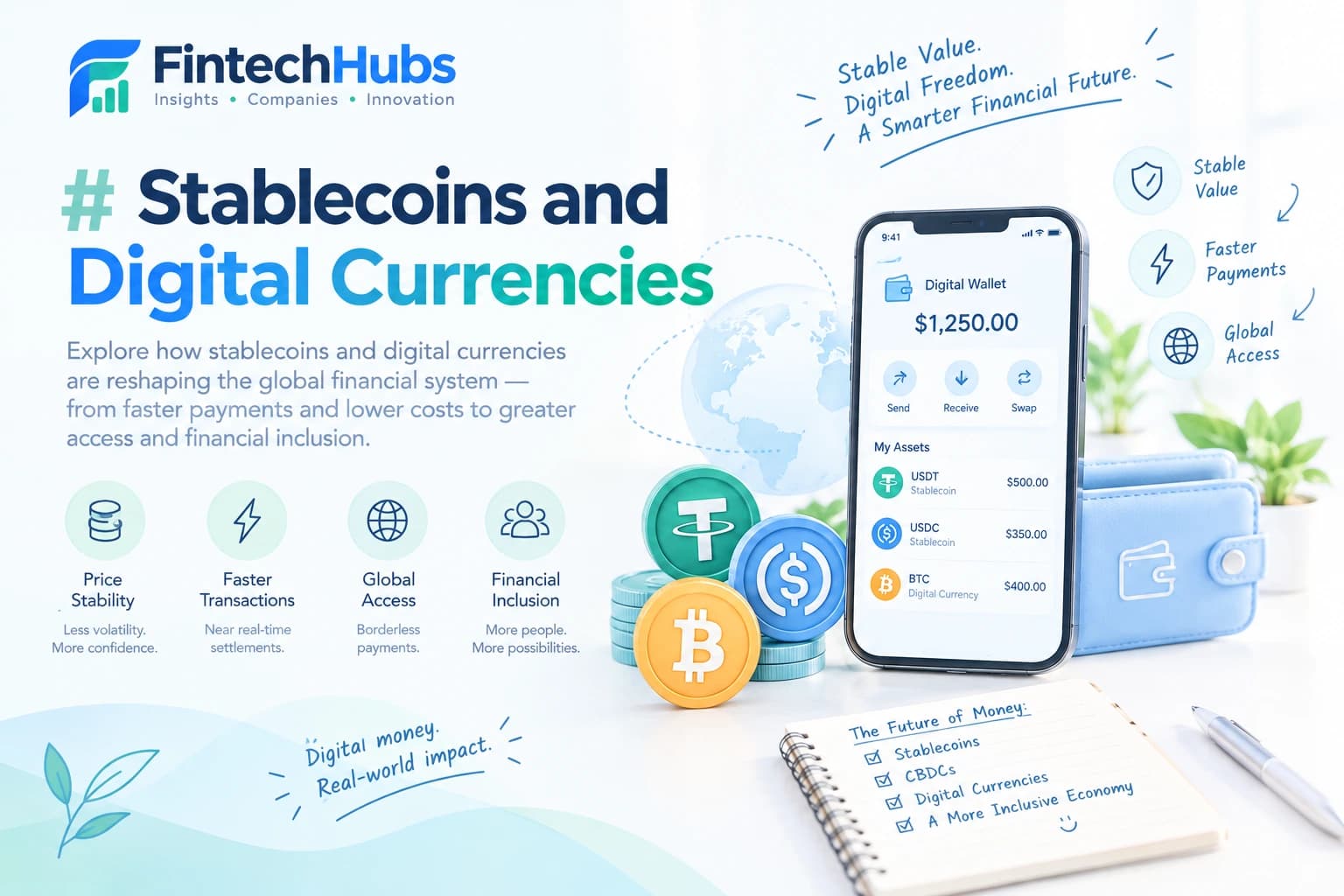
Stablecoins and Digital Currencies
A complete 2026 guide to stablecoins and digital currencies, covering types, the GENIUS Act, bank-issued coins, CBDCs, real use cases, and key risks.