The Role of RegTech in Digital Banking
RegTech in Digital Banking: Role, Benefits & Future
The Role of RegTech in Digital Banking
Introduction
The rapid growth of digital banking has transformed the way financial services are delivered. Customers can now open accounts, transfer money, apply for loans, and make payments through smartphones and online platforms without visiting a traditional bank branch. While digital banking offers convenience, speed, and accessibility, it also creates significant regulatory and compliance challenges. Financial institutions must comply with increasingly complex rules relating to anti-money laundering (AML), know-your-customer (KYC) requirements, data protection, fraud prevention, cybersecurity, and consumer protection.
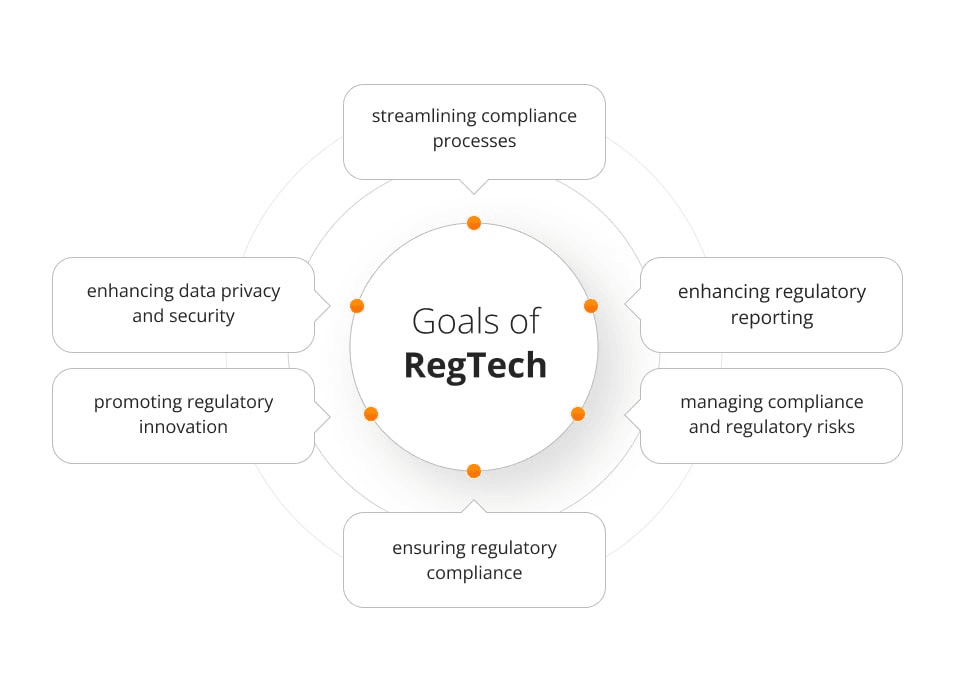
Regulatory Technology, commonly known as RegTech, has emerged as an important solution to these challenges. RegTech refers to the use of technologies such as artificial intelligence (AI), machine learning, big data analytics, cloud computing, automation, and blockchain to help financial institutions manage regulatory and compliance requirements more efficiently. In digital banking, RegTech plays a vital role in reducing compliance costs, identifying risks, preventing financial crime, and improving the overall efficiency of regulatory processes.
Understanding RegTech
RegTech is a specialized application of financial technology that focuses on regulatory compliance. Traditional compliance processes often depend on manual document reviews, spreadsheets, repetitive reporting, and large compliance teams. These approaches can be expensive, slow, and vulnerable to human error.
RegTech solutions automate many of these activities. They can collect and analyze large volumes of financial data, monitor transactions in real time, identify suspicious activities, verify customer identities, and generate regulatory reports. As digital banking generates enormous amounts of data every day, automated regulatory technology enables banks to process this information more quickly and accurately.
RegTech and Know Your Customer (KYC)
One of the most important applications of RegTech in digital banking is Know Your Customer (KYC). Banks are legally required to verify the identity of their customers and understand their financial activities. This helps prevent criminals from using banking services for money laundering, terrorism financing, identity theft, and fraud.
RegTech can automate customer identification by using digital identity verification, biometric authentication, optical character recognition (OCR), and artificial intelligence. For example, a customer opening a digital bank account can upload an identity document and complete a facial verification process. RegTech systems can compare the information with reliable databases and determine whether the customer presents a potential compliance risk.
This makes account opening faster while maintaining appropriate regulatory controls. It also reduces paperwork and minimizes the possibility of errors caused by manual data entry.
Anti-Money Laundering and Fraud Detection
Money laundering and financial fraud are major concerns for digital banks. The speed and global nature of digital transactions can make it difficult for traditional monitoring systems to identify suspicious behavior.
RegTech strengthens Anti-Money Laundering (AML) programs by continuously monitoring transactions and customer behavior. AI and machine-learning systems can analyze patterns across thousands or millions of transactions and identify unusual activities. For instance, a system may flag a customer who suddenly makes multiple large international transfers that are inconsistent with their previous behavior.
Unlike traditional rule-based systems, advanced RegTech solutions can learn from historical data and identify complex patterns. This can help banks detect emerging forms of fraud more effectively and reduce false alerts.
Automated Regulatory Reporting
Digital banks operate under numerous regulations and are required to submit reports to regulatory authorities. Preparing these reports manually can consume significant time and resources.
RegTech enables banks to automate regulatory reporting. Data can be collected from different internal systems, processed according to regulatory requirements, and converted into standardized reports. Automation improves accuracy and ensures that reports are submitted within required deadlines.
Automated reporting also allows compliance teams to spend less time performing repetitive administrative tasks and more time analyzing important regulatory risks.
Risk Management
Effective risk management is essential for digital banking because banks face credit, operational, cybersecurity, liquidity, market, and compliance risks. RegTech provides tools that help institutions identify and assess these risks more efficiently.
Advanced analytics can examine large amounts of data and identify unusual trends or potential weaknesses. AI-based systems can also provide early warnings about suspicious transactions, customer behavior, or operational problems. As a result, banks can take preventive action instead of responding only after a problem has occurred.
RegTech therefore supports a shift from reactive compliance toward proactive risk management.
Reducing Compliance Costs
Compliance can be expensive, particularly for banks that operate across multiple countries with different regulatory requirements. Hiring large teams to perform repetitive compliance activities increases operational costs.
RegTech reduces these expenses through automation. A single automated system can perform tasks that would otherwise require substantial human effort. This does not mean that human compliance professionals are no longer necessary. Instead, technology allows them to focus on complex decisions, investigations, and strategic risk management.
For smaller digital banks and fintech companies, affordable RegTech solutions can make it easier to meet regulatory obligations without maintaining large compliance departments.
Improving Customer Experience
An important advantage of RegTech is that it can improve compliance without unnecessarily reducing customer convenience. Traditional KYC procedures may require customers to submit multiple documents and wait several days for verification.
Digital RegTech solutions can make these processes faster and more convenient. Automated identity verification can allow customers to complete onboarding remotely within minutes. Continuous monitoring can also take place in the background without repeatedly requiring customers to provide information.
By combining regulatory compliance with a smoother customer journey, RegTech helps digital banks maintain trust while remaining competitive.
Data Privacy and Cybersecurity
The growing use of digital banking also increases concerns about data privacy and cybersecurity. Banks collect sensitive information, including identification details, financial records, and transaction histories. RegTech can help institutions monitor compliance with data protection requirements and identify potential security risks.
However, RegTech systems themselves must be designed with strong security controls. Banks need to ensure that customer data is protected, access is properly controlled, and automated decisions can be explained and audited where necessary.
Challenges of RegTech Adoption
Despite its benefits, RegTech presents several challenges. Implementing new technology can require significant investment, technical expertise, and integration with existing banking systems. Banks may also face difficulties when dealing with outdated legacy infrastructure.
Another concern is the quality and privacy of data used by AI systems. Incorrect or incomplete data can produce inaccurate compliance decisions. Furthermore, regulators and financial institutions must consider issues such as algorithmic bias, transparency, cybersecurity, and accountability.
Successful RegTech adoption therefore requires a combination of advanced technology, skilled professionals, effective governance, and clear regulatory standards.
Future of RegTech in Digital Banking
The future of RegTech is closely connected to developments in artificial intelligence, machine learning, cloud computing, blockchain, and digital identity. AI systems are likely to become increasingly capable of identifying sophisticated financial crimes and predicting compliance risks.
Regulators may also increasingly use technology, creating a broader concept known as SupTech (Supervisory Technology). Through SupTech, regulatory authorities can use advanced analytics to monitor financial institutions and identify systemic risks.
As digital banking continues to expand, collaboration among banks, fintech companies, technology providers, and regulators will become increasingly important. Common data standards and interoperable digital identity systems could further improve the effectiveness of RegTech.
Conclusion
RegTech has become an essential component of modern digital banking. It enables financial institutions to manage regulatory requirements more efficiently while reducing costs, improving risk management, detecting financial crime, and enhancing customer experiences. Through technologies such as artificial intelligence, machine learning, automation, and data analytics, RegTech transforms compliance from a largely manual activity into a more intelligent and continuous process.
Although challenges related to cost, data quality, privacy, cybersecurity, and technology integration remain, the benefits of RegTech are substantial. As banking becomes increasingly digital, regulatory compliance must also become more digital, automated, and data-driven. RegTech will therefore play a central role in creating a financial system that is not only faster and more convenient but also safer, more transparent, and more resilient.
Share this article