
Interlinking Instant Payment Systems Across Countries
How countries link instant payment systems: bilateral links, Nexus, UPI-PayNow, risks, compliance, operations, a rollout roadmap, and 10 FAQs.
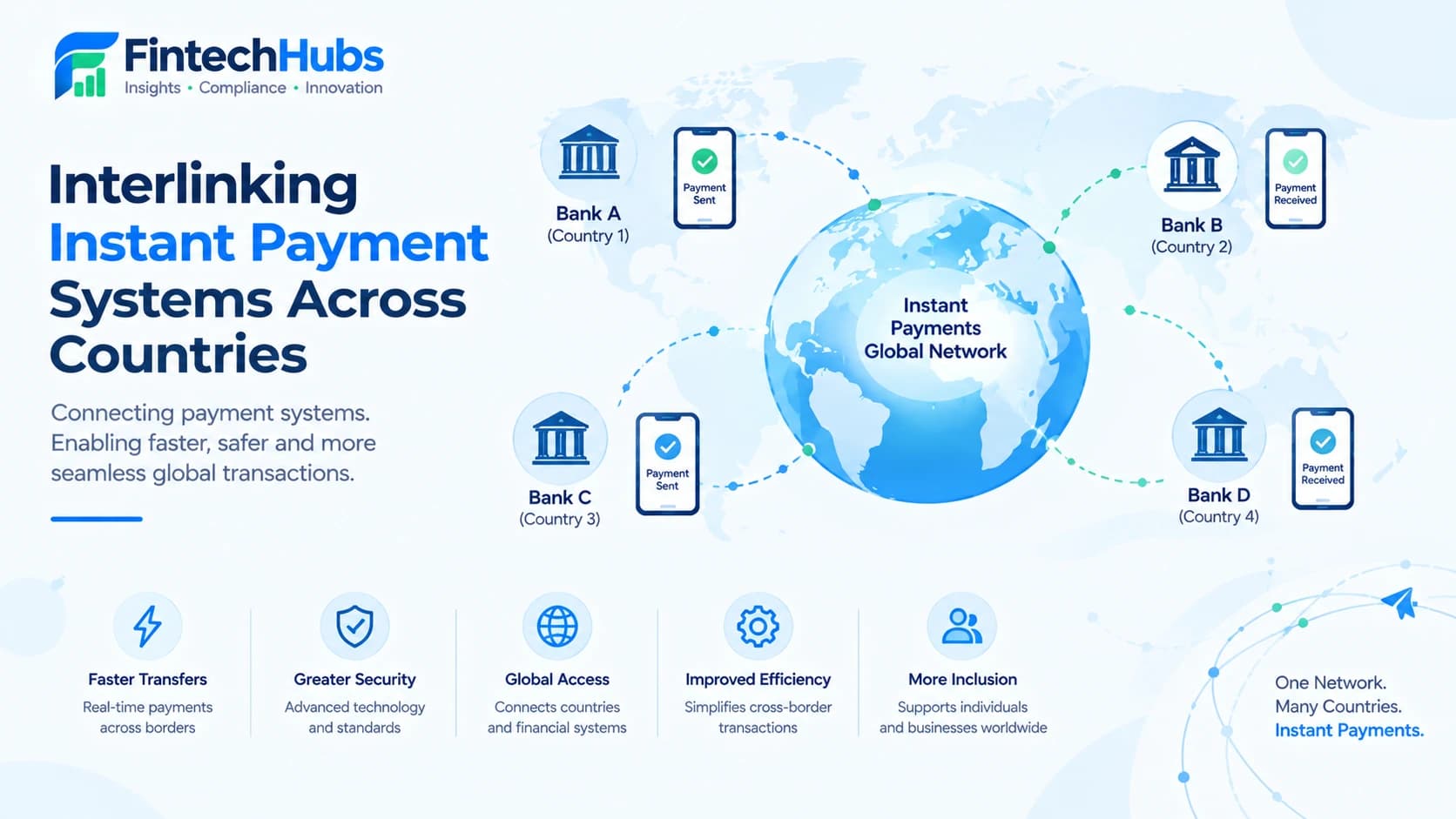
Interlinking Instant Payment Systems Across Countries
An in-depth article for central banks, payment service providers, banks, fintech, and policy professionals
Status of initiatives reflects publicly available information as of October 2026. Original work, free to share, adapt, and republish without restriction.
Executive Summary
Over the past decade, more than a hundred countries have launched or are building instant payment systems (IPS): domestic rails that move money between bank accounts and wallets in seconds, around the clock. Examples include India’s UPI, Singapore’s FAST and PayNow, Brazil’s Pix, the euro area’s SCT Inst and TIPS, and Pakistan’s Raast.
Domestically, these systems have reset customer expectations. Across borders, however, the experience is still often slow, opaque, and costly, because most international payments rely on chains of correspondent banks designed for a pre-instant world. The natural question follows: if two countries each have a fast domestic system, why not connect them directly?
That idea, interlinking instant payment systems, is now one of the most important themes in global payments. It is a core building block of the G20 roadmap for enhancing cross-border payments, and it is moving from pilots to production through bilateral links, regional platforms, and a new multilateral scheme called Nexus.
This article explains how interlinking works, the main models in use, real-world examples, technical and regulatory design questions, risks, operational implications, and a practical roadmap for institutions. The core conclusion: linking systems is as much a governance, compliance, and operations challenge as a technology one. The winners will be those who standardize, plan for exceptions, and keep trust at the center.
The Cross-Border Problem Being Solved
1.1 Why traditional cross-border payments are slow and costly
A conventional cross-border payment often passes through several institutions, each applying its own checks, fees, cut-off times, and currency conversion. Common frictions include:
Multiple intermediaries: each adding cost and delay
Limited operating hours: and mismatched time zones
Inconsistent data formats: that cause repair and rework
Opaque fees and FX margins: so senders and recipients do not know the final amount
Weak tracking: leaving customers unsure where the money is
Pre-funded accounts: (nostro/vostro) that trap liquidity
1.2 Why instant payment systems change the equation
Domestic IPS already provide 24/7 availability, immediate confirmation, simple addressing (mobile numbers, QR codes, aliases), and low per-transaction costs. Connecting them extends these properties across borders and reaches people who are underserved by traditional channels, including migrant workers sending remittances and small businesses trading internationally.
1.3 The policy backdrop
The G20, the Financial Stability Board, and the Committee on Payments and Market Infrastructures (CPMI) have set targets for faster, cheaper, more transparent, and more accessible cross-border payments. Interlinking fast payment systems is widely seen as one of the most promising ways to meet them, alongside broader adoption of ISO 20022 messaging, longer operating hours, and better legal and regulatory alignment.
What “Interlinking” Actually Means
Interlinking means enabling a payer in one country, using their domestic bank or wallet app, to send funds directly to a recipient in another country, who receives them in their own domestic account, with both domestic IPS participating in the flow. Instead of a chain of correspondent banks, the payment travels from one IPS to another through a defined link.
A successful link must solve six things at once:
Addressing: How the payer identifies the recipient (account number, mobile proxy, QR code)
Messaging: A shared format and data model
Foreign exchange: How and when currency is converted, and at what price
Settlement: How value moves between the two systems and who bears risk
Compliance: How sanctions screening, anti-money-laundering (AML), and fraud checks happen within seconds
Governance: Who sets the rules, handles disputes, and carries liability
Models of Interlinking
3.1 Bilateral links
Two countries connect their systems directly through an agreed technical and legal arrangement. This is the simplest model to start with and has produced the best-known live examples. Its weakness is scale: connecting n systems bilaterally requires roughly n(n-1)/2 separate links, each with its own negotiation, build, and maintenance.
3.2 Multilateral hub or scheme
A common scheme and technical platform lets each participating IPS connect once and reach every other connected country. This reduces duplication and standardizes rules, but requires strong governance and agreement among many parties. Nexus is the leading example.
3.3 Regional platforms
A regional body operates a shared platform that links several national or institutional systems. Examples include the Arab Monetary Fund’s Buna platform and, in Africa, the Pan-African Payment and Settlement System (PAPSS). Regional platforms benefit from common political and economic interests, but may need further links to connect with the rest of the world.
3.4 QR code and merchant-acceptance interoperability
Rather than linking account-to-account rails, some initiatives allow a payer’s domestic app to scan a foreign merchant’s QR code. This is a quick route to travel and retail use cases and has been widely adopted in Asia, though it is typically focused on person-to-merchant payments rather than full account-to-account transfers.
3.5 Cross-currency and cross-system extensions
Some systems extend their own infrastructure to support multiple currencies or to accept payments from other zones. In Europe, for example, work on cross-currency instant settlement and on instant cross-border credit transfers seeks to open the euro instant payments zone to non-euro payments and external partners.
Comparison of models
Model | Strengths | Limitations | Best suited for |
|---|---|---|---|
Bilateral link | Fast to launch, tailored to two markets | Does not scale; many separate agreements | Strong trade or remittance corridors |
Multilateral scheme | Connect once, reach many; standard rules | Complex governance; long lead time | Broad global or multi-regional coverage |
Regional platform | Shared interests, common legal context | May not connect beyond region | Regional blocs and common markets |
QR interoperability | Quick consumer value, easy for merchants | Mostly payments at point of sale | Tourism and retail |
Cross-currency extension | Builds on strong existing infrastructure | Limited to participating zone or currencies | Large domestic systems opening outward |
Real-World Initiatives
Details change quickly. Readers should verify the current status with the official operators before making decisions.
4.1 UPI and its international expansion
India’s Unified Payments Interface, operated by NPCI, has expanded abroad through NPCI International Payments Limited (NIPL). Official Indian sources in August 2026 described UPI as live in 11 foreign countries for merchant acceptance and/or cross-border remittances, with a stated goal of reaching 20 countries by the 2028-29 financial year. Counts differ slightly between sources because some markets support merchant payments while others support remittances, so it is best to treat any single number carefully.
4.2 UPI-PayNow (India and Singapore)
Launched in 2021 as a reciprocal link, the UPI-PayNow corridor is the most cited example of true domestic-rail-to-domestic-rail connection. It allows users in each country to send money to the other’s real-time system without onboarding to the foreign scheme, removing most intermediaries.
4.3 Singapore and Thailand
A bilateral linkage between Singapore’s PayNow and Thailand’s PromptPay, introduced in 2021, enabled account-to-account transfers using a mobile number proxy. It remains an influential reference design for other corridors.
4.4 Project Nexus and Nexus Global Payments
Nexus began as a project of the Bank for International Settlements Innovation Hub in Singapore, working with central banks including those of India, Indonesia, Malaysia, the Philippines, Singapore, Thailand, and the European Central Bank, with the aim of standardizing how domestic IPS connect. Its aim is to let an IPS integrate once and reach multiple countries.
Key milestones reported publicly:
The BIS handed the project over to Nexus Global Payments (NGP), a not-for-profit organization founded in 2025 to manage the scheme.
In February 2026, NGP announced the addition of Indonesia and the appointment of its first board chair.
In February 2026, NGP appointed a joint venture of Malaysia’s PayNet and Singapore’s NETS as the Nexus Technical Operator, with technical development beginning in 2026 and go-live targeted for 2027.
Nexus is widely expected to complement, rather than replace, existing channels such as SWIFT, as not every country has an IPS and high-value payments often exceed instant-payment limits.
4.5 Buna (Arab region) and Pakistan
Buna is a cross-border payment system operated by the Arab Regional Payments Clearing and Settlement Organization, owned by the Arab Monetary Fund. Pakistan’s central bank signed an MoU with the AMF to link Raast with Buna to improve remittance flows from the Arab region, and officials publicly described a project to interlink the two systems.
A note on status: In early September 2026, the State Bank of Pakistan issued a clarification stating that Raast is a domestic payment channel and does not currently facilitate cross-border transfers. This illustrates a practical point: announcements, pilots, and partial implementations can be described differently by different parties, so always check the central bank’s latest statement.
4.6 Europe
The euro area has made instant payments widely available through SEPA Instant Credit Transfers and the Eurosystem’s TIPS platform. Further initiatives explore instant payments in multiple currencies and with external partners, positioning Europe both as a large domestic IPS and as a participant in global linking efforts such as Nexus.
4.7 Africa
PAPSS, supported by the African Export-Import Bank and the African Continental Free Trade Area secretariat, aims to settle intra-African payments in local currencies, reducing dependence on third-currency intermediation.
Summary table
Initiative | Type | Core purpose |
|---|---|---|
UPI international (NIPL) | Bilateral and acceptance links | Merchant acceptance and remittances for Indian users and partners |
UPI-PayNow | Bilateral IPS link | Account-to-account transfers, India and Singapore |
PayNow-PromptPay | Bilateral IPS link | Account-to-account transfers, Singapore and Thailand |
Nexus | Multilateral scheme | Standardized “connect once” model for many IPS |
Buna | Regional platform | Cross-border payments in the Arab region and linked partners |
PAPSS | Regional platform | Intra-African payments in local currencies |
TIPS / SEPA Instant | Domestic and regional rail | Euro instant payments; extensions toward cross-currency |
Technical Design Considerations
5.1 Messaging and data standards
Using a common, rich message standard, with ISO 20022 as the dominant choice, allows structured information about the payer, payee, purpose, and remittance details to travel end to end. This improves screening accuracy and reduces manual repairs. Mapping between domestic message formats and the shared standard is a major piece of integration work.
5.2 Addressing and proxy resolution
Customers prefer to pay using a mobile number or alias rather than long account numbers. Cross-border linking therefore needs a proxy lookup across systems, with safeguards so that the payer can confirm the recipient’s name before sending. Name confirmation reduces misdirected payments and fraud.
5.3 Foreign exchange
Design choices include who provides FX quotes, how long quotes are valid, whether the payer sees the final received amount before confirming, and how FX liquidity is managed. Transparency on rate and fees at the point of payment is central to customer trust and to policy goals.
5.4 Settlement and liquidity
Instant customer experience does not require instant interbank settlement in every case, but the design must manage the risk between the moment the recipient is credited and the moment value actually settles. Typical approaches include:
Pre-funded accounts held by settlement agents or participating institutions
Prefunded liquidity pools in each currency
Linking to central bank settlement systems where permitted
Net settlement at intervals with risk limits
Each approach involves tradeoffs among liquidity cost, credit risk, and operational complexity.
5.5 Availability, timeouts, and resilience
Payments must complete within strict time targets (often described in seconds). Systems need clear rules for timeouts, retries, duplicates, and “unknown outcome” situations. Operating 24/7 across time zones demands resilient infrastructure, tested failover, and coordinated maintenance windows.
5.6 Security
Secure channels, strong authentication between operators, message signing and encryption, and rigorous monitoring are essential. Because a link joins two otherwise separate ecosystems, a weakness in one can become a vulnerability for both.
Legal, Regulatory, and Governance Issues
6.1 Scheme rules and legal certainty
Participants need clear rules on rights, obligations, liability for errors and fraud, finality of payment, and dispute handling. For multilateral schemes, a central rulebook and governance body is critical; for bilateral links, a detailed agreement between operators and a shared understanding with regulators.
6.2 AML/CFT and sanctions compliance
The central challenge is performing compliance checks inside an instant timeline. Questions include:
Which party screens: the sending institution, the receiving institution, or both?
How are sanctions lists aligned between jurisdictions?
What data must accompany every payment to enable effective checks?
How are suspicious cases handled without delaying the vast majority of legitimate payments?
Richness of data (for example, full names and structured addresses) strongly improves screening quality and reduces false positives.
6.3 Data protection and localization
Cross-border data flows can trigger privacy and data localization rules. Link designers must decide what data is shared, where it is stored, and how it is protected, in line with the laws of every participating jurisdiction.
6.4 Exchange control and capital flow rules
Some countries restrict outbound transfers or place limits on certain types of cross-border flows. Links therefore often start with specific use cases (such as inbound remittances or low-value payments) and expand gradually. This is one reason that some corridors are one-directional in practice.
6.5 Governance and oversight
Good governance includes transparent decision-making, representation of participants, clear change management, and a role for central banks as overseers. Open, non-discriminatory access rules help the network grow without concentrating control.
Benefits
For consumers and migrants: faster delivery, lower and clearer fees, familiar apps, and real-time confirmation.
For businesses: improved cash flow, easier supplier and freelancer payments, and better reconciliation through richer data.
For banks and PSPs: access to new revenue lines, reduced reliance on correspondent chains, and potential cost savings through a single integration.
For central banks and economies: better visibility of flows, stronger formal remittance channels, support for financial inclusion, and reduced dependence on a few dominant currencies for settlement.
Challenges and Risks
Challenge | Why it matters | Typical mitigation |
|---|---|---|
Fraud and scams | Instant, irrevocable payments are attractive to criminals, and cross-border tracing is harder | Name verification, real-time risk scoring, shared fraud intelligence, clear recall procedures |
Compliance friction | Screening within seconds can cause delays and false positives | Rich data, aligned lists, risk-based approaches |
Liquidity and settlement risk | Value is credited before final settlement in some designs | Prefunding, limits, collateral, central bank settlement |
Fragmented standards | Different message formats and rules per country | ISO 20022 adoption, common rulebooks |
Governance complexity | Many sovereign and commercial parties with differing interests | Clear scheme organization, defined decision rights |
Operational mismatch | Different operating hours, maintenance windows, and service levels | 24/7 operations, coordinated calendars, tested incident processes |
Transaction limits | Instant rails often have per-payment caps | Tiered limits and fallback to other rails for large payments |
Uneven participation | Not every country or bank joins at the same pace | Phased onboarding, bilateral bridges where needed |
Pricing and incentives | Operators and banks need sustainable business models | Transparent pricing, volume incentives, regulatory oversight |
Operational Implications: Reconciliation, Disputes, and Support
Interlinking does not remove operational work; it shifts it. Institutions should plan for:
Reconciliation across systems and currencies: Each payment can involve a domestic leg, a conversion, and a settlement step. Operations teams need automated matching across these legs, clear handling of timing differences, and daily reports of unmatched items.
Exception and investigation handling: Common cases include unknown-outcome payments, rejected payments after debit, mismatched names, and payments held for compliance review. Define service-level targets and ownership in advance.
Dispute and recall processes: Instant payments are generally final, so schemes need clear processes for fraud claims, misdirected payments, and errors, including how a request is routed to the beneficiary’s institution in another country.
Customer support: Customers will ask where a payment is, why the received amount differs from expectations, and how to recover a mistaken transfer. Support teams need tracking information, scripts, and escalation paths that span both countries’ participants.
Reporting and regulatory returns: Cross-border flows may trigger statistical and compliance reporting in both jurisdictions.
Implementation Roadmap for a Bank or Payment Service Provider
Phase 1: Assess (1-3 months)
Identify target corridors using customer demand, remittance volumes, and trade relationships.
Review regulatory and exchange control constraints in each corridor.
Evaluate readiness: ISO 20022 capability, 24/7 operations, screening engines, and FX capability.
Phase 2: Design (3-6 months)
Decide the participation model (direct, through a partner, or via a scheme).
Define customer experience: name confirmation, FX display, fee disclosure, limits.
Design compliance, fraud, dispute, and reconciliation processes.
Phase 3: Build and test (6-12 months)
Integrate with the domestic IPS and the link or scheme.
Run end-to-end testing with partner institutions, including failure and timeout scenarios.
Train operations and support teams.
Phase 4: Pilot (3-6 months)
Launch with limited users, low limits, and one or two corridors.
Monitor success rates, completion times, fraud rates, and customer feedback.
Phase 5: Scale
Expand limits, corridors, and customer segments.
Optimize pricing, liquidity, and processes using live data.
Timelines vary widely by institution and corridor and are illustrative.
Measuring Success
Customer outcomes
Percentage of payments completed within the target time
Total cost to the sender and transparency of the quoted amount
Customer satisfaction and complaint rates
Operational performance
Success and rejection rates, including reasons for failure
Rate of unknown-outcome and manual-repair cases
Reconciliation break rate and time to clear
Risk and compliance
Fraud and scam loss rates and recovery rates
Screening alert volumes and false-positive rates
Incidents and near-misses
Business results
Transaction volumes and value by corridor
Revenue per transaction and cost to serve
Share of flows moving to formal, lower-cost channels
Case Study Patterns
These patterns are simplified illustrations, not descriptions of specific institutions.
Pattern A: Remittance corridor: A migrant worker uses a mobile app to send money to a family member’s mobile number in another country. The app confirms the recipient’s name, shows the exact amount that will arrive, and completes in seconds. The receiving bank credits the account and sends a notification. Both institutions record the payment for reconciliation the same day.
Pattern B: Small-business supplier payment: A small exporter pays a supplier abroad directly from a business account using a proxy identifier. Rich remittance data travels with the payment, simplifying the supplier’s bookkeeping and the buyer’s reconciliation.
Pattern C: Tourist payment: A traveler scans a merchant’s local QR code with their home banking app. The amount is converted at a disclosed rate and debited from their account, while the merchant receives funds in local currency.
The Road Ahead
Multilateral scale-up: As schemes such as Nexus move from design to operation, more countries may join and standardization may deepen.
Richer data and smarter compliance: Structured data and better analytics can make real-time screening more accurate and less intrusive.
Fraud-resistant design: Expect wider use of name verification, shared fraud signals, and confirmation-of-payee style checks across borders.
Connections between different types of systems: Policymakers are exploring how instant payments might coexist with other forms of digital money and with traditional high-value systems.
AI-assisted operations: Automation can help with matching, exception handling, and support, provided human oversight and clear controls remain in place.
Inclusive access: Allowing non-bank payment providers to connect in a safe and regulated way can broaden participation.
Progress will be uneven, and that is acceptable: bilateral, regional, and multilateral approaches are likely to coexist and gradually interconnect.
Frequently Asked Questions (FAQs)
1. What does it mean to interlink instant payment systems?
It means connecting two or more countries’ domestic instant payment systems so that a person or business can send money from an account in one country directly to an account in another, in seconds, using their normal banking or payment app, without a long chain of correspondent banks.
2. How is this different from traditional cross-border payments like SWIFT transfers?
Traditional transfers usually pass through several banks, each adding time and cost. Interlinked IPS aim to move money directly between domestic fast payment systems, with standardized messages and clear pricing. SWIFT remains important as a messaging network and for countries and payment types not covered by instant links.
3. What is Project Nexus?
Nexus is a scheme designed to standardize how domestic instant payment systems connect, so that each system integrates once and can reach many others. It started at the BIS Innovation Hub and is now managed by Nexus Global Payments, a not-for-profit organization. Public announcements in 2026 indicate that a technical operator has been appointed and that go-live is targeted for 2027.
4. Which countries are involved in these links today?
Examples include India (UPI) with Singapore (PayNow), Singapore with Thailand, UPI’s merchant and remittance links in a growing list of countries, the Arab region’s Buna platform, and regional efforts in Africa. Nexus involves central banks and payment systems from Asia and Europe. Because the situation changes frequently, check official operator announcements for the latest list.
5. Will cross-border payments really be instant and cheaper?
The goal is for most payments to complete within seconds, and the removal of intermediaries can reduce cost. Actual results depend on the corridor, FX margins, fees charged by participants, compliance checks, and transaction limits. Transparent pricing and competition are key to passing savings on to users.
6. How are fraud, money laundering, and sanctions handled in real time?
Through a combination of rich payment data, automated screening and risk scoring, name verification before sending, transaction limits, and clear responsibility between sending and receiving institutions. Suspicious items may be held for review, which is why design and data quality matter.
7. How is the exchange rate determined?
Designs vary. Typically, a liquidity provider or participating institution offers a quote for a short validity period, and the sender sees the converted amount and fees before confirming. Transparent display of the final received amount is a central principle in most designs.
8. What happens if a payment is sent to the wrong person or is fraudulent?
Because instant payments are generally final, recovery depends on scheme rules and cooperation between the two institutions. Good designs include name confirmation before payment, fast fraud-reporting channels, and agreed procedures for recall requests. Recovery is not guaranteed, which is why prevention is emphasized.
9. Can banks and fintechs of any size participate?
Participation rules are set by each domestic IPS and by the link or scheme. Many systems allow banks and, increasingly, licensed non-bank payment providers to connect directly or through partners. Smaller institutions often join through a larger sponsor or a technical service provider.
10. What should a bank do now to prepare?
Start by assessing readiness: adopt ISO 20022 capabilities, ensure 24/7 operations, upgrade screening and fraud tools, and prepare reconciliation and dispute processes for multi-currency flows. Then identify priority corridors, engage with the domestic IPS operator and regulators, and plan a phased pilot.
Key Takeaways
Interlinking domestic instant payment systems offers a direct path to faster, cheaper, more transparent cross-border payments.
Several models coexist: bilateral links, regional platforms, QR interoperability, and the multilateral Nexus scheme. Each has strengths and limits.
Technology is only part of the challenge. Governance, compliance, liquidity, and legal certainty determine whether a link succeeds.
Operations teams must be ready for new reconciliation, exception, dispute, and support requirements.
Start with clear corridors, phased pilots, strong fraud controls, and transparent pricing, and keep checking official sources, as the landscape evolves quickly.
Glossary
AML/CFT: Anti-money-laundering and countering the financing of terrorism.
BIS: Bank for International Settlements, an international organization of central banks.
CPMI: Committee on Payments and Market Infrastructures.
Correspondent banking: Arrangements where one bank provides services to another in a different country or currency.
IPS: Instant payment system.
ISO 20022: A global standard for rich financial messaging.
Nostro/Vostro: Accounts a bank holds with a foreign bank (nostro) or a foreign bank holds with it (vostro).
Proxy: An easy identifier, such as a mobile number or alias, linked to a bank account.
QR interoperability: Allowing a payment app in one country to scan and pay using another country’s QR codes.
Settlement: The final transfer of funds between institutions.
+68.
Disclaimer
This article is provided for general informational and educational purposes only and does not constitute legal, regulatory, financial, or technical advice. Descriptions of initiatives are based on publicly available information as of October 2026 and may change; readers should verify current status with the relevant operators and regulators. Case study patterns are illustrative and hypothetical.
This work is original and released for free use. You may copy, modify, and distribute it for any purpose without attribution.
Share this article
Related Articles
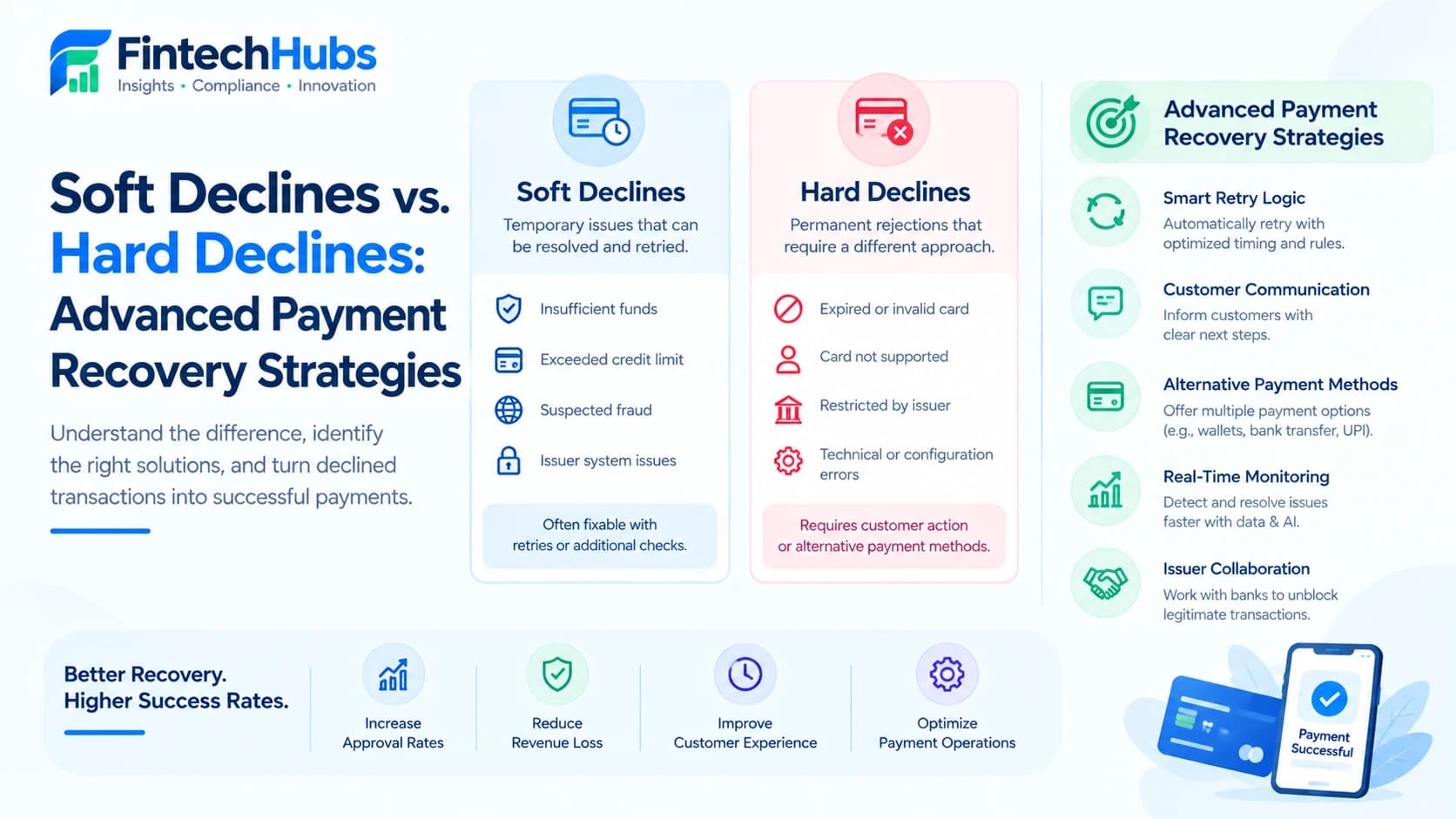
Soft vs Hard Declines: Advanced Payment Recovery Guide
Soft vs hard declines explained: Visa and Mastercard retry rules, smart retries, network tokens, 3-D Secure, dunning, recovery metrics, and 10 FAQs.
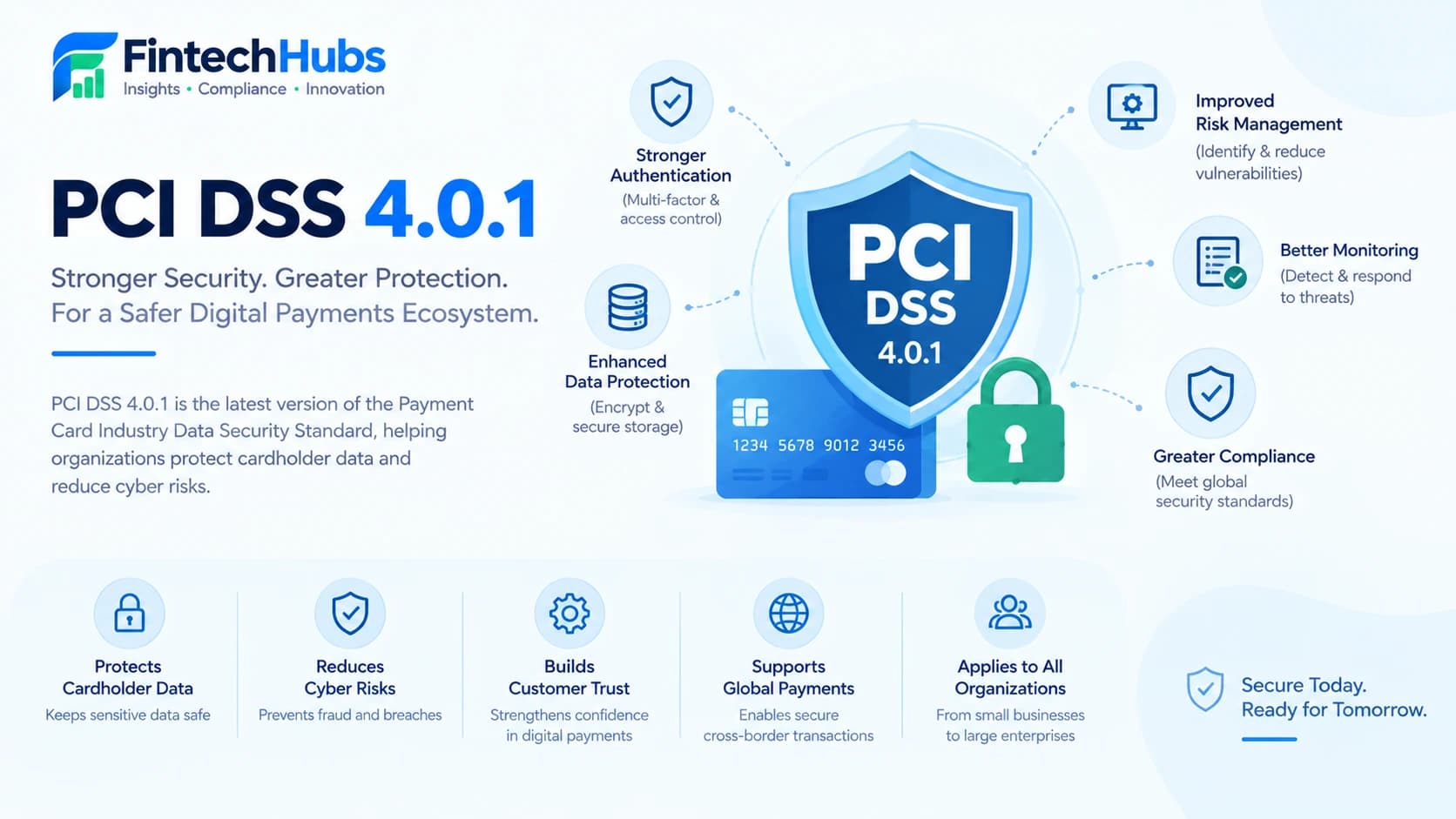
PCI DSS 4.0.1: Technical Requirements for Modern Payments
PCI DSS 4.0.1 explained: 12 requirements, MFA, payment page scripts, cloud and API compliance, scope reduction, a rollout roadmap, and 10 FAQs.
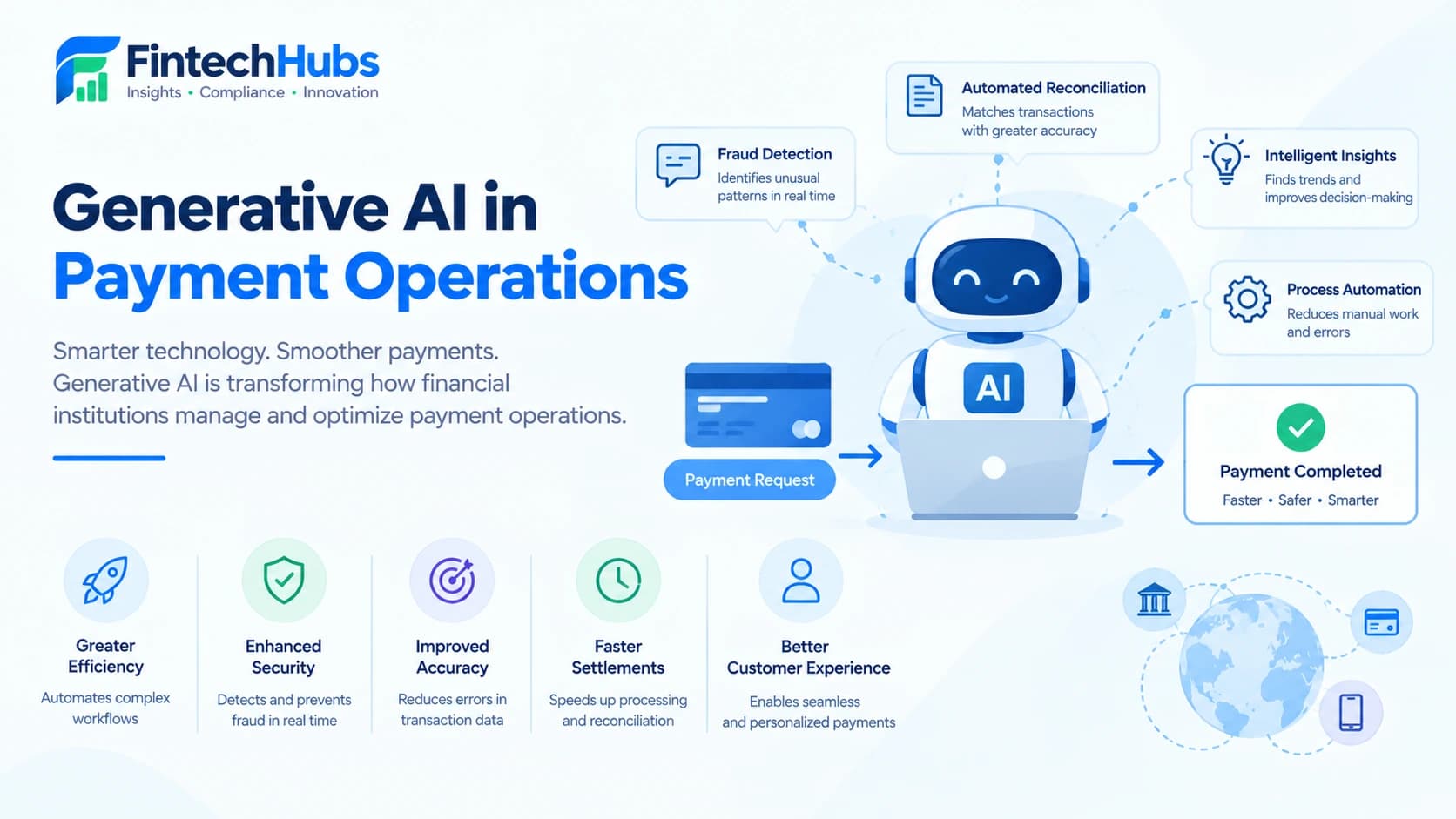
Generative AI in Payments: Reconciliation, Disputes & Support
How generative AI improves payment reconciliation, disputes, and customer support, plus architecture, risks, governance, roadmap, and 10 FAQs.