
Account-to-Account Payments: Challenging Card Networks
Discover how open banking powers account-to-account payments lower costs, faster settlement, key use cases, risks, and how they're challenging card networks.
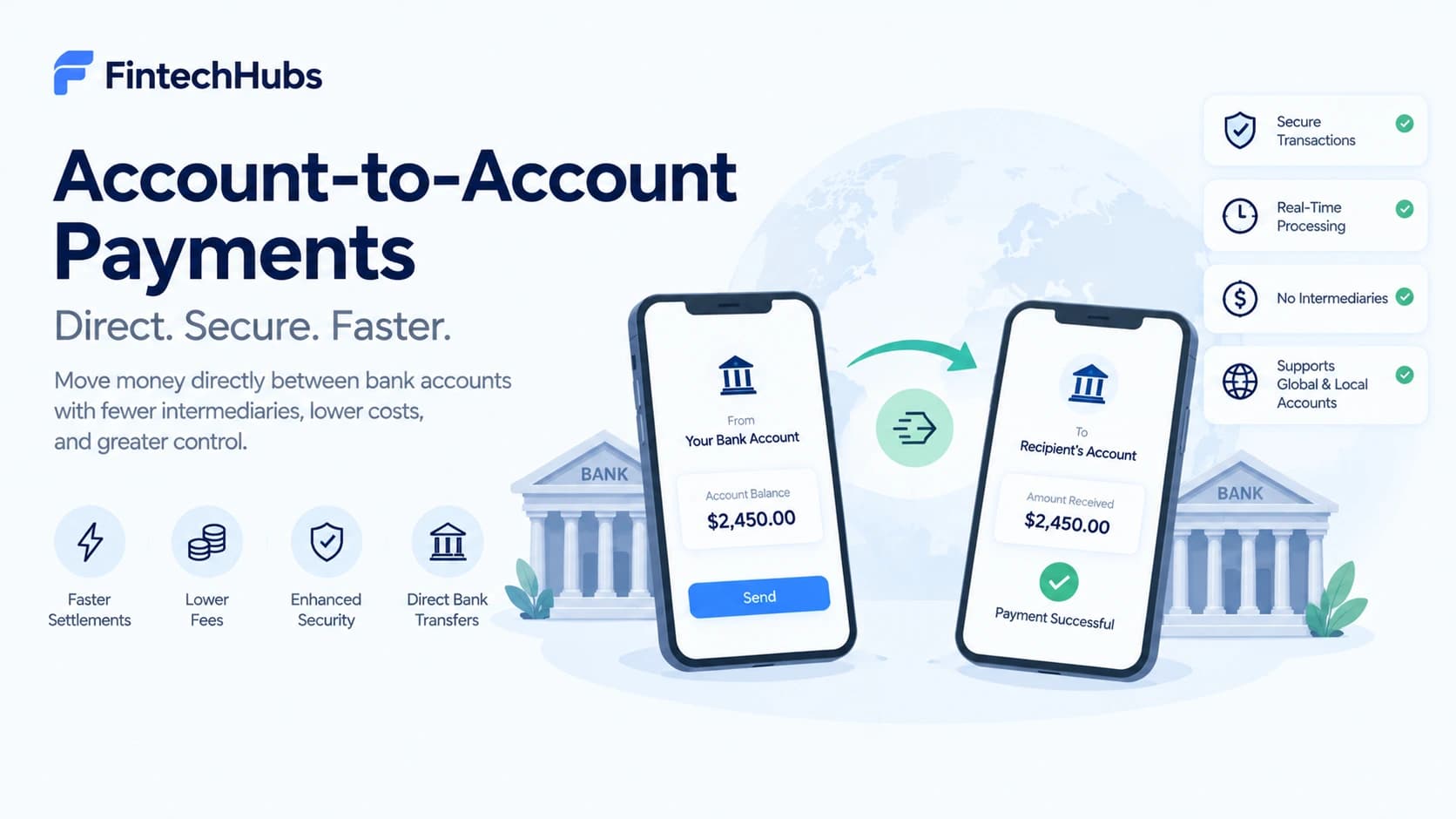
Account-to-Account Payments: How Open Banking Is Challenging Traditional Card Networks
For most of the digital commerce era, paying online has meant reaching for a card: typing in sixteen digits, an expiry date, and a security code, or tapping a stored card token in a digital wallet. That card then travels through a well-established but layered system of card networks, issuing banks, and acquiring banks, each taking a cut along the way. Account-to-account payments offer a fundamentally different path: moving money directly from the payer's bank account to the payee's bank account, bypassing the card network entirely.
This approach has existed in limited forms for decades, but open banking has turned it into a genuine competitive alternative to card payments at scale. By giving businesses and payment providers secure, standardized access to initiate payments directly from a customer's bank account, open banking infrastructure has made account-to-account payments faster, more transparent, and significantly cheaper to process than card transactions in many cases. This guide provides a complete, professional look at account-to-account payments: what they are, how open banking enables them, how they compare to card payments, their major branches and use cases, why businesses are adopting them, and where this shift is heading.
What Are Account-to-Account Payments?
Account-to-account payments, often abbreviated as A2A payments, are transactions in which funds move directly from the payer's bank account to the payee's bank account, without routing through a card network such as those operated by major card scheme providers. Instead of presenting a card number, the payer authorizes the payment directly from their bank, and the funds are transferred using bank payment rails rather than card payment rails.
This is not an entirely new concept. Traditional bank transfers and direct debits have existed for a long time. What is new is the ability to initiate these account-to-account payments programmatically, securely, and at the moment of checkout, made possible by open banking infrastructure and modern payment initiation technology.
How Open Banking Enables Account-to-Account Payments
Open banking is the regulatory and technological framework that allows banks to securely expose certain account and payment capabilities to authorized third-party providers through standardized application programming interfaces, or APIs, with the customer's explicit consent. Two specific open banking capabilities are central to account-to-account payments:
Payment Initiation Services (PIS): Which allow an authorized third-party provider to initiate a payment directly from a customer's bank account on the customer's behalf, with their explicit authorization
Account Information Services (AIS): Which allow authorized providers to access account and transaction data, supporting verification, risk assessment, and a smoother overall payment experience
Before open banking frameworks existed in many markets, initiating a payment directly from a customer's bank account in a secure, standardized, real-time way was technically difficult and inconsistent across different banks. Open banking standardized this process, creating the foundation that has allowed account-to-account payments to scale as a genuine checkout option rather than a niche, manually initiated bank transfer.
How Account-to-Account Payments Work
Step 1: Checkout Initiation
At checkout, the customer selects an account-to-account or open banking-based payment option rather than entering card details.
Step 2: Bank Selection and Redirection
The customer is typically redirected to their own bank's secure authentication environment, either through a banking app or a secure web interface, rather than entering credentials into the merchant's checkout page.
Step 3: Authentication and Authorization
The customer authenticates with their bank using their normal banking credentials and security steps, then reviews and explicitly authorizes the specific payment amount and recipient.
Step 4: Payment Initiation
Once authorized, the payment initiation service provider sends the payment instruction directly to the customer's bank, instructing it to transfer the specified funds to the merchant's account.
Step 5: Processing and Settlement
The payment is processed through the relevant underlying bank payment rail, which may be a real-time payment network in markets where one is available, enabling settlement within seconds, or a standard bank transfer rail with a longer settlement window in other cases.
Step 6: Confirmation
The customer and merchant both receive confirmation that the payment has been completed, with the merchant typically receiving confirmation significantly faster than with some traditional bank transfer methods, particularly where real-time payment rails are used.
Account-to-Account Payments vs. Card Payments
Understanding the competitive dynamic requires a direct comparison across several dimensions:
Settlement speed: Card payments typically offer immediate authorization but can take a day or more for the merchant to actually receive settled funds. Account-to-account payments, particularly when built on real-time payment rails, can offer both immediate authorization and immediate, final settlement.
Cost structure: Card payments involve interchange fees, card scheme fees, and acquirer processing fees, which collectively represent a meaningful percentage of each transaction. Account-to-account payments typically involve a flat or lower percentage fee, since they bypass the card network layer entirely.
Chargebacks and reversibility: Card payments include built-in chargeback mechanisms, allowing customers to dispute transactions under certain circumstances. Account-to-account payments, particularly once settled through real-time rails, are often immediately final, which changes the dispute resolution dynamic for both merchants and consumers.
Data and authentication: Card payments rely on card numbers, expiry dates, and security codes, data that can be stolen and reused if compromised. Account-to-account payments rely on the customer directly authenticating with their own bank, which can reduce certain categories of card-specific fraud, such as card-not-present fraud using stolen card numbers.
Customer experience: Card payments benefit from decades of familiarity and widespread stored-card convenience. Account-to-account payments require a redirect to the customer's banking app or portal, which can introduce friction, though this experience has improved significantly as open banking infrastructure has matured.
Core Components of Account-to-Account Payment Infrastructure
Open banking APIs: Provided by banks to allow authorized third parties to initiate payments and access account information
Payment initiation service providers: Regulated entities that connect to bank APIs on behalf of merchants and facilitate the payment flow
Bank authentication and authorization interfaces: Where the customer confirms their identity and approves the specific payment
Underlying settlement rails: Which may include real-time payment networks or standard bank transfer systems, determining how quickly funds actually move
Risk and fraud screening tools: Assessing transaction risk using account data and behavioral signals available through open banking access
Merchant integration layers: Including checkout plugins and APIs that allow merchants to offer account-to-account payment options alongside traditional methods
Branches and Use Cases of Account-to-Account Payments
A. E-Commerce Checkout Payments
Allowing online shoppers to pay directly from their bank account at checkout, as an alternative to entering card details, often positioned alongside card and digital wallet options.
B. Bill Payments and Recurring Payments
Supporting direct, often lower-cost bill payments and recurring payment arrangements, an area where account-to-account payments can offer a meaningful cost advantage over card-based recurring billing.
C. Person-to-Person and Small Business Payments
Enabling direct transfers between individuals or to small businesses without requiring either party to have card acceptance infrastructure.
D. Request to Pay
A capability allowing a business or individual to send a formal payment request, which the payer can review and approve directly from their banking app, streamlining invoicing without requiring card details to be shared.
E. Variable Recurring Payments (VRP)
An evolving open banking capability allowing a customer to authorize a third party to initiate a series of payments within agreed limits, without requiring separate authorization for each individual payment, positioned as a potential alternative to card-based subscription billing and direct debit.
F. High-Value and B2B Payments
Supporting larger business payments where the lower percentage-based cost of account-to-account payments, compared to card interchange fees, can represent significant savings at scale.
G. Marketplace and Platform Payouts
Enabling marketplaces and platforms to pay out to sellers, freelancers, and partners directly via bank transfer initiated through open banking rails, often faster and cheaper than alternative payout methods.
H. Account Verification and Pay-by-Bank Refunds
Using open banking account information access to verify account ownership and process refunds directly back to the original bank account, improving speed and reducing fraud risk compared to some traditional refund methods.
Why Businesses Are Adopting Account-to-Account Payments
Lower Processing Costs
By bypassing card network fees, account-to-account payments can offer merchants meaningfully lower transaction costs, particularly valuable for high-volume or high-value transactions where card interchange fees add up significantly.
Faster Access to Funds
When built on real-time payment rails, account-to-account payments can give merchants access to funds much faster than the typical settlement timeline for card transactions.
Reduced Chargeback Exposure
Because account-to-account payments are typically authorized directly by the customer through their own bank and are often immediately final, merchants can face reduced exposure to certain types of chargeback-related losses and disputes compared to card payments.
Improved Payment Data and Verification
Open banking account information access can give merchants and payment providers richer, verified account data to support fraud prevention and risk assessment compared to what is available through card payment data alone.
Appeal in High-Value Transactions
For large purchases, such as real estate deposits, vehicle purchases, or significant B2B invoices, account-to-account payments can offer a more cost-effective and sometimes more secure alternative to card payments, which may carry transaction limits or high fees at large values.
Key Technologies Behind Account-to-Account Payments
Open banking APIs: The standardized technical interfaces banks expose to allow authorized payment initiation and account data access
Strong customer authentication: Security protocols requiring multi-factor verification when a customer authorizes a payment through their bank
Real-time payment network connectivity: Enabling the fast settlement that gives account-to-account payments a competitive edge over traditional bank transfers
Payment initiation service provider infrastructure: The regulated technology layer connecting merchants to the broader open banking ecosystem across multiple banks
Risk scoring and fraud detection models: Increasingly using open banking account data to assess transaction risk in real time
Checkout integration tools: Including APIs and plugins that let merchants offer account-to-account payment options within their existing checkout flow
The Cost Advantage Over Card Networks
A central reason account-to-account payments are gaining adoption is cost. Card payments typically involve several layered fees:
Interchange fees: Paid by the merchant's acquiring bank to the customer's card-issuing bank
Card scheme fees: Charged by the card network itself for using its infrastructure
Acquirer or processor markup: The fee charged by the payment processor or acquiring bank for handling the transaction
Collectively, these fees represent a meaningful percentage of each transaction's value. Account-to-account payments, by moving money directly between bank accounts through open banking rails, generally avoid this layered fee structure, often resulting in a lower, sometimes flat-rate cost per transaction. This cost difference becomes particularly significant for businesses processing high transaction volumes or handling larger-value transactions, where even a small percentage difference translates into substantial savings at scale.
Industries and Use Cases
E-commerce and online retail: Offering pay-by-bank as a checkout alternative to reduce processing costs
Utilities and subscription billing: Using account-to-account payments for lower-cost recurring billing
Real estate and high-value transactions: Supporting large payments like deposits and down payments
Financial services and investment platforms: Enabling account funding and withdrawals directly via bank transfer
Gig economy and marketplace platforms: Paying out to sellers and workers directly and cost-effectively
Government and public sector payments: Supporting tax payments, fines, and benefit-related transactions
Business-to-business commerce: Settling invoices and supplier payments at lower cost than card-based alternatives
Regional Adoption Patterns
Adoption of account-to-account payments has varied significantly by region, shaped largely by differences in open banking regulation and the maturity of real-time payment infrastructure:
Europe: Has seen substantial account-to-account payment growth, supported by established open banking regulatory frameworks and the availability of instant payment infrastructure in the euro area and the United Kingdom.
The United Kingdom: Has been a particularly active market for pay-by-bank adoption, benefiting from an established open banking framework and real-time payment infrastructure.
India: Has seen massive adoption of account-to-account-style payments through its widely used unified real-time payment system, though built on a somewhat different regulatory and technical model than open banking-driven approaches elsewhere.
The United States: Has seen growing interest in account-to-account payments, supported by the continued rollout of real-time payment infrastructure and growing open banking-related regulatory developments, though adoption has generally lagged behind some other markets.
Other regions: Including parts of Latin America and Southeast Asia, have seen rapid growth in account-to-account and bank-based instant payment adoption, often driven by national real-time payment system initiatives.
Because regulatory frameworks and payment infrastructure maturity vary significantly and continue to evolve, businesses should research the current state of account-to-account payment adoption and infrastructure in each specific market they operate in.
Challenges and Limitations
Customer experience friction. The redirect to a customer's banking app or portal, while generally fast, is a different and sometimes less familiar experience than entering stored card details, which can affect adoption and conversion rates.
Fragmented bank API quality. Not all banks have invested equally in high-quality, reliable open banking APIs, leading to inconsistent experiences depending on which bank a customer uses.
Limited chargeback protections for consumers. The immediacy and finality that benefit merchants can represent a reduced safety net for consumers compared to the dispute mechanisms built into card payments.
Regulatory and infrastructure variation by market. The maturity of open banking regulation and real-time payment infrastructure differs significantly across countries, affecting how viable account-to-account payments are as a checkout option in a given market.
Limited rewards and loyalty integration. Many consumers are accustomed to card-based rewards programs and loyalty points, which are generally not available through account-to-account payment methods, potentially affecting consumer preference.
Awareness and trust. As a newer checkout option in many markets, account-to-account payments may face a slower adoption curve as both merchants and consumers become familiar with the option.
Security and Fraud Considerations
Account-to-account payments carry a different security and fraud profile compared to card payments:
Reduced exposure to card-specific fraud. Because no card number is used, account-to-account payments are not vulnerable to the card-not-present fraud that affects stolen or compromised card numbers.
Strong customer authentication. Payments are authorized directly through the customer's own bank, typically requiring the same robust authentication the bank already uses for its own banking app or portal.
Irrevocability considerations. Particularly when built on real-time payment rails, account-to-account payments are often immediately final, meaning fraud involving a customer being deceived into authorizing a fraudulent payment can be more difficult to reverse than certain card-based fraud scenarios.
Authorized push payment fraud risk. As with other real-time and account-to-account payment methods, scams that trick a customer into knowingly authorizing a payment to a fraudster represent a meaningful and growing concern that card-style chargeback protections do not address.
Account verification benefits. Open banking account information access can help verify that the payer genuinely owns and controls the account being used, supporting stronger identity assurance compared to card payments alone.
Regulatory Considerations
Account-to-account payments operate within a regulatory environment shaped by several overlapping frameworks:
Open banking and payment services regulation, which establishes the legal framework allowing third-party providers to access bank accounts and initiate payments with customer consent
Payment initiation service provider licensing, requiring companies offering this capability to be appropriately authorized or regulated in the relevant jurisdiction
Strong customer authentication requirements, mandating robust, typically multi-factor authentication for payment authorization in many regulatory frameworks
Data protection and privacy regulation, governing how account and transaction data accessed through open banking can be used and protected
Consumer protection considerations, including ongoing regulatory discussion in various markets about liability and recourse for consumers in cases of fraud or error involving account-to-account payments
Best Practices for Businesses Adopting Account-to-Account Payments
Offer account-to-account payments as one option alongside, rather than a full replacement for, existing payment methods, allowing customers to choose their preferred method
Partner with experienced, well-regulated payment initiation service providers with strong bank connectivity and reliability track records
Clearly communicate the benefits of pay-by-bank options to customers at checkout to encourage adoption
Build fraud monitoring specifically calibrated to the speed and finality of account-to-account transactions
Eval\action size and volume before prioritizing account-to-account payment adoption
Monitor the maturity of open banking infrastructure and real-time payment rails in each specific market the business operates in, since adoption viability varies significantly by region
Maintain clear policies and processes for handling disputes or errors involving account-to-account payments, given the different reversibility dynamics compared to card payments
The Competitive and Vendor Landscape
The account-to-account payments ecosystem includes specialized open banking and payment initiation service providers connecting merchants to multiple banks through a single integration, traditional banks increasingly offering their own pay-by-bank capabilities, payment orchestration platforms incorporating account-to-account rails alongside card and other payment methods, card networks themselves exploring or acquiring account-to-account payment capabilities as a strategic response to this competitive pressure, and real-time payment network operators whose infrastructure underpins the fastest account-to-account payment experiences.
Future Trends to Watch
Growth of variable recurring payments: As this open banking capability matures and sees broader bank support, expect growing adoption as an alternative to card-based subscription billing and traditional direct debit arrangements.
Expanding real-time rail coverage: As more countries develop and mature their real-time payment infrastructure, the speed advantage of account-to-account payments is expected to become available in a growing number of markets.
Card networks responding competitively: Expect continued strategic responses from traditional card networks, including investment in or acquisition of account-to-account payment capabilities, as they adapt to this competitive pressure rather than simply competing against it.
Improved consumer experience and trust: As account-to-account payment interfaces and bank API reliability continue to mature, expect a smoother, more familiar checkout experience that narrows the convenience gap with card payments.
Growing B2B adoption: Given the significant cost advantages at scale, expect continued growth in account-to-account payment adoption specifically for business-to-business transactions and high-value payments.
Regulatory attention to consumer protection: As adoption grows, expect continued regulatory discussion and potential new frameworks addressing consumer protection and fraud liability specific to account-to-account payments, given the different reversibility dynamics compared to card payments.
Continued regional divergence: Expect adoption to continue varying significantly by region based on local regulatory frameworks and real-time payment infrastructure maturity, rather than a single uniform global pace of change.
19. Frequently Asked Questions
1. What is an account-to-account payment?
An account-to-account payment is a transaction in which funds move directly from the payer's bank account to the payee's bank account, without routing through a card network, typically initiated using open banking payment initiation technology.
2. How is an account-to-account payment different from a regular bank transfer?
While both move money directly between bank accounts, account-to-account payments enabled by open banking are typically initiated programmatically at the point of checkout or payment, often settling much faster, particularly when built on real-time payment rails, compared to a manually initiated traditional bank transfer.
3. Why are businesses interested in account-to-account payments instead of just using card payments?
Businesses are primarily drawn to lower processing costs, since account-to-account payments bypass card network interchange and scheme fees, along with potentially faster access to settled funds and reduced exposure to certain types of chargebacks.
4. Is paying by bank account safer than paying by card?
Account-to-account payments reduce exposure to certain types of fraud, such as stolen card number misuse, since customers authenticate directly with their own bank. However, they carry different risks, particularly around the finality of payments and exposure to scams involving authorized payments, meaning the overall safety comparison depends on the specific type of fraud being considered.
5. Can I get my money back if I make an account-to-account payment by mistake?
This varies by payment method, bank, and circumstances, but because many account-to-account payments, particularly those on real-time rails, are immediately final, recovering a mistaken payment can be more difficult than with certain card-based transactions that include chargeback protections.
6. Does using account-to-account payments require me to share my banking password with the merchant?
No. Open banking-based account-to-account payments typically redirect the customer to their own bank's secure authentication environment to authorize the payment directly, rather than requiring banking credentials to be shared with the merchant or payment provider.
7. What is Variable Recurring Payments, and how does it relate to account-to-account payments?
Variable Recurring Payments is an open banking capability that allows a customer to authorize a series of future payments within agreed limits without approving each one individually, positioned as a potential open banking-based alternative to card-based subscriptions and traditional direct debit arrangements.
8. Are account-to-account payments available everywhere?
Availability depends significantly on the maturity of open banking regulation and real-time payment infrastructure in a given country, with adoption notably more advanced in markets such as the United Kingdom, parts of Europe, and India, and still developing in various other regions.
9. Do account-to-account payments offer rewards or cash back like credit cards often do?
Generally, no. Account-to-account payments typically do not include the rewards, points, or cash-back programs commonly associated with credit card payments, which can be a factor in consumer preference between the two payment methods.
10. Will account-to-account payments eventually replace card payments entirely?
This is unlikely in the near term for most markets. Account-to-account payments are generally expected to grow as a meaningful, increasingly popular alternative alongside card payments, rather than fully replacing the deeply embedded card payment ecosystem, particularly given the consumer familiarity and rewards programs associated with cards.
Conclusion
Account-to-account payments represent one of the clearest examples of how open banking infrastructure is reshaping the economics and mechanics of everyday commerce. By allowing funds to move directly between bank accounts, bypassing the layered fee structure and settlement delays of traditional card networks, this payment method offers businesses a compelling combination of lower costs, faster access to funds, and reduced exposure to certain types of fraud and chargebacks. Its branches, spanning e-commerce checkout, recurring billing, high-value transactions, and business-to-business payments, all point toward the same underlying shift: payment infrastructure built directly on bank rails, rather than routed through card networks, is becoming a genuine, increasingly mainstream competitive alternative. As real-time payment infrastructure continues to expand, as variable recurring payments mature, and as consumer familiarity grows, account-to-account payments are positioned to capture a steadily increasing share of global payment volume, even as card networks adapt and respond to this evolving competitive landscape.
This content is for informational and educational purposes only and does not constitute financial, legal, or compliance advice. Open banking regulations, payment infrastructure, and adoption vary significantly by country and change over time. Readers and businesses should consult qualified professionals and verify current details with relevant financial institutions and official sources.
Share this article
Related Articles
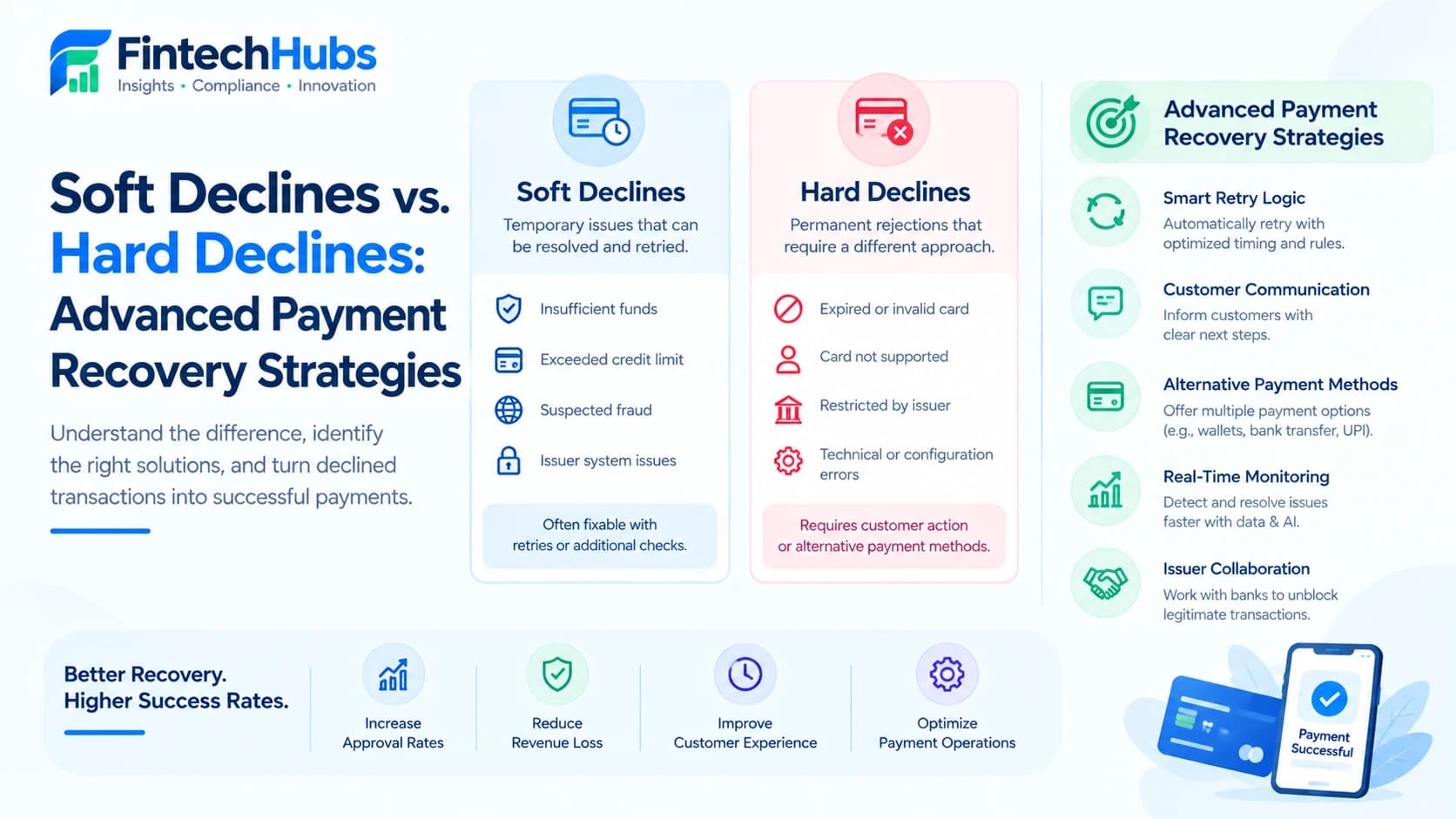
Soft vs Hard Declines: Advanced Payment Recovery Guide
Soft vs hard declines explained: Visa and Mastercard retry rules, smart retries, network tokens, 3-D Secure, dunning, recovery metrics, and 10 FAQs.
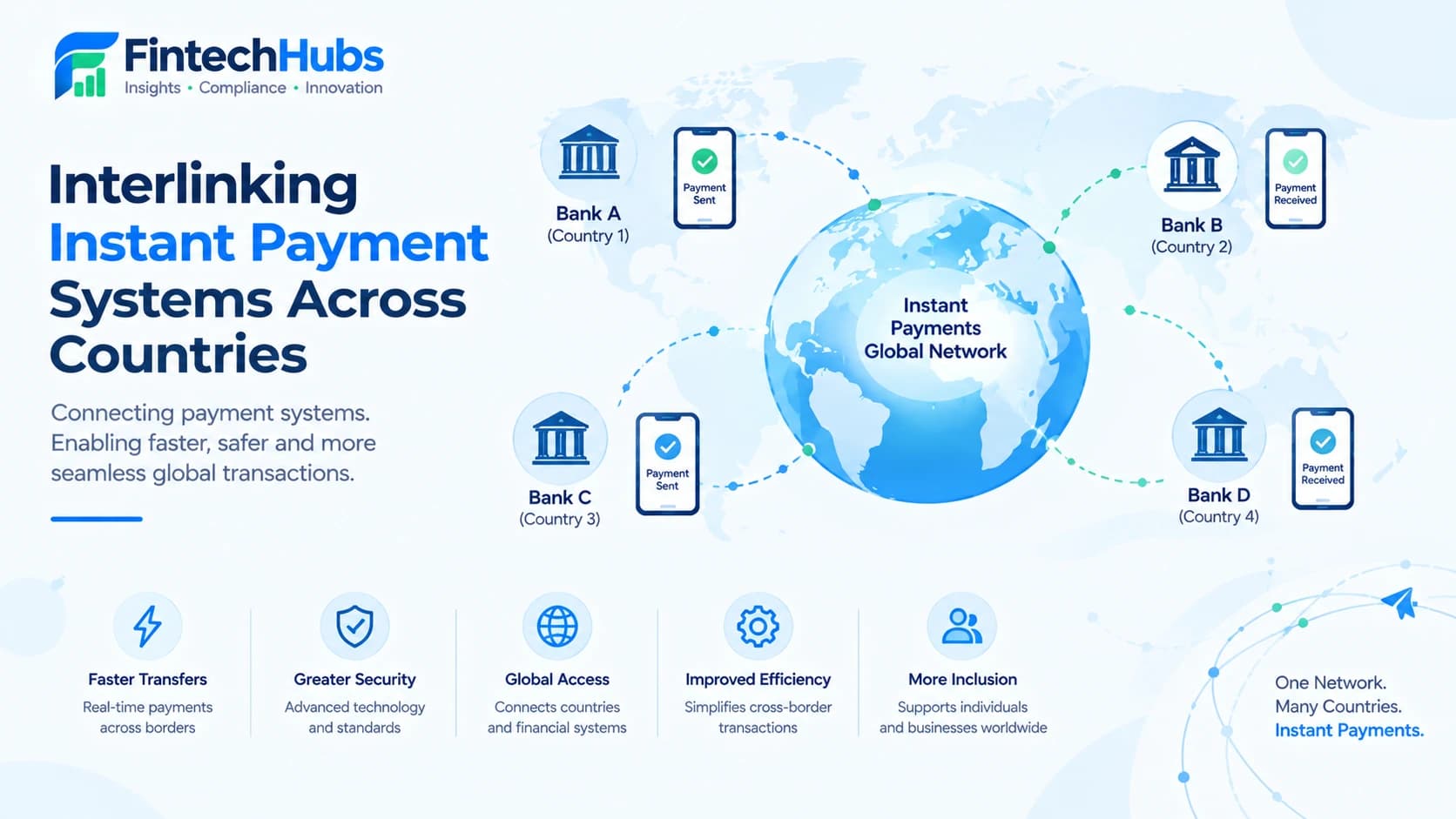
Interlinking Instant Payment Systems Across Countries
How countries link instant payment systems: bilateral links, Nexus, UPI-PayNow, risks, compliance, operations, a rollout roadmap, and 10 FAQs.
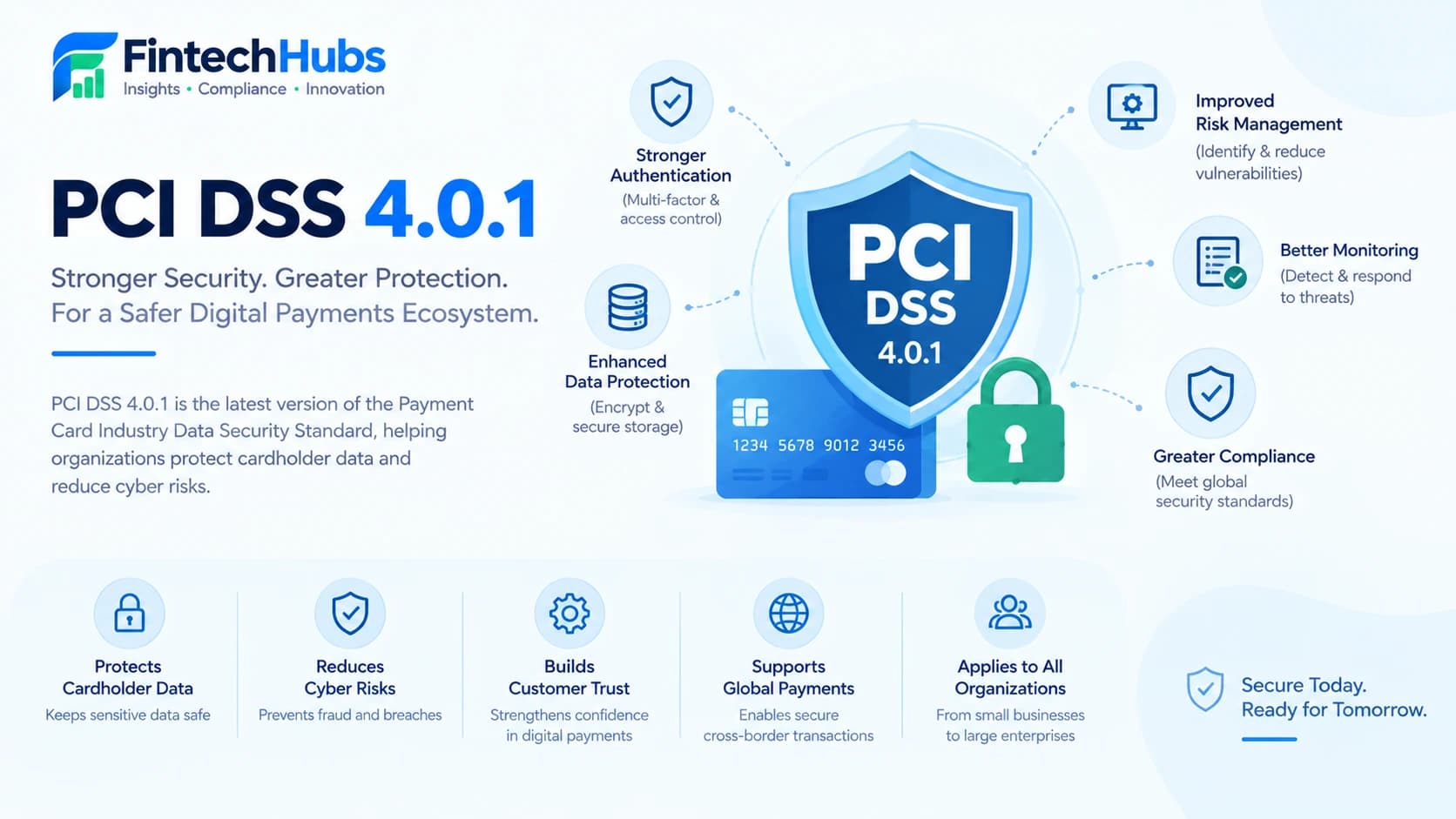
PCI DSS 4.0.1: Technical Requirements for Modern Payments
PCI DSS 4.0.1 explained: 12 requirements, MFA, payment page scripts, cloud and API compliance, scope reduction, a rollout roadmap, and 10 FAQs.