
Automated Portfolio Management: How Algorithms Invest in 2026
Learn how algorithms build, rebalance, and optimize investment portfolios from asset allocation models to tax-loss harvesting and direct indexing.
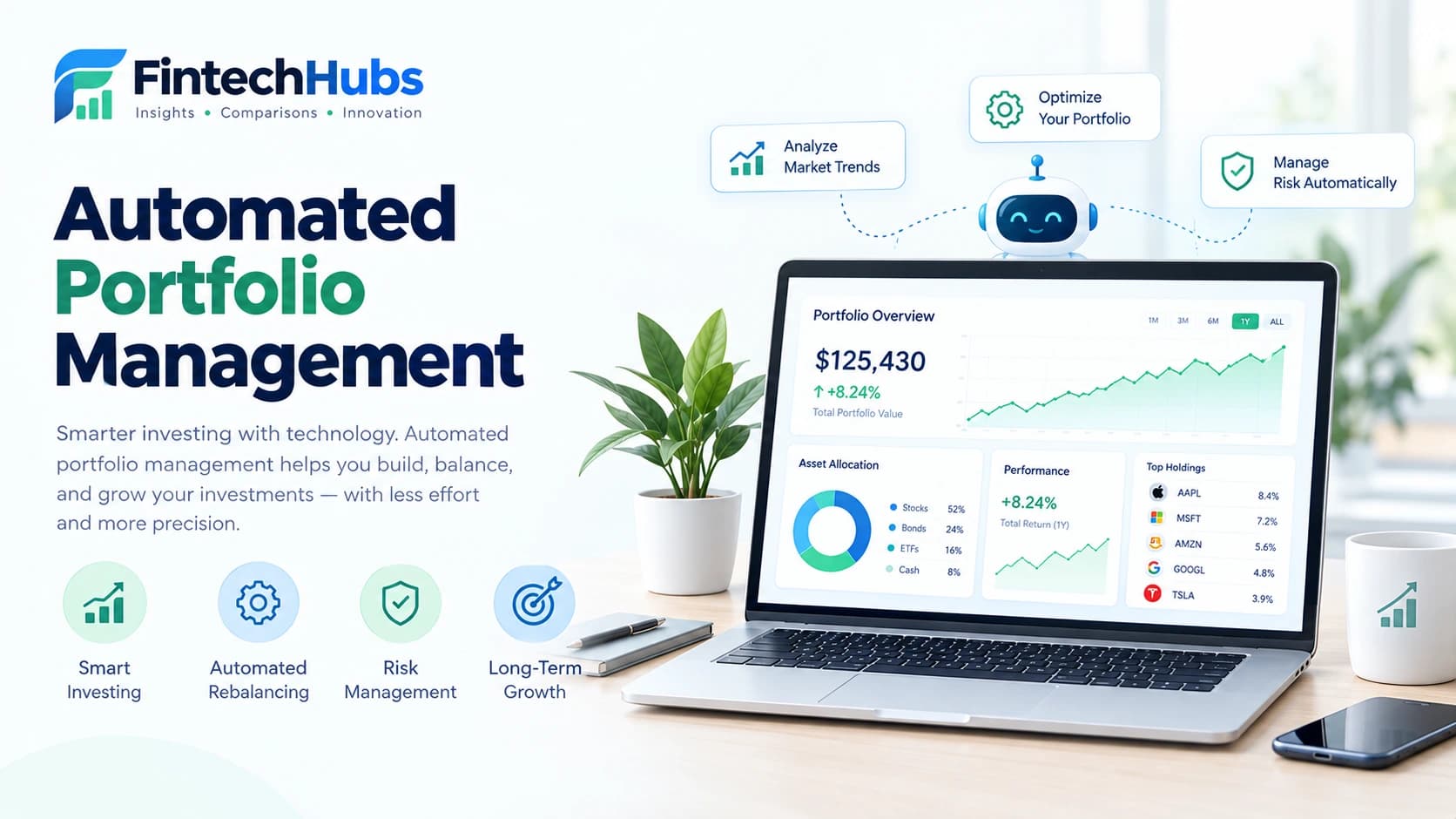
Automated Portfolio Management: How Algorithms Build, Rebalance, and Optimize Investment Portfolios
Behind every modern robo-advisor and digital wealth platform sits a quieter, more technical story: the algorithms that actually decide what to buy, when to sell, and how to keep a portfolio aligned with an investor's goals as markets move. Automated portfolio management is the engineering discipline that translates investment theory into executable, repeatable, and scalable software — the layer that turns a risk questionnaire into a diversified set of trades, and keeps that portfolio disciplined through years of market volatility without requiring constant human intervention.
This guide focuses specifically on the mechanics: how automated systems construct portfolios, the mathematical models that guide asset allocation, the logic used to rebalance holdings, and the optimization techniques — including tax-aware strategies — that refine performance over time. It complements broader discussions of wealthtech and digital wealth platforms by going deeper into the algorithmic engine room that powers them.
This article is for general informational and educational purposes only and does not constitute investment, financial, or legal advice.
What Is Automated Portfolio Management
Automated portfolio management refers to the use of software algorithms rather than manual, advisor-driven decisions to construct, monitor, rebalance, and optimize investment portfolios. It encompasses the full lifecycle of portfolio decision-making: determining an appropriate asset allocation based on an investor's objectives, selecting specific securities or funds to implement that allocation, executing trades, monitoring the portfolio against its targets, and adjusting it as market conditions or the investor's circumstances change.
While often associated with consumer-facing robo-advisors, automated portfolio management is also used extensively behind the scenes by institutional asset managers, hedge funds, and enterprise wealth management platforms to manage scale, consistency, and speed that manual processes cannot match.
How Automated Portfolio Management Works
Objective and Constraint Capture: The system captures an investor's goals, time horizon, risk tolerance, tax situation, and any specific constraints (such as excluded securities or sectors).
Asset Allocation Modeling: A quantitative model translates those inputs into a target allocation across asset classes (equities, fixed income, cash, alternatives).
SelSecurity ection: The system selects specific instruments, typically low-cost ETFs or index funds, though some platforms use individual securities to implement the target allocation.
Trade Generation and Execution: Orders are generated and routed for execution, often using algorithms designed to minimize transaction costs and market impact.
Continuous Monitoring: The system tracks the portfolio's actual composition against its target allocation on an ongoing basis.
Rebalancing: When drift exceeds defined thresholds, or on a scheduled basis, the system generates trades to restore the target allocation.
Optimization Overlays: Additional algorithms run continuously or periodically to improve after-tax returns, manage risk, and capture efficiency gains (such as tax-loss harvesting or cash flow-based rebalancing).
Reporting and Feedback: Performance, allocation, and activity are reported back to the investor or advisor, often feeding into further refinement of the underlying models.
The Core Algorithms Behind Portfolio Construction
4.1 Modern Portfolio Theory (MPT)
The foundational framework behind most automated portfolio construction, MPT seeks to identify the asset allocation that maximizes expected return for a given level of risk, based on the expected returns, volatilities, and correlations of the assets under consideration.
4.2 Mean-Variance Optimization
A mathematical technique used to solve for the "efficient frontier" — the set of portfolios offering the highest expected return for each level of risk — based on historical or forward-looking estimates of asset performance.
4.3 Risk Parity Models
Allocate portfolio weight based on each asset's contribution to overall portfolio risk, rather than on capital allocation alone, aiming for more balanced risk exposure across asset classes.
4.4 Factor-Based Models
Construct portfolios around specific return-driving factors (such as value, momentum, quality, or size) rather than traditional asset-class categories alone.
4.5 Black-Litterman and Bayesian Approaches
Combine market equilibrium assumptions with an investor's or manager's own views to produce more stable, less extreme allocation outputs than pure historical optimization.
4.6 Machine Learning-Enhanced Allocation
Increasingly, platforms incorporate machine learning models to improve return and risk forecasts, detect regime changes, or refine risk-profiling beyond static questionnaires.
How Algorithms Rebalance Portfolios
5.1 Threshold-Based Rebalancing
Triggers a rebalance when an asset class's weight drifts beyond a predefined percentage from its target, helping control risk drift without excessive trading.
5.2 Calendar-Based Rebalancing
Rebalances the portfolio on a fixed schedule (monthly, quarterly, annually) regardless of how far allocations have drifted.
5.3 Cash Flow-Based Rebalancing
Uses incoming deposits or withdrawals as an opportunity to move the portfolio back toward target allocations, reducing the need for separate buy/sell transactions and their associated costs.
5.4 Tax-Aware Rebalancing
Incorporates tax consequences into rebalancing decisions, prioritizing trades in tax-advantaged accounts or using losses strategically to offset the tax impact of necessary rebalancing trades in taxable accounts.
5.5 Band-and-Buffer Approaches
Combine threshold and calendar logic, checking for rebalancing opportunities on a schedule but only executing trades if drift has crossed a meaningful buffer, balancing responsiveness against unnecessary trading costs.
How Algorithms Optimize Portfolios Over Time
Tax-loss harvesting: Automatically identifying and realizing investment losses to offset taxable gains, while maintaining the portfolio's overall market exposure through substitute securities.
Asset location optimization: Strategically placing tax-inefficient assets in tax-advantaged accounts and tax-efficient assets in taxable accounts to improve after-tax returns.
Transaction cost minimization: Algorithms that sequence and size trades to reduce market impact and brokerage costs.
Glide path adjustments: Automatically shifting asset allocation over time for goal-based portfolios, such as gradually reducing equity exposure as a target date approaches.
Dynamic risk adjustment: Modifying allocations in response to changing market volatility or macroeconomic signals, within predefined risk guardrails.
Direct indexing optimization: For platforms offering direct indexing, algorithms manage individual security positions to maximize tax-loss harvesting opportunities and allow for personalized exclusions.
Types/Branches of Automated Portfolio Management
7.1 Strategic Asset Allocation Systems
Maintain a relatively stable, long-term target allocation based on an investor's risk profile, with rebalancing used primarily to maintain that fixed target.
7.2 Tactical Asset Allocation Systems
Allow for shorter-term adjustments to allocation based on market conditions or model-driven signals, within boundaries set by the long-term strategic allocation.
7.3 Goal-Based Portfolio Management
Manages multiple portfolios simultaneously, each tied to a specific financial goal with its own time horizon and risk profile.
7.4 Direct Indexing Systems
Manage individual securities directly rather than through pooled funds, enabling granular tax management and personalization at the position level.
7.5 Multi-Asset and Alternative Allocation Systems
Extend automated management beyond traditional stocks and bonds to include alternative asset classes such as real estate, commodities, or private market exposure where available.
7.6 Institutional and Enterprise Portfolio Management Systems
Used by asset managers and institutions to manage large numbers of portfolios or accounts at scale, often with more sophisticated risk modeling and compliance controls than consumer platforms.
Core Technologies Powering Automated Portfolio Management
Quantitative modeling engines: Implementing optimization algorithms such as mean-variance optimization and risk parity.
Cloud infrastructure: Enables scalable computation across large numbers of portfolios simultaneously.
Order and execution management systems: That route and execute trades efficiently.
Fractional share trading capability: Allowing precise allocation regardless of account size.
Tax-lot accounting systems: That track the cost basis and holding period of individual tax lots to support tax-aware strategies.
Risk analytics engines: That continuously monitor portfolio-level risk metrics such as volatility, value-at-risk, and factor exposures.
APIs and data feeds: Supplying real-time and historical market data used in forecasting and optimization models.
Why It Matters
Manual portfolio management does not scale efficiently — a human advisor can realistically monitor and rebalance only a limited number of accounts with precision and consistency. Automated portfolio management removes that constraint, enabling consistent, disciplined application of investment strategy across thousands or millions of accounts simultaneously, each personalized to its own goals and constraints.
This matters not only for cost and scale, but for investment discipline itself: algorithms do not experience the behavioral biases panic selling, overconfidence, inertia that frequently undermine manually managed portfolios, instead executing predefined strategies consistently regardless of market sentiment.
Industries and Use Cases
Consumer robo-advisory platforms: Automated management of retail investment accounts.
Retirement plan administration: Automated glide-path management for target-date retirement portfolios.
Registered investment advisors (RIAs): Using portfolio management software to scale advisory practices.
Institutional asset management: Automated rebalancing and risk management across large pooled funds.
Private banks and wealth management divisions: Hybrid use of automation for efficiency alongside human oversight for high-net-worth clients.
Insurance and annuity providers: Managing underlying investment accounts tied to variable products.
Benefits of Automated Portfolio Management
Consistency and discipline: Removes emotional, ad hoc decision-making from the rebalancing process.
Scalability: Enables management of large numbers of personalized portfolios simultaneously.
Cost efficiency: Reduces the labor-intensive processes traditionally required for portfolio monitoring and rebalancing.
Precision: Fractional share capabilities and automated tax-lot tracking allow for more exact allocation and tax management than manual processes typically achieve.
Speed of response: Portfolios can be adjusted continuously rather than during periodic manual reviews.
Transparency and auditability: Systematic, rules-based processes create clear records of why and when portfolio changes were made.
Challenges and Limitations
Model risk: Optimization algorithms rely on assumptions and historical data that may not hold during unprecedented market conditions.
Overfitting: Overly complex models calibrated too closely to historical data may perform poorly on new, unseen market conditions.
Limited handling of complex, idiosyncratic situations: Automated systems may struggle with highly specific client circumstances better suited to human judgment.
Transaction cost trade-offs: Overly frequent rebalancing can erode returns through trading costs and tax consequences if not carefully managed.
Data dependency: The quality of automated decisions is only as good as the underlying market and account data feeding the system.
Behavioral risk during extreme volatility: While algorithms avoid emotional decision-making, investors themselves may panic and override automated strategies at the worst possible time.
Explainability: More sophisticated machine learning-based models can be difficult to explain clearly to end investors or regulators.
Risk Management and Regulatory Considerations
Automated portfolio management systems typically operate within a regulated investment advisory framework and must address:
Fiduciary and suitability obligations: Ensuring algorithmic recommendations align with disclosed investor objectives and risk tolerance.
Model governance and validation: Including regular testing and review of optimization and rebalancing algorithms.
Risk controls and circuit breakers: To prevent erroneous trades or extreme allocation shifts due to data errors or model malfunctions.
Disclosure requirements: Clearly explaining how the automated system makes decisions, including fees, methodology, and limitations.
Record-keeping and auditability: Maintaining clear logs of algorithmic decisions for regulatory review and client transparency.
Cybersecurity and operational resilience: Protecting the systems and data underlying automated decision-making from disruption or compromise.
Firms operating automated portfolio management systems should consult current regulatory guidance applicable to their jurisdiction, as oversight of algorithmic investment advice continues to evolve.
Best Practices for Investors and Providers
For investors:
Understand the underlying investment philosophy and methodology before entrusting a portfolio to an automated system.
Review how rebalancing and tax-loss harvesting are triggered and whether they align with personal preferences.
Periodically review automated recommendations, especially following major life changes not reflected in the original risk profile.
For providers:
Build robust model validation and backtesting processes before deploying new optimization algorithms.
Implement clear guardrails and human escalation paths for unusual market conditions.
Prioritize explainability so that both clients and regulators can understand how allocation decisions are made.
Continuously monitor transaction costs and tax impact to ensure optimization strategies deliver genuine net benefit.
Maintain rigorous data quality controls, since forecasting and allocation models are only as reliable as their inputs.
Competitive Landscape
The automated portfolio management space spans consumer robo-advisory pioneers that popularized algorithm-driven investing, enterprise software vendors licensing portfolio management technology to banks and RIAs, and institutional-grade quantitative platforms used by asset managers for large-scale portfolio operations. Differentiation increasingly centers on the sophistication of optimization and tax-management algorithms, the breadth of asset classes supported (including direct indexing and alternatives), and the degree of personalization available without sacrificing the scalability that automation is meant to provide.
Future Trends
Greater use of machine learning: For dynamic risk forecasting and regime detection, supplementing traditional mean-variance approaches.
Expansion of direct indexing: To more investors as trading costs decline, enabling more granular tax and personalization benefits.
Integration of alternative assets: Into automated allocation models as access to private markets and alternative strategies broadens.
More sophisticated personalization: Incorporating values-based exclusions, factor tilts, and individualized constraints at scale.
Improved explainability tools: Helping investors and regulators understand increasingly complex algorithmic decision-making.
Greater integration with broader financial planning: Linking portfolio optimization to spending, saving, and liability management goals.
Continued movement toward real-time, continuous optimization: Rather than periodic rebalancing cycles.
Frequently Asked Questions
1. What is automated portfolio management?
It is the use of software algorithms to construct, monitor, rebalance, and optimize investment portfolios, replacing or supplementing manual, advisor-driven decision-making.
2. What is the difference between automated portfolio management and a robo-advisor?
Automated portfolio management refers to the underlying algorithms and processes; a robo-advisor is the consumer-facing product or platform that uses automated portfolio management to serve end investors.
3. How do algorithms decide how to build a portfolio?
Most systems use quantitative models, such as modern portfolio theory and mean-variance optimization, to determine an asset allocation that balances expected return against an investor's risk tolerance.
4. How often are automated portfolios rebalanced?
This varies by platform and methodology some rebalance based on drift thresholds, others on a fixed schedule, and many combine both approaches along with cash flow-based rebalancing.
5. What is tax-loss harvesting and how does it relate to automated portfolio management?
Tax-loss harvesting is an automated strategy that realizes investment losses to offset taxable gains elsewhere, while maintaining overall market exposure through similar substitute securities.
6. Can automated systems handle complex financial situations?
Automated systems handle standardized scenarios well but may be less suited to highly complex or idiosyncratic situations, which is why many platforms offer hybrid access to human advisors.
7. Are automated portfolios riskier than manually managed ones?
Not inherently automated systems follow predefined, disciplined strategies and are not immune to market risk, but they do remove certain behavioral risks associated with manual, emotion-driven decision-making.
8. What happens if markets behave in unprecedented ways?
Models based primarily on historical data may perform less reliably during unprecedented conditions, which is why risk controls, guardrails, and human oversight remain important components of well-designed systems.
9. Do automated portfolio management systems use individual stocks or funds?
Many use low-cost, diversified funds such as ETFs, though direct indexing systems manage individual securities directly for more granular control and tax optimization.
10. How is automated portfolio management regulated?
Providers typically operate under investment advisory regulatory frameworks involving fiduciary or suitability obligations, disclosure requirements, and model governance expectations, which vary by jurisdiction.
Conclusion
Automated portfolio management represents the computational backbone of modern digital investing the algorithms that translate investment theory into disciplined, scalable, and personalized action across millions of portfolios. From asset allocation modeling and rebalancing logic to tax-aware optimization and direct indexing, these systems continue to narrow the gap between institutional-grade investment management techniques and everyday investors. As machine learning, broader asset class access, and improved explainability continue to advance the technology, automated portfolio management is likely to become even more central to how investment portfolios are built and maintained going forward.
Disclaimer: This article is provided for general informational and educational purposes only. It does not constitute investment, financial, legal, or tax advice. Readers should consult a licensed financial professional before making investment decisions.
Share this article
Related Articles
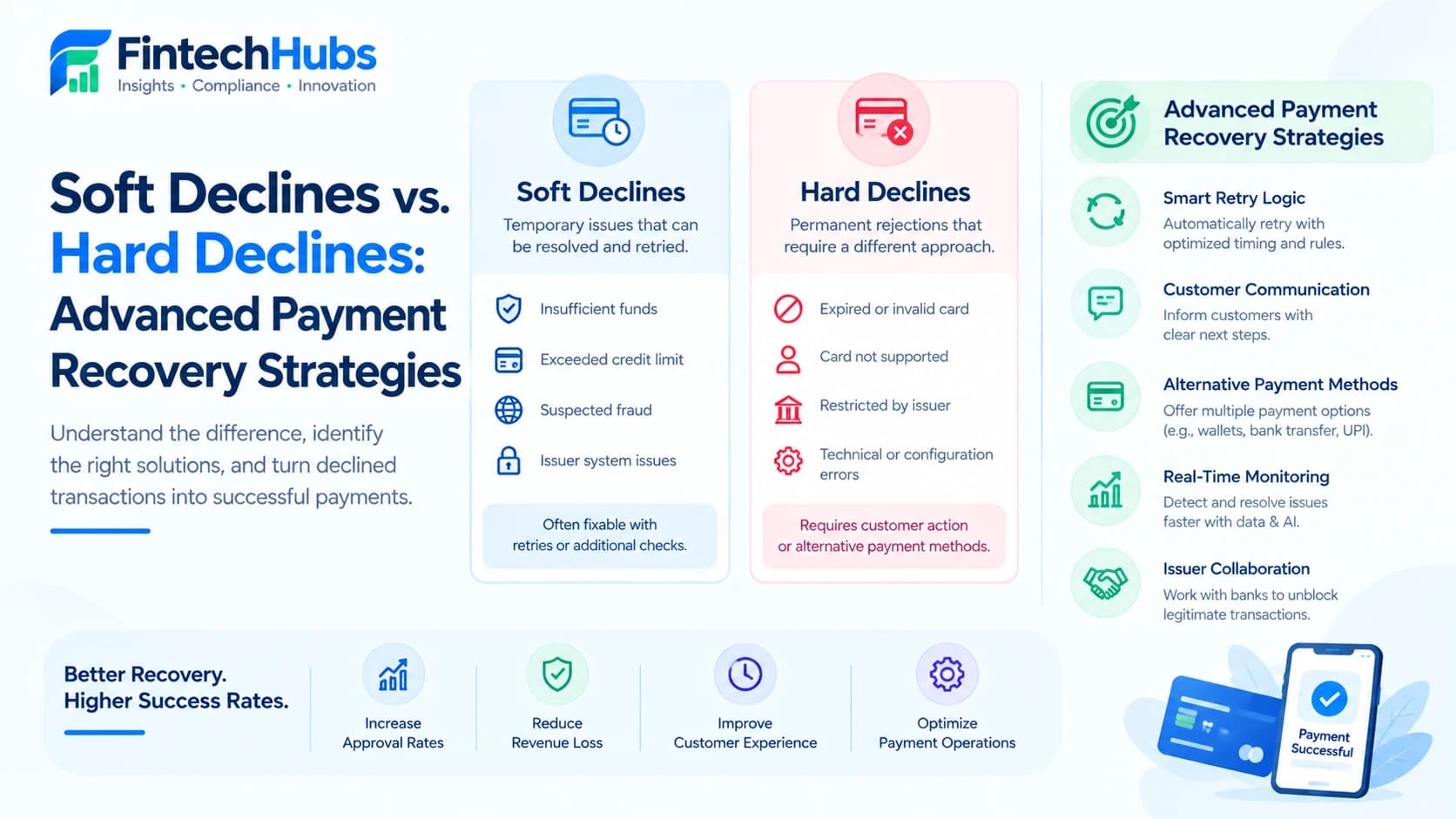
Soft vs Hard Declines: Advanced Payment Recovery Guide
Soft vs hard declines explained: Visa and Mastercard retry rules, smart retries, network tokens, 3-D Secure, dunning, recovery metrics, and 10 FAQs.
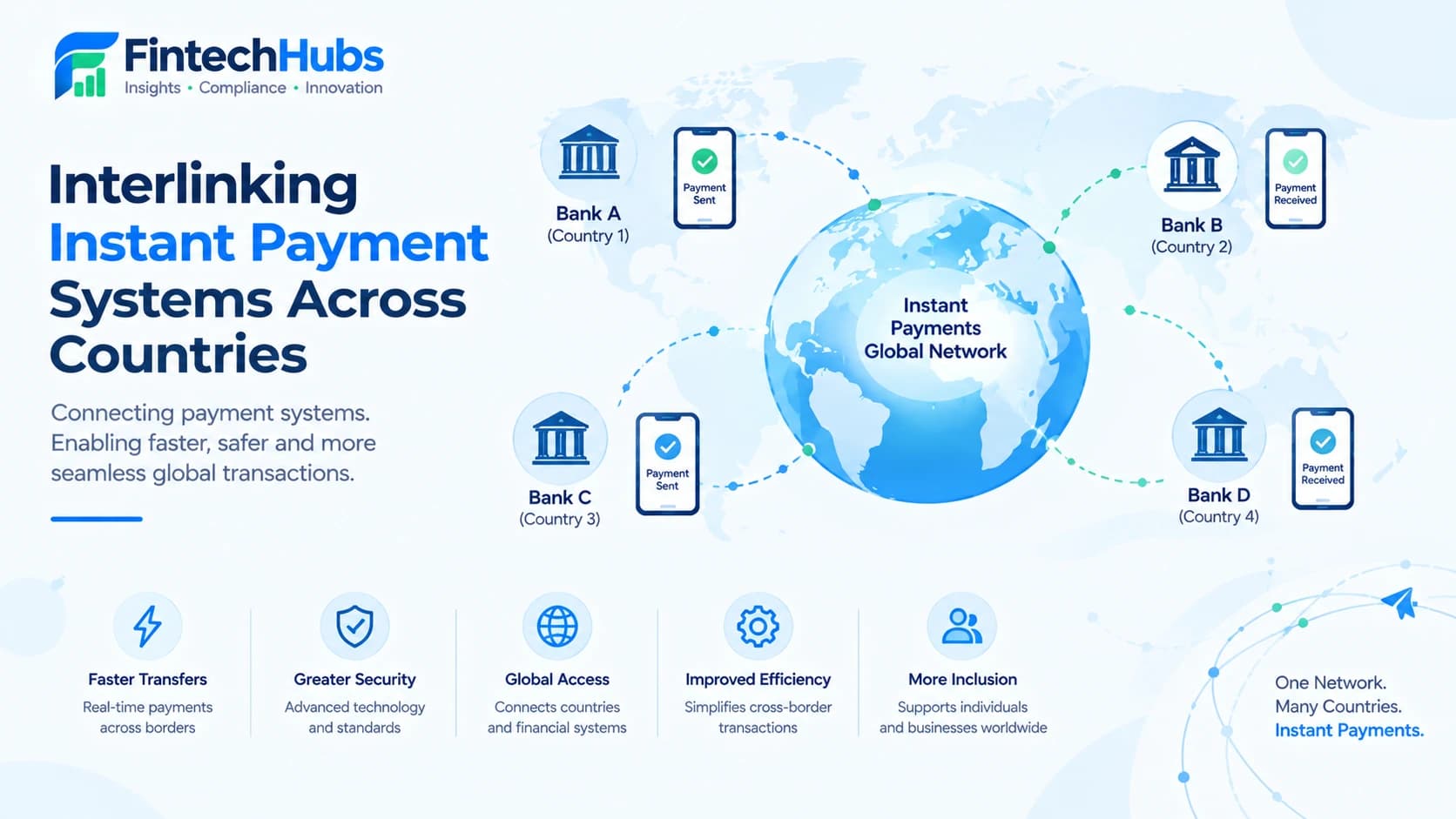
Interlinking Instant Payment Systems Across Countries
How countries link instant payment systems: bilateral links, Nexus, UPI-PayNow, risks, compliance, operations, a rollout roadmap, and 10 FAQs.
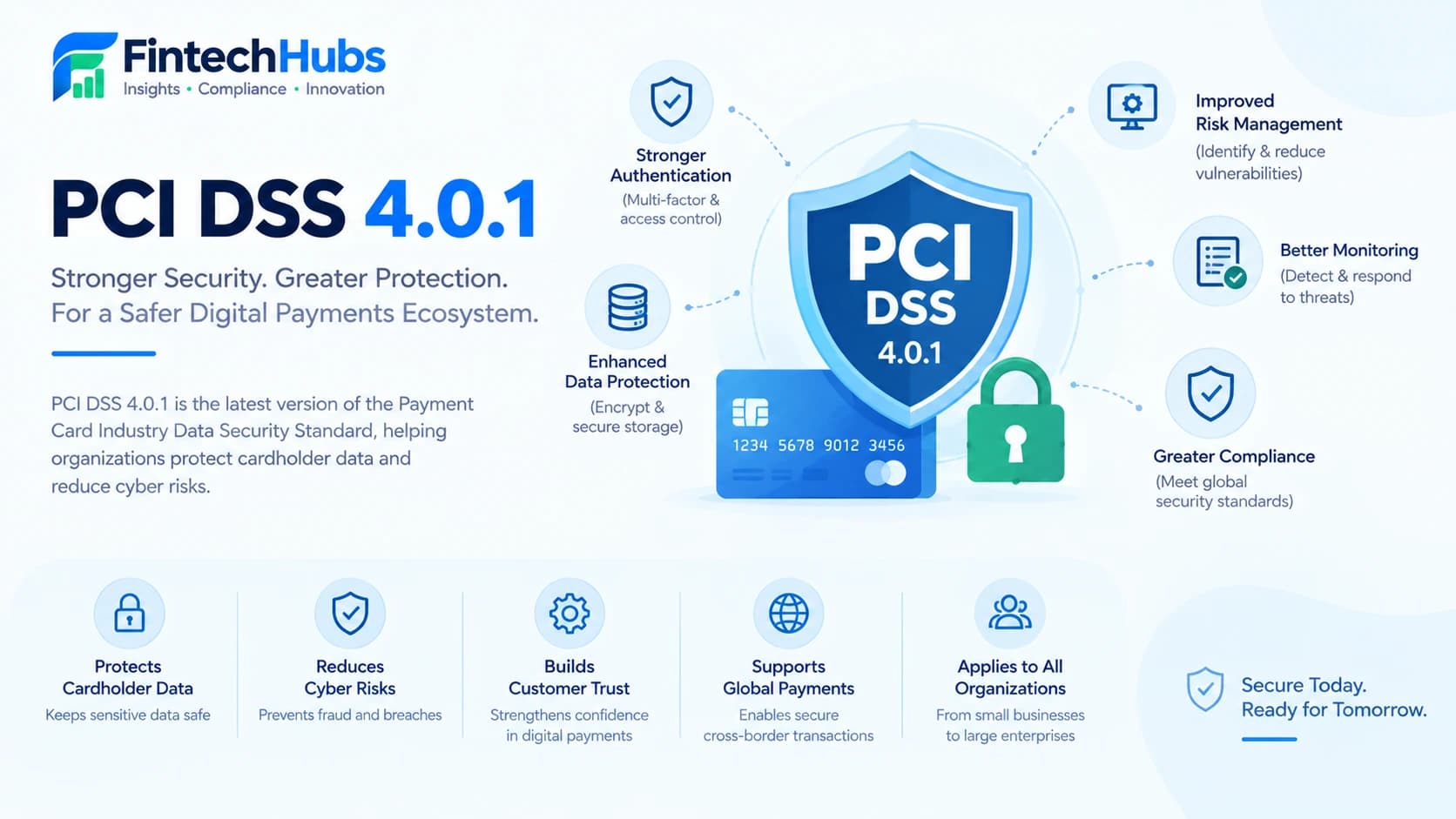
PCI DSS 4.0.1: Technical Requirements for Modern Payments
PCI DSS 4.0.1 explained: 12 requirements, MFA, payment page scripts, cloud and API compliance, scope reduction, a rollout roadmap, and 10 FAQs.