
Financial Cybersecurity and Fraud Prevention
Learn how financial cybersecurity and fraud prevention work in 2026 — fraud detection, identity verification, scam protection, and key industry trends.
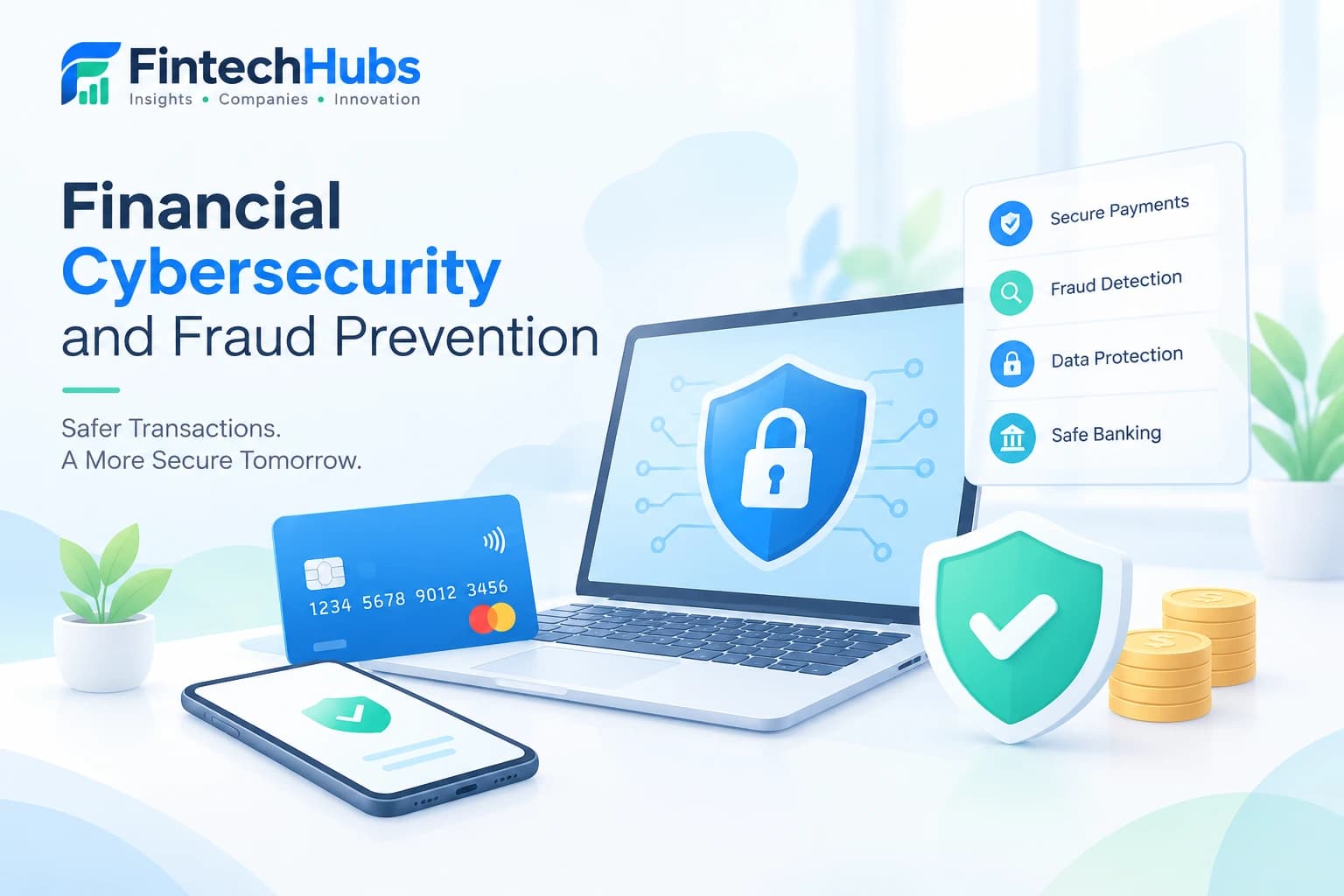
Financial Cybersecurity and Fraud Prevention: A Complete Guide to Financial Technology in 2026
Introduction
Every advance in financial technology faster payments, open banking data sharing, embedded finance, AI-driven advice creates new convenience for legitimate users and new opportunity for criminals. As money has moved from cash and paper checks to instant digital transactions, the attack surface for fraud and cybercrime has expanded just as quickly as the industry itself. Financial cybersecurity and fraud prevention is the branch of fintech dedicated to closing that gap: the technology, processes, and strategies that protect financial institutions, businesses, and consumers from theft, deception, and digital attack.
This isn't a niche concern. Fraud and cybercrime cost the global economy enormous sums every year, and financial services remain one of the most heavily targeted industries precisely because that's where the money is. By 2026, protecting financial systems has evolved from basic password protection and manual fraud review into a sophisticated, AI-driven discipline that operates in real time, often invisibly, behind nearly every digital payments.
This guide covers what financial cybersecurity and fraud prevention actually involves, how modern systems work, the major branches of the field, why it matters, and where it's headed next.
1. What Is Financial Cybersecurity and Fraud Prevention, Exactly?
Financial cybersecurity and fraud prevention refers to the combination of technology, processes, and organizational practices used to protect financial systems, institutions, and their customers from unauthorized access, data breaches, and fraudulent transactions. It spans two closely related but distinct concerns:
Cybersecurity: Focuses on protecting the technical infrastructure itself systems, networks, applications, and data — from hacking, malware, and unauthorized intrusion.
Fraud prevention: Focuses on detecting and stopping deceptive activity that exploits legitimate access stolen credentials used to make unauthorized payments, fake identities used to open accounts, or social engineering used to trick people into authorizing fraudulent transactions themselves.
In modern financial technology, these two disciplines increasingly overlap and rely on the same underlying tools: real-time data analysis, behavioral monitoring, and machine learning trained to recognize patterns that indicate something is wrong.
2. How Modern Financial Fraud Prevention Actually Works
Step 1: Identity Verification at Onboarding
Before an account is even opened, systems verify that a new customer is who they claim to be checking government ID documents, using biometric verification (like facial recognition matched against an ID photo), and screening against known fraud databases.
Step 2: Continuous Authentication
Rather than relying solely on a password at login, modern systems continuously assess risk throughout a session checking device fingerprints, typing patterns, location data, and behavioral biometrics to confirm the person using the account is consistent with the account's normal patterns.
Step 3: Real-Time Transaction Monitoring
As transactions occur, machine learning models analyze them in milliseconds against a huge range of signals transaction amount, location, merchant type, time of day, and how the transaction compares to the customer's historical behavior assigning a risk score before the transaction completes.
Step 4: Adaptive Response
Depending on the risk score, the system responds proportionally: a low-risk transaction proceeds instantly, a medium-risk transaction might trigger a step-up authentication request (a one-time code, a biometric check), and a high-risk transaction might be held for manual review or blocked outright.
Step 5: Investigation and Feedback Loops
Flagged cases are investigated by fraud analysts or automated systems, and the outcome — confirmed fraud or false alarm — feeds back into the machine learning models, continuously improving their accuracy over time.
3. The Branches of Financial Cybersecurity and Fraud Prevention
A. Identity Verification and KYC Fraud Prevention
Technology focused on confirming a person's identity at account opening and preventing synthetic identity fraud here criminals combine real and fake information to create an identity that doesn't correspond to any actual person.
B. Transaction Fraud Detection
Real-time systems monitoring payments, transfers, and purchases for signs of unauthorized or fraudulent activity, including stolen card usage, account takeover, and unusual spending patterns.
C. Account Takeover Prevention
Tools specifically designed to detect when a criminal has gained unauthorized access to a legitimate customer's account often through phishing, credential stuffing, or SIM-swapping and is attempting to use it fraudulently.
D. Authentication and Access Management
Technology governing how users prove their identity to access financial systems, including multi-factor authentication, biometric login, passwordless authentication, and behavioral biometrics that continuously verify identity based on how someone interacts with their device.
E. Anti-Money Laundering (AML) Technology
Systems that monitor transactions and account behavior for patterns indicating money laundering closely related to fraud prevention but focused specifically on detecting the movement of illicit funds through the financial system, often overlapping with RegTech.
F. Social Engineering and Scam Prevention
A growing branch focused specifically on protecting customers from scams where they're tricked into authorizing a fraudulent transaction themselves romance scams, fake tech support calls, impersonation of banks or government agencies which traditional fraud detection can struggle to catch because the transaction is technically "authorized" by the real account holder.
G. Application Security and Infrastructure Protection
Core cybersecurity practices protecting the actual software and systems financial institutions run on — penetration testing, vulnerability management, secure software development, and protection against direct hacking attempts and data breaches.
H. Third-Party and Supply Chain Risk Management
Given how much of modern finance relies on interconnected APIs, vendors, and partners (as seen in open banking and embedded finance), this branch focuses on assessing and monitoring the security posture of every third party a financial institution connects with, since a vulnerability anywhere in that chain can expose the whole system.
I. Fraud Analytics and Case Management
Tools that help fraud investigation teams manage flagged cases efficiently — pulling together relevant data, prioritizing the highest-risk cases, and documenting outcomes for both operational learning and regulatory record-keeping.
J. Consumer-Facing Security Tools
Features and products aimed directly at helping individual consumers protect themselves account monitoring alerts, card-locking features, dark web monitoring for leaked personal data, and real-time notifications for every transaction.
4. Why Financial Cybersecurity and Fraud Prevention Matters
Protecting People's Money and Trust
At the most basic level, effective fraud prevention protects individuals and businesses from direct financial loss and trust in the safety of digital financial services is foundational to the entire fintech industry functioning at all.
The Scale of the Problem Is Enormous
Digital and payment fraud represents a massive and growing global cost, affecting financial institutions, merchants, and consumers alike. As more of the economy moves to digital and instant payments, the incentive and opportunity for fraud grows in parallel.
Regulatory and Legal Obligations
Financial institutions face significant legal and regulatory obligations to protect customer data and prevent fraud, with substantial penalties for failures making robust cybersecurity a compliance necessity as much as a customer protection measure.
Enabling Innovation Safely
Every new fintech capability instant payments, open banking data sharing, embedded finance depends on strong underlying security to be viable at all. Without effective fraud prevention, faster and more open financial systems would simply create faster and more open avenues for crime.
Protecting Vulnerable Populations
Scams and fraud disproportionately target vulnerable groups, including elderly individuals and people less familiar with digital financial systems. Effective, well-designed fraud prevention has a real human protective function beyond pure financial metrics.
Business Continuity and Reputation
Beyond direct fraud losses, a major cybersecurity breach can cause severe reputational damage, loss of customer trust, and significant remediation costs — making prevention far less costly than recovery.
5. Challenges and Criticisms
The arms race with criminals: Fraud prevention is fundamentally adversarial as detection systems improve, criminals adapt their tactics, including increasingly using AI themselves to generate more convincing scams, deepfake voice and video, and sophisticated phishing content.
Balancing security and friction: Excessive security checks frustrate legitimate customers and can drive them away, while insufficient checks let fraud through finding the right balance is a constant, difficult trade-off.
False positives: Overly aggressive fraud detection can incorrectly block or flag legitimate transactions, creating a poor customer experience and, in some cases, disproportionately affecting certain customer groups.
Authorized push payment fraud: When a scam victim is tricked into authorizing a transaction themselves, traditional fraud detection systems (built to catch unauthorized activity) can struggle to intervene, and liability questions around who bears the loss remain contentious in many markets.
Fragmented data across institutions: Fraudsters often operate across multiple institutions and platforms, but data sharing between competing financial institutions is limited by privacy regulations and competitive concerns, making it harder to spot patterns that span the whole industry.
Resource disparities: Smaller financial institutions and fintechs often lack the resources of large banks to build sophisticated in-house fraud prevention, making partnerships with specialized fraud-prevention vendors increasingly important — and creating potential gaps for institutions that underinvest.
6. The Competitive Landscape
The financial cybersecurity and fraud prevention ecosystem includes:
Specialized fraud detection vendors: Offering real-time transaction monitoring and risk scoring as a service
Identity verification companies: Focused specifically on onboarding and authentication
Cybersecurity firms: Providing broader infrastructure protection, threat intelligence, and incident response
In-house fraud and security teams: At banks, payment companies, and large fintechs building proprietary detection systems
Consumer security app providers: Offering direct-to-consumer monitoring and protection tools
Industry consortiums and data-sharing networks: That pool anonymized fraud signals across institutions to improve collective detection
7. Where Financial Cybersecurity and Fraud Prevention Are Headed
AI versus AI: As fraudsters increasingly use generative AI to create convincing deepfakes, synthetic identities, and personalized phishing content, fraud prevention is expected to rely ever more heavily on equally sophisticated AI to detect these increasingly realistic threats.
Behavioral biometrics becoming standard: Continuous, passive authentication based on how a person types, holds their phone, or navigates an app is expected to become a standard layer of security, working invisibly alongside traditional login credentials.
Greater cross-institution data collaboration: Expect continued growth in privacy-preserving data-sharing frameworks that let institutions collectively spot fraud patterns spanning multiple organizations without directly exposing sensitive customer data.
Regulatory focus on scam liability: As authorized push payment fraud and social engineering scams grow, regulators in various markets are increasingly examining who should bear financial responsibility when a customer is deceived into authorizing a fraudulent transaction, which may reshape how banks are required to intervene.
Real-time, universal payment protection: As instant payments become the default in more markets, fraud prevention systems are under increasing pressure to make accurate risk decisions in milliseconds, since instant payments typically can't be reversed once sent.
Zero-trust security architecture: Financial institutions are increasingly adopting "zero-trust" security models, which assume no user or system should be automatically trusted and instead continuously verify every access request, reducing the risk from both external attackers and insider threats.
Conclusion
Financial cybersecurity and fraud prevention sits quietly behind nearly every other branch of financial technology discussed elsewhere in this series without it, faster payments, open banking, embedded finance, and AI-driven advice would all be far riskier propositions. Its branches, spanning identity verification, transaction monitoring, authentication, scam prevention, and infrastructure security, all serve a common purpose: keeping the enormous convenience of modern digital finance from becoming an equally enormous opportunity for criminals. As fraud tactics grow more sophisticated increasingly powered by the same AI advances reshaping the rest of the industry the technology and strategies protecting financial systems will need to keep evolving just as quickly, making this one of the most continuously important branches of fintech for the foreseeable future.
Share this article
Related Articles
Fintech Regulation and Compliance
Understand fintech regulation and compliance in 2026 licensing, AML, consumer protection, crypto rules, and how oversight shapes financial technology.

Personal Finance Management
Learn how personal finance management works in 2026, including budgeting, saving, investing, digital banking, fintech apps, and smarter ways to manage your money.
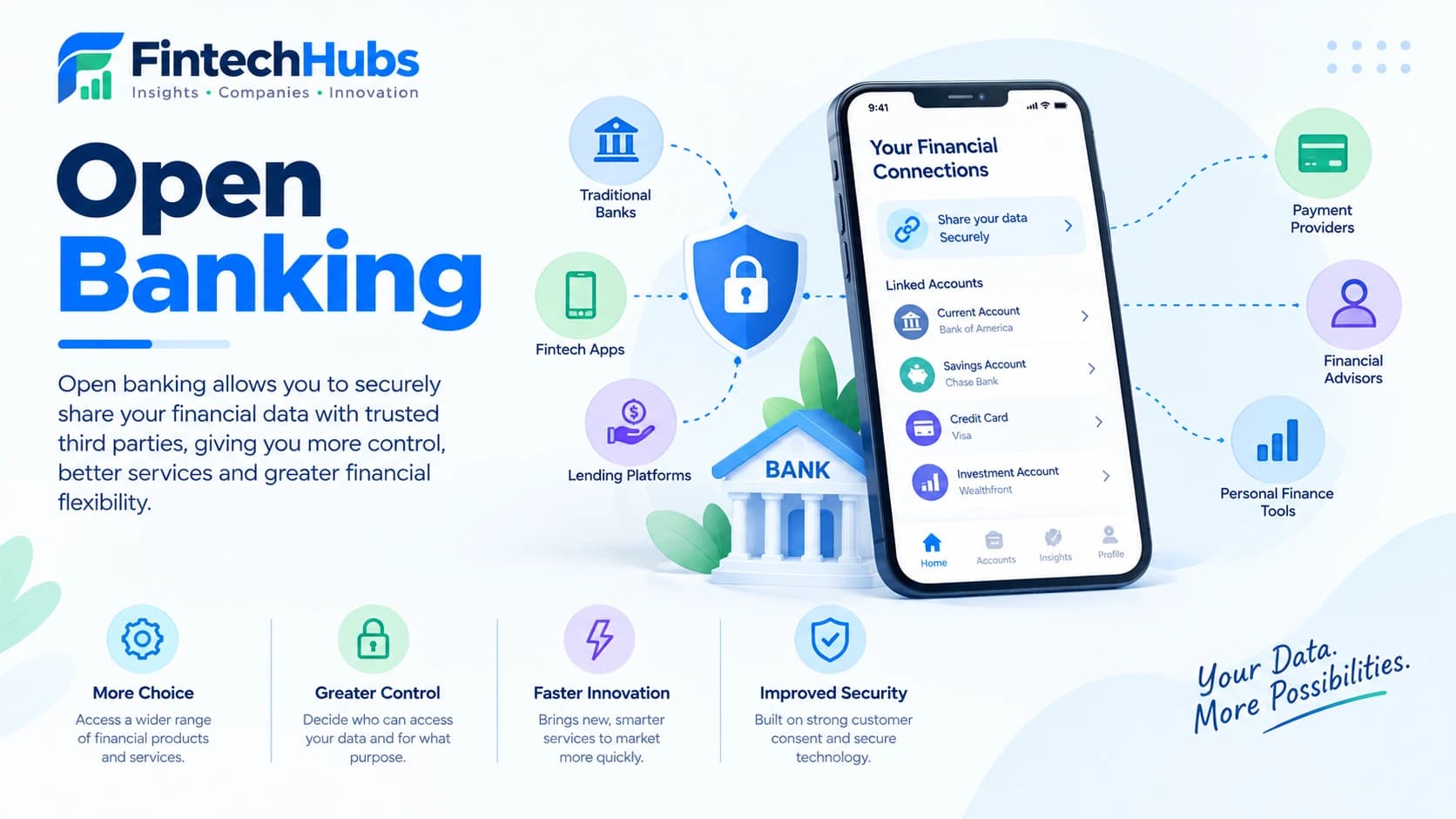
Open Banking: Complete Guide to Open Banking in 2026
Learn what open banking is, how it works, its benefits, security, APIs, and how fintech companies are transforming financial services in 2026.