
Hyperautomation in Financial Services: Use Cases & Guide
Explore hyperautomation in financial services: key use cases, benefits, risks, and a step-by-step implementation roadmap for banks, fintechs, and insurers.
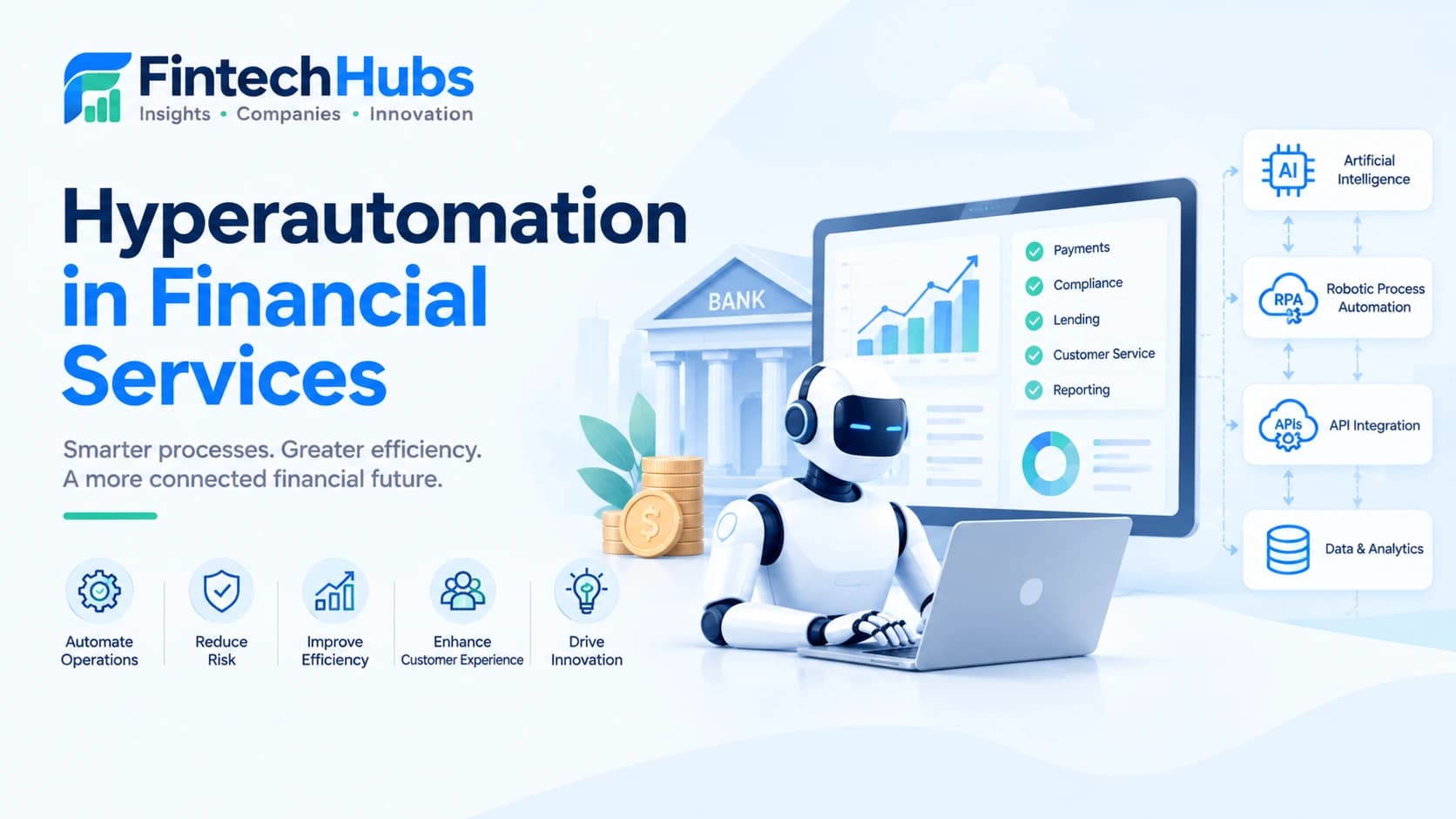
Hyperautomation in Financial Services: Use Cases, Benefits, and Implementation
Financial institutions run on processes: opening accounts, verifying identities, approving loans, settling payments, reconciling ledgers, filing regulatory reports, and handling claims. Many of these processes still involve manual data entry, document review, email chains, and handoffs between disconnected systems. The result is higher costs, slower service, and more room for error.
Hyperautomation is an approach that combines multiple technologies, such as robotic process automation, artificial intelligence, process mining, and workflow orchestration, to automate as many business and IT processes as possible, not just individual tasks. In financial services, where accuracy, speed, and compliance all matter, hyperautomation has become a major focus of modernization programs.
This guide explains what hyperautomation is, how it works, where it is used, what benefits and risks it carries, and how organizations can implement it responsibly.
This article is for general informational and educational purposes only. It does not constitute financial, legal, technology, or compliance advice. Vendor-neutral by design; no product is endorsed.
What Is Hyperautomation
Hyperautomation is a disciplined, business-driven approach for identifying, vetting, and automating as many processes as possible, using a coordinated set of tools rather than a single one. The term was popularized by industry analysts to describe automation that goes beyond rule-based scripts to include intelligence, decision-making, and end-to-end process coverage.
Its defining features are:
Breadth: Many processes and functions, not isolated tasks
Combination of technologies: Automation, AI, analytics, and orchestration working together
Discovery: Using data to find which processes are worth automating
Continuous improvement: Monitoring and refining automated processes over time
Hyperautomation vs. Traditional Automation
Dimension | Traditional Automation | Hyperautomation |
|---|---|---|
Scope | Single task or system | End-to-end processes across systems |
Technology | Scripts or basic RPA | RPA plus AI, process mining, orchestration, analytics |
Data handling | Structured data and fixed rules | Structured and unstructured data (documents, emails, images) |
Decision-making | Predefined rules only | Rules combined with machine learning judgments |
Process selection | Chosen by intuition | Informed by process mining and analytics |
Adaptability | Breaks when processes change | Monitored and adjusted continuously |
Human role | Replaced in narrow steps | Focused on exceptions, oversight, and judgment |
Core Technologies Behind Hyperautomation
4.1 Robotic Process Automation (RPA)
Software bots that mimic human actions on screens and in applications, such as copying data between systems or filling forms.
4.2 Artificial Intelligence and Machine Learning
Models that classify, predict, and make recommendations, for example, scoring risk or routing cases.
4.3 Intelligent Document Processing (IDP)
Combines optical character recognition and natural language processing to extract data from invoices, statements, contracts, and identity documents.
4.4 Process Mining and Task Mining
Analyze system logs and user activity to map how processes actually run, revealing bottlenecks and automation candidates.
4.5 Business Process Management and Workflow Orchestration
Coordinate tasks, bots, systems, and people across a process from start to finish.
4.6 Low-Code and No-Code Platforms
Allow business users and developers to build workflows and applications faster.
4.7 APIs and Integration Platforms
Connect core banking, payment, CRM, and compliance systems so data flows without manual re-entry.
4.8 Generative AI and Large Language Models
Summarize documents, draft communications, answer internal queries, and assist agents, with human review.
4.9 Decision Engines and Analytics
Apply business rules and models consistently to approvals, pricing, and risk decisions.
How Hyperautomation Works in Financial Services
Discover: Use process mining, interviews, and data to map current processes and find pain points.
Prioritize: Rank candidates by volume, cost, error rate, compliance risk, and feasibility.
Design: Redesign the process before automating it; remove unnecessary steps instead of automating waste.
Build: Combine bots, AI models, document processing, and integrations into an orchestrated workflow.
Test: Validate accuracy, security, and compliance in a controlled environment.
Deploy: Roll out in stages, with humans handling exceptions.
Monitor: Track performance, errors, and business outcomes.
Optimize: Use findings to improve models, rules, and process design.
Key Use Cases in Financial Services
6.1 Customer Onboarding and KYC
Automate document capture, identity verification, sanctions screening, and risk scoring so new customers can be approved faster while meeting due diligence requirements.
6.2 Loan Origination and Underwriting
Extract data from applications and financial statements, verify income and credit information, apply decision rules, and route complex cases to underwriters.
6.3 Anti-Money Laundering and Financial Crime Operations
Reduce manual effort in alert review by enriching alerts with data, prioritizing them, and drafting case narratives for investigator review.
6.4 Claims Processing (Insurance)
Intake claims, extract details from documents and images, check policy coverage, flag potential fraud, and route for approval.
6.5 Payment Operations and Exception Handling
Match, validate, and repair payment instructions, and automate investigation of failed or returned payments.
6.6 Reconciliation and Financial Close
Automate matching of transactions across ledgers, bank statements, and subledgers, and flag only the exceptions for review.
6.7 Regulatory Reporting and Compliance
Collect data from multiple systems, run validations, and assemble reports, with audit trails showing how figures were produced.
6.8 Accounts Payable and Receivable
Capture invoices, match them to purchase orders, route approvals, and automate collections reminders.
6.9 Customer Service and Contact Centers
Support agents with automated data retrieval, suggested responses, and summaries, and handle routine requests through virtual assistants.
6.10 Trade Operations and Settlement
Automate trade confirmation, matching, and break resolution in capital markets operations.
6.11 IT and Security Operations
Automate user access provisioning, incident triage, and routine monitoring tasks.
6.12 Human Resources and Back-Office Functions
Streamline employee onboarding, expense processing, and internal requests.
Hyperautomation by Industry Segment
Segment | Typical Priorities |
|---|---|
Retail and commercial banking | Onboarding, lending, service requests, payments operations |
Fintech and neobanks | Scalable KYC, fraud handling, customer support, compliance operations |
Insurance | Claims, underwriting, policy administration, fraud detection |
Asset and wealth management | Client onboarding, reporting, trade operations, reconciliation |
Capital markets | Settlement, confirmations, regulatory reporting, risk data |
Payments and processors | Dispute handling, reconciliation, merchant onboarding |
Lending and mortgage | Document processing, verification, servicing |
Benefits of Hyperautomation
Efficiency: Shorter processing times and lower cost per transaction
Accuracy: Fewer manual keying errors and more consistent decisions
Scalability: Handle volume spikes without proportional headcount increases
Better customer experience: Faster onboarding, approvals, and responses
Stronger compliance: Standardized steps, complete audit trails, and consistent controls
Employee value: Staff move from repetitive tasks to analysis and customer-facing work
Visibility: Process data reveals bottlenecks and risks that were hidden
Agility: Faster adaptation to regulatory or market change when processes are digitized
Actual results vary widely by organization, process, and implementation quality.
Challenges and Risks
Automating broken processes: Automating a poor process simply makes it fail faster.
Legacy systems and data silos: Older core systems may lack APIs, making integration difficult.
Data quality: AI and automation depend on accurate, well-governed data.
Fragile bots: Screen-based bots can break when applications change.
Model risk and bias: AI-driven decisions need validation, monitoring, and fairness testing.
Generative AI errors: Language models can produce incorrect output and need human review in high-stakes uses.
Security and access risk: Bots and service accounts need strict credential management and monitoring.
Change resistance and skills gaps: Success depends on people, training, and clear communication.
Automation sprawl: Uncoordinated bots built by many teams become hard to govern and maintain.
Overstated ROI: Business cases can ignore maintenance, governance, and exception-handling costs.
Governance, Risk, and Regulatory Considerations
Financial institutions are subject to supervisory expectations that apply directly to automated processes:
Operational resilience: Automated processes must be reliable, with fallback procedures when bots or systems fail.
Third-party and vendor risk: Due diligence and ongoing oversight of automation and AI providers.
Model risk management: Documentation, independent validation, and monitoring of AI models used in decisions.
Explainability and fairness: Especially for credit, pricing, and other customer-impacting decisions.
Data protection and privacy: Lawful handling of personal and financial data across automated flows.
Audit and recordkeeping: Logs of what was done, by which bot or person, and why.
Access and segregation of duties: Bots should follow the same control principles as human users.
Change management: Controlled testing and approval before modifying automated processes.
Emerging AI rules: Requirements for certain AI uses are evolving across jurisdictions.
Requirements vary by country and sector; consult current regulatory guidance and qualified professionals.
Implementation Roadmap
Phase 1: Strategy and Governance
Define objectives, set up a cross-functional steering group (business, IT, risk, compliance), and establish standards for security, controls, and documentation.
Phase 2: Discovery and Prioritization
Map processes, use process mining where possible, and score candidates by value, feasibility, and risk.
Phase 3: Pilot
Select one or two high-value, well-understood processes. Redesign them, automate, and measure results against a baseline.
Phase 4: Scale
Build reusable components, a central automation inventory, and a center of excellence to share standards and skills.
Phase 5: Optimize and Expand
Add AI capabilities, extend to more functions, and continuously monitor and refine.
Best Practices
Start with business outcomes, not technology.
Fix the process first, then automate.
Involve risk and compliance from day one, not after build.
Use human-in-the-loop designs for exceptions and high-impact decisions.
Prefer APIs over screen scraping where possible for stability.
Maintain a central inventory of bots, models, owners, and dependencies.
Apply least-privilege access and monitor bot activity.
Invest in change management and staff training.
Document everything, including logic, data sources, and controls.
Plan for maintenance, including monitoring, updates, and retirement of automations.
Measuring Success: Key Metrics
Cycle time (for example, time to onboard or approve)
Cost per transaction or case
Straight-through processing rate
Error and rework rate
Exception rate and exception handling time
Compliance metrics (audit findings, SLA breaches, reporting timeliness)
Customer satisfaction and employee satisfaction
Automation uptime and failure rate
Return on investment, including build, run, and governance costs
Measure a baseline before automating so improvements can be demonstrated credibly.
Build, Buy, or Partner
Approach | Advantages | Considerations |
|---|---|---|
Build in-house | Tailored to needs, full control | Requires skills, time, and ongoing maintenance |
Buy platform | Faster start, vendor support and updates | Licensing cost, integration effort, vendor dependence |
Partner with a service provider | Access to expertise and delivery capacity | Governance of third parties, knowledge transfer |
Hybrid | Balance of speed and control | Needs clear ownership and architecture standards |
Most institutions use a combination, selecting by process criticality, sensitivity of data, and internal capability.
Future Trends
Agentic AI: systems that plan and execute multi-step tasks with human approval and strong guardrails
Generative AI copilots embedded in operations, compliance, and service workflows
Wider use of process intelligence to continuously find and prioritize improvements
Composable, API-first architectures reducing reliance on screen-based bots
Greater emphasis on explainability and AI governance as supervision matures
Convergence of automation, analytics, and low-code into unified platforms
Democratized automation, with governed citizen development by business teams
Security-focused automation for fraud, cyber response, and compliance monitoring
Frequently Asked Questions
1. What is hyperautomation in financial services?
It is the coordinated use of technologies such as RPA, AI, process mining, and workflow orchestration to automate as many financial processes as possible, from onboarding to reporting.
2. How is hyperautomation different from RPA?
RPA automates specific, rule-based tasks. Hyperautomation combines RPA with AI, analytics, and orchestration to cover entire processes, including those involving documents and judgment.
3. Which processes are best to automate first?
High-volume, rule-heavy, repetitive processes with clear data and measurable outcomes, such as onboarding checks, reconciliation, and invoice processing.
4. Will hyperautomation replace bank employees?
It reduces repetitive work, but people remain essential for exceptions, judgment, relationship management, and oversight. Roles often shift toward analysis and customer-facing work.
5. Is hyperautomation safe for regulated environments?
It can be, when designed with strong governance, access controls, audit trails, testing, and human oversight, and when it follows applicable regulations.
6. What are the main risks?
Automating flawed processes, poor data quality, fragile integrations, model bias, security gaps, and weak governance.
7. How long does implementation take?
Pilots can run in weeks to a few months, while enterprise-wide programs take years. Timelines depend on process complexity, legacy systems, and organizational readiness.
8. How do we measure return on investment?
Compare against a baseline for cycle time, cost per transaction, error rates, and capacity, and include build, maintenance, and governance costs.
9. Can smaller financial firms and fintechs use hyperautomation?
Yes. Cloud-based and low-code platforms have reduced cost and complexity, making targeted automation practical for smaller organizations.
10. What role does generative AI play?
It can summarize documents, draft communications, and assist staff, but outputs should be reviewed by humans, especially for customer-facing or regulated decisions.
Conclusion
Hyperautomation gives financial institutions a structured way to modernize operations by combining automation, AI, and process intelligence across entire workflows. The strongest programs begin with clear business goals, redesign processes before automating them, build governance and compliance into the foundation, and keep people involved where judgment matters. Done well, hyperautomation improves speed, accuracy, and customer experience while strengthening control. Done poorly, it scales problems faster. Careful prioritization, disciplined governance, and continuous measurement are what separate the two.
Disclaimer: This article is provided for general informational and educational purposes only. It does not constitute financial, legal, technology, or compliance advice. Readers should consult qualified professionals and applicable regulations before implementing automation in regulated environments.
Share this article
Related Articles
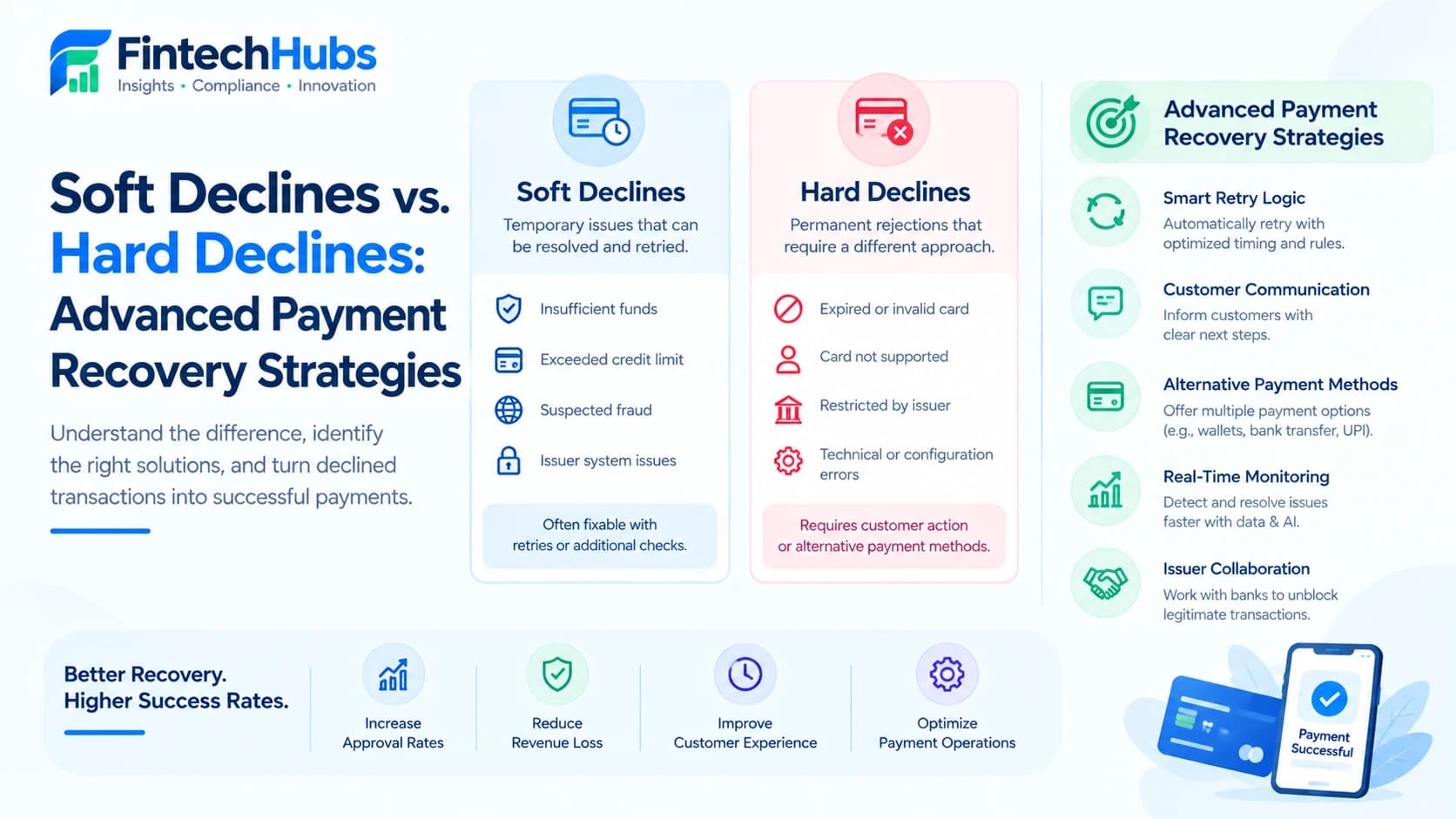
Soft vs Hard Declines: Advanced Payment Recovery Guide
Soft vs hard declines explained: Visa and Mastercard retry rules, smart retries, network tokens, 3-D Secure, dunning, recovery metrics, and 10 FAQs.
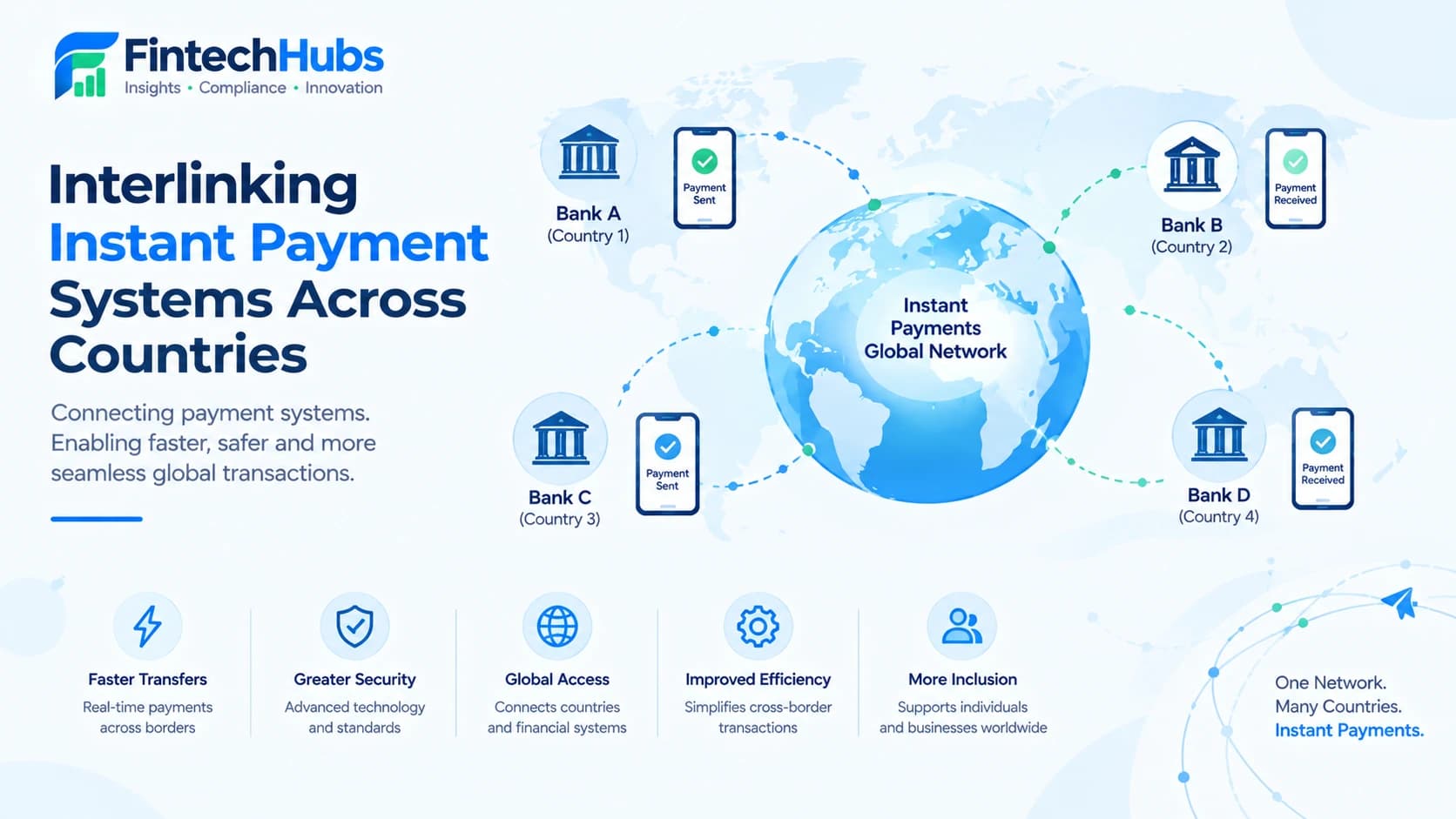
Interlinking Instant Payment Systems Across Countries
How countries link instant payment systems: bilateral links, Nexus, UPI-PayNow, risks, compliance, operations, a rollout roadmap, and 10 FAQs.
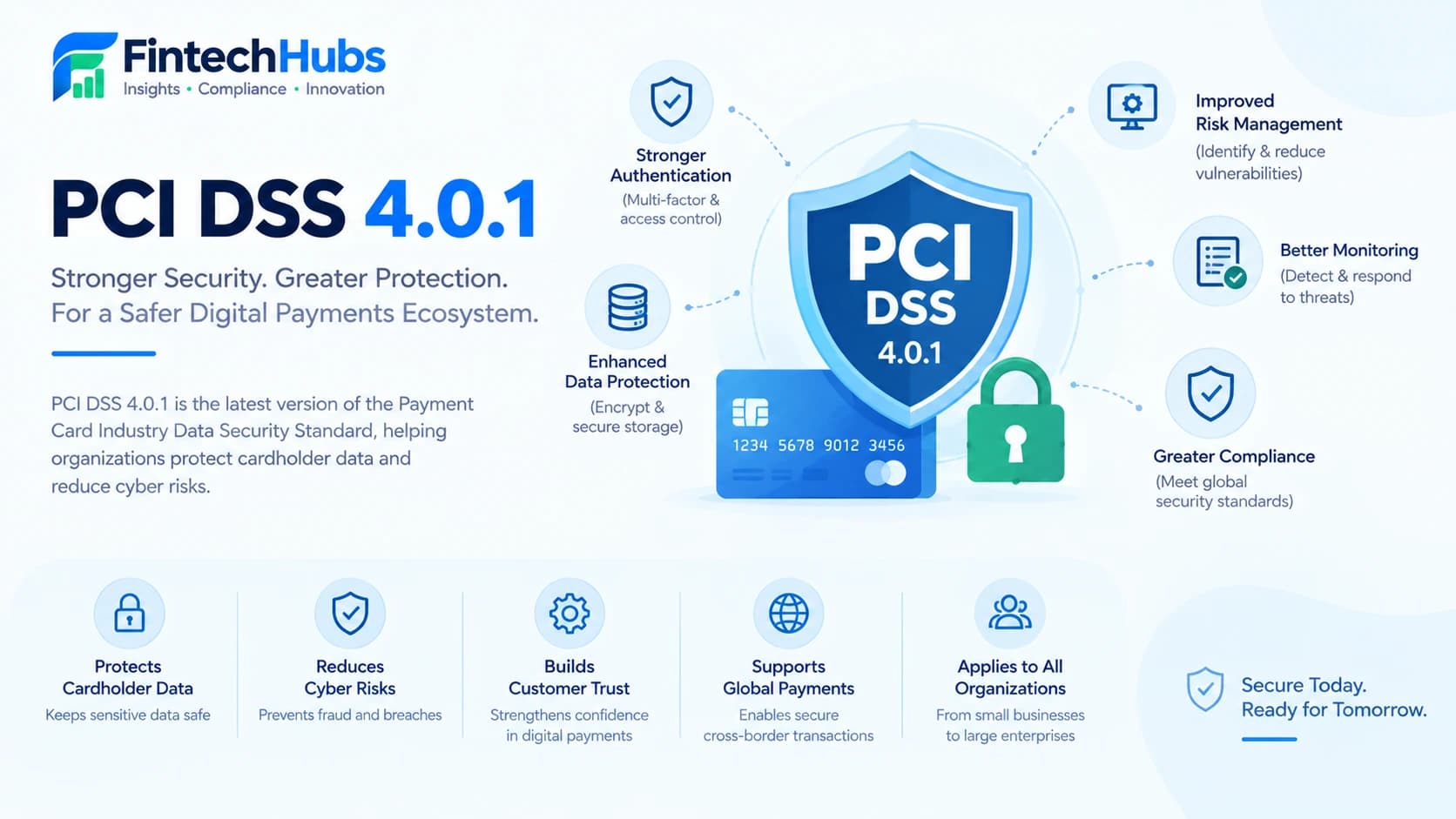
PCI DSS 4.0.1: Technical Requirements for Modern Payments
PCI DSS 4.0.1 explained: 12 requirements, MFA, payment page scripts, cloud and API compliance, scope reduction, a rollout roadmap, and 10 FAQs.