
Liveness Detection: A Complete Guide
Understand liveness detection how it stops spoofing and deepfakes, active vs passive methods, key technologies, industries, best practices, and 10 FAQs.
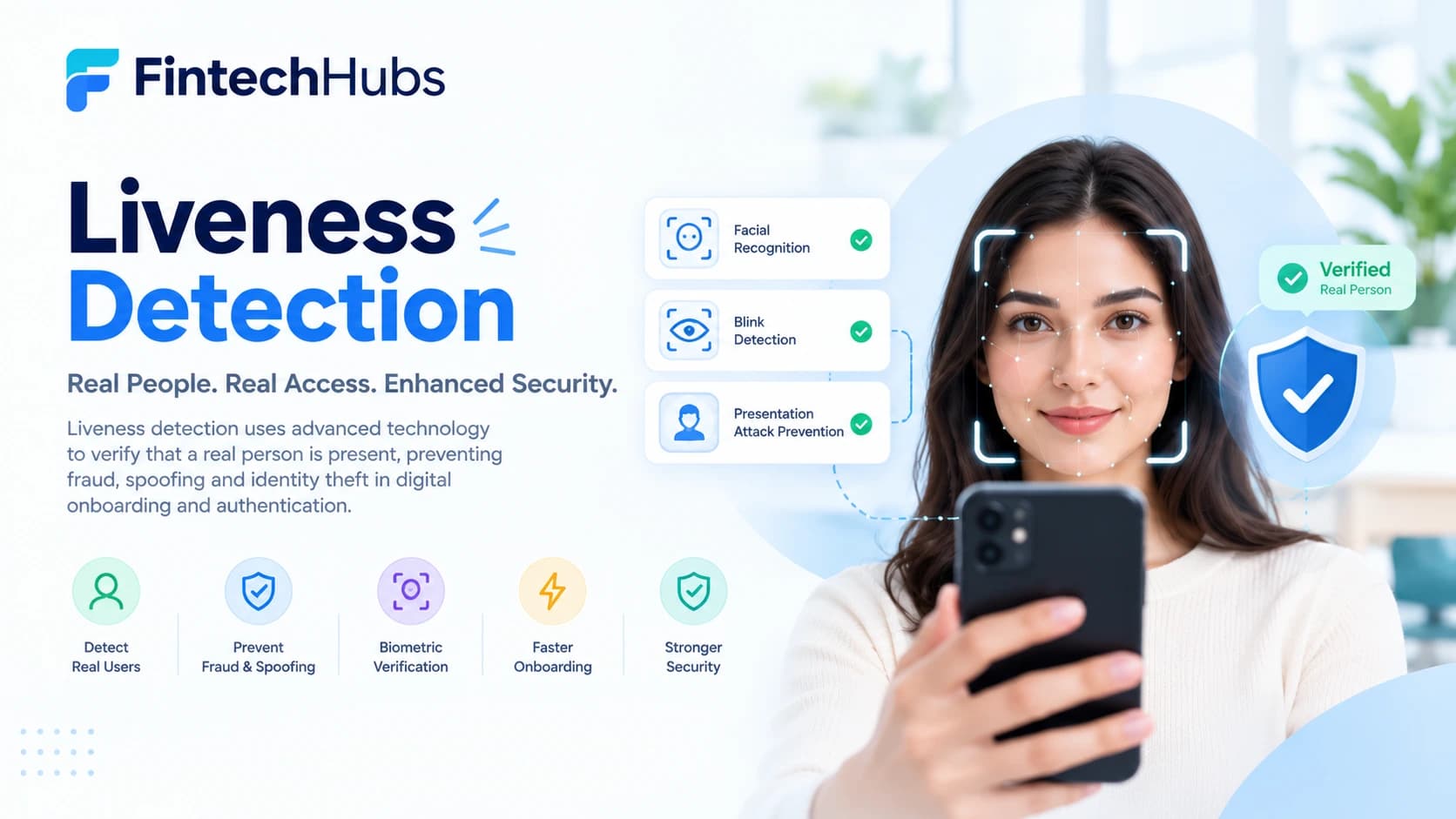
Liveness Detection: A Complete Guide
A photo of someone's face can be printed, displayed on a screen, or increasingly generated by artificial intelligence with startling realism. If a biometric verification system simply matched facial features without checking whether a real, living person was actually present, it would be trivially easy to fool with a picture held up to a camera. Liveness detection is the technology that closes this gap, confirming that the face or other biometric sample being presented to a system comes from a real, live person physically present at the moment of capture, rather than a photo, video, mask, or synthetic reproduction.
As biometric verification has become central to everything from unlocking smartphones to opening bank accounts remotely, liveness detection has evolved from a niche technical safeguard into one of the most critical components of any trustworthy identity verification system. This guide provides a complete, professional overview of liveness detection: what it is, how it works, the types of attacks it defends against, its major methods and branches, why it matters, and where the technology is heading.
What Is Liveness Detection?
Liveness detection is a security technique used within biometric verification systems to determine whether the biometric sample being presented, most commonly a face, is coming from a live, physically present human being rather than an artificial or fraudulent representation such as a photograph, video recording, mask, or digitally generated image.
It functions as a critical companion to biometric matching. Matching answers the question, "Does this face resemble the reference identity?" Liveness detection answers a different, equally important question: "Is this actually a real, live person presenting their face right now, and not a spoof of some kind?" A biometric system without liveness detection can be matched accurately and still be completely insecure, because it has no way to distinguish a real person from a well-made fake.
Why Liveness Detection Is Necessary
Several factors make liveness detection an essential, rather than optional, component of modern biometric systems:
The growth of remote, unsupervised verification: As identity verification increasingly happens remotely, without a human present to visually confirm authenticity, automated systems must be able to perform that check themselves.
The accessibility of spoofing materials: High-resolution photos are often publicly available on social media, and video recordings can be captured relatively easily, giving potential attackers raw material to attempt spoofing.
The rise of deepfake technology: Increasingly realistic AI-generated images, video, and synthetic faces have significantly raised the sophistication required to detect fraudulent presentations.
High-value use cases: Biometric verification increasingly gates access to financial accounts, sensitive data, and high-value transactions, making it an attractive target for fraud.
Regulatory and industry expectations: Many industries handling identity verification, particularly financial services, are expected to implement robust safeguards against spoofing as part of broader identity assurance requirements.
How Liveness Detection Works
Step 1: Biometric Capture Initiation
The process typically begins as part of a broader identity verification or authentication flow, such as opening a banking app or completing a remote onboarding process, where the system requests a live face capture.
Step 2: Guided or Passive Capture
Depending on the method used, the system either guides the user through specific actions, such as turning their head or blinking, or passively captures a short video or series of frames without requiring explicit user action.
Step 3: Signal Analysis
The system analyzes multiple signals within the captured data, which may include subtle skin texture, natural micro-movements, depth information, reflections, and response timing, looking for characteristics consistent with a live human presence.
Step 4: Spoof Artifact Detection
The system specifically looks for signs associated with common spoofing methods, such as the flat, two-dimensional appearance of a printed photo, the unnatural reflections or moiré patterns of a screen replay, or the subtle inconsistencies often present in synthetic or deepfake imagery.
Step 5: Liveness Scoring
Based on this analysis, the system generates a liveness confidence score, indicating how likely it is that the biometric sample comes from a genuine, live source.
Step 6: Decision and Integration with Verification
The liveness result is combined with the outcome of biometric matching. A high liveness score alongside a successful match allows the process to proceed; a low liveness score can halt the process entirely or route it to additional review, regardless of how well the face otherwise matches the reference image.
Types of Spoofing Attacks Liveness Detection Defends Against
Print attacks: Using a printed photograph of the legitimate user's face held up to the camera.
Replay attacks: Displaying a photo or pre-recorded video of the legitimate user on a screen, such as a phone or tablet, in front of the camera.
Mask attacks. Using a realistic 2D or 3D mask crafted to resemble the legitimate user's face.
Deepfake and synthetic media attacks: Using AI-generated video or real-time synthetic face manipulation to impersonate the legitimate user, sometimes live during a video call or verification session.
Injection attacks: Bypassing the physical camera entirely by injecting a fabricated video feed directly into the software pipeline, which requires liveness detection to be paired with broader technical security measures beyond just visual analysis.
Active vs. Passive Liveness Detection
Active Liveness Detection
Requires the user to perform a specific action on request, such as blinking, smiling, turning their head, or reading a randomly generated number aloud. This approach can be effective against simpler spoofing attempts but adds friction to the user experience and can, in some cases, still be circumvented by sufficiently sophisticated video-based attacks.
Passive Liveness Detection
Analyzes a brief video or a series of image frames without requiring the user to perform any specific action, relying instead on subtle signals like natural texture, depth, and micro-movement that are difficult for static or simple spoofing methods to replicate. This approach generally offers a smoother user experience and, when well implemented, can be highly effective, though it typically requires more sophisticated underlying technology.
Many modern systems use a hybrid approach, combining passive analysis as the primary method with occasional active prompts for higher-risk scenarios.
Branches and Methods of Liveness Detection
A. Texture and Micro-Feature Analysis
Examining fine-grained details of skin texture, natural imperfections, and light reflection patterns that are difficult for printed photos or screens to accurately reproduce.
B. Motion and Micro-Movement Analysis
Detecting natural, involuntary micro-movements, such as subtle head motion, eye movement, or breathing-related changes, that are characteristic of a live person and difficult to fake convincingly in a static or looped image.
C. Depth and 3D Analysis
Using depth-sensing cameras or structured light to confirm that the presented face has genuine three-dimensional structure, which flat photos and most screen-based replays cannot replicate.
D. Reflection and Screen Detection
Identifying visual artifacts specific to photographs or digital screens, such as glare, moiré patterns, or unnatural light reflection, that indicate the camera is capturing a reproduction rather than a real face.
E. Challenge-Response Detection
An active liveness method prompting the user to perform a specific, sometimes randomized action, making it harder for pre-recorded video attacks to succeed since the required response cannot be predicted in advance.
F. Deepfake and Synthetic Media Detection
A rapidly advancing specialized branch specifically focused on identifying the subtle artifacts and inconsistencies often present in AI-generated or digitally manipulated video and images.
G. Multi-Modal Liveness Detection
Combining facial liveness detection with additional biometric or behavioral signals, such as voice liveness detection or device sensor data, to increase overall confidence and resistance to spoofing.
H. Injection Attack Detection
A technical security branch focused on ensuring that the video or image data being analyzed is genuinely coming from a live camera feed at the time of capture, rather than being artificially inserted into the system's data pipeline.
Key Technologies Behind Liveness Detection
Deep learning and neural networks: Trained to distinguish genuine biometric presentations from a wide range of spoofing attempts
Near-infrared and thermal imaging: Capturing information not visible in standard photos, which can help distinguish real skin from printed or digital reproductions
3D depth sensors and structured light: Providing genuine depth information that is very difficult to spoof with flat images
Remote photoplethysmography (rPPG): A technique analyzing subtle color changes in skin caused by blood flow, which can indicate a live pulse and is extremely difficult to replicate in a photo or video
Behavioral biometrics: Incorporating natural interaction patterns, such as how a device is held or moved during capture, as an additional liveness signal
Secure hardware and trusted execution environments: Protecting the capture and analysis pipeline from tampering or injection attacks
Why Liveness Detection Matters
Preventing Identity Fraud
Liveness detection is often the single most important defense against spoofing attempts that would otherwise allow criminals to impersonate legitimate users using photos, videos, or increasingly convincing deepfakes.
Enabling Trustworthy Remote Verification
Without reliable liveness detection, remote identity verification processes would be significantly less trustworthy, undermining the broader shift toward fully digital onboarding and authentication.
Protecting High-Value Transactions and Accounts
As biometric verification increasingly gates access to financial accounts and sensitive data, liveness detection provides a critical safeguard against unauthorized access through spoofed biometric data.
Supporting Regulatory and Industry Standards
Many identity verification and compliance frameworks now expect robust anti-spoofing measures as part of adequate biometric verification, making liveness detection an increasingly standard requirement rather than an optional add-on.
Keeping Pace with Evolving Threats
As deepfake and synthetic media technology becomes more accessible and convincing, strong liveness detection is increasingly essential to maintaining trust in any system relying on biometric verification.
Industries and Use Cases
Banking and financial services: Remote account opening, login authentication, and high-value transaction approval
Travel and border security: Passenger and traveler identity confirmation at various checkpoints
Telecommunications: Verifying subscriber identity during remote mobile account setup
Healthcare — confirming patient identity for telehealth consultations and remote prescription access
Government digital services: Securing access to online public services and benefits
Cryptocurrency exchanges: Verifying user identity during account creation, given the elevated fraud risk in the sector
Workplace security: Securing remote access to sensitive systems and facilities
Online gaming and gambling platforms: Supporting age and identity verification requirements
Accuracy and Performance Considerations
False acceptance rate: The rate at which a spoofing attempt is incorrectly accepted as genuine, a critical security metric that providers work continuously to minimize.
False rejection rate: The rate at which a genuine, live user is incorrectly flagged as a potential spoof, which affects user experience and requires careful balancing against security.
Environmental factors: Lighting conditions, camera quality, and user positioning can all affect liveness detection accuracy, requiring systems to be tested across a wide range of real-world conditions.
Continuous evaluation against new attack methods: Because spoofing techniques constantly evolve, particularly with advancing deepfake technology, liveness detection accuracy should be understood as an ongoing, continuously tested capability rather than a fixed, one-time certification.
Independent testing and benchmarking: Organizations selecting liveness detection technology should review independent accuracy and security testing results rather than relying solely on vendor claims, given how directly this technology affects security outcomes.
Challenges and Limitations
The evolving arms race with attackers: As liveness detection improves, spoofing techniques, particularly deepfake technology, continue to advance in parallel, requiring continuous investment and updates.
Balancing security and user experience: More rigorous active liveness checks can improve security but add friction, while smoother passive methods must work hard to maintain equally strong protection.
Environmental variability: Poor lighting, low-quality cameras, or unusual capture angles can all affect accuracy and increase false rejections for genuine users.
Injection attacks: Sophisticated attackers may attempt to bypass the physical capture process entirely, requiring liveness detection to be paired with broader technical safeguards around the software pipeline itself.
Accessibility considerations: Certain physical conditions or environmental constraints may make some liveness detection methods more difficult for certain users, requiring accessible fallback options.
Rapid technology evolution: Because deepfake and synthetic media generation capabilities are advancing quickly, liveness detection providers must continuously update their models to remain effective against newly emerging techniques.
Best Practices for Implementation
Choose liveness detection technology that has been independently tested against a wide range of spoofing methods, including recent deepfake techniques
Favor passive liveness detection where possible to reduce user friction, supplemented by active checks for higher-risk scenarios
Combine liveness detection with broader technical safeguards against injection attacks, not just visual analysis
Continuously monitor and update detection models as new spoofing techniques emerge
Test performance across diverse real-world conditions, including varied lighting, devices, and demographic groups
Provide clear, accessible fallback verification paths for users who encounter genuine difficulty with liveness checks
Maintain transparent logging and audit trails of liveness detection outcomes to support security review and compliance needs
Regularly reassess vendor performance, since this is a fast-moving technical field where capabilities can change significantly over time.
Privacy and Ethical Considerations
Because liveness detection involves analyzing biometric data, including in some cases sensitive details like natural facial movement and, in advanced methods, subtle physiological signals, privacy considerations are important:
Biometric data protection laws: Many jurisdictions impose specific legal requirements on the collection, use, and retention of biometric data, which liveness detection systems must comply with alongside broader face verification regulations.
Data minimization: Best practice generally favors retaining only what is necessary for security and audit purposes, rather than indefinitely storing full video captures.
Transparency with users: Clear disclosure about what data is captured during liveness checks and how it will be used and retained supports trust and, in many jurisdictions, legal compliance.
Physiological signal sensitivity: Techniques like remote photoplethysmography analyze subtle health-related signals such as blood flow patterns, which may warrant particular care regarding consent and data handling given their sensitive nature.
The Competitive and Vendor Landscape
The liveness detection market includes specialized biometric security vendors focused specifically on anti-spoofing technology, broader identity verification platforms that incorporate liveness detection as one component of a larger verification flow, device manufacturers building liveness capabilities directly into hardware-based face unlock features, and academic and research-driven providers focused specifically on deepfake and synthetic media detection.
Future Trends to Watch
Advancing deepfake detection: As AI-generated synthetic media becomes increasingly realistic, expect continued, rapid advancement in detection techniques specifically designed to identify subtle artifacts in even highly convincing deepfakes.
Wider adoption of passive liveness detection: As passive methods mature and demonstrate strong security performance, expect continued movement away from friction-heavy active challenges toward smoother, less intrusive verification experiences.
Greater use of multi-modal and physiological signals: Techniques analyzing subtle physiological indicators, combined with traditional visual analysis, are expected to play a growing role in strengthening liveness detection accuracy.
Standardized testing and certification: Expect continued growth of independent testing standards and certification programs, helping organizations more confidently compare the real-world security performance of different liveness detection providers.
Tighter integration with broader identity ecosystems: Liveness detection is increasingly becoming a standard, expected component of digital identity infrastructure more broadly, rather than a standalone feature evaluated in isolation.
Regulatory attention to biometric security standards: As biometric verification becomes more central to sensitive processes like financial account access, expect growing regulatory attention to minimum security standards for the underlying liveness detection technology.
Frequently Asked Questions
1. What is liveness detection?
Liveness detection is a security technique that confirms whether a biometric sample, most commonly a face, is coming from a real, live person physically present at the time of capture, rather than a photo, video, mask, or synthetic reproduction.
2. Why is liveness detection necessary if face matching already confirms identity?
Face matching only confirms whether a presented face resembles a reference image; it does not confirm that the presented face is genuinely live rather than a spoof. Without liveness detection, a system could be fooled by a photo or video of the legitimate user.
3. What is the difference between active and passive liveness detection?
Active liveness detection requires the user to perform a specific action, such as blinking or turning their head, while passive liveness detection analyzes natural signals like texture and micro-movement without requiring explicit user action, generally offering a smoother experience.
4. Can liveness detection be fooled by deepfakes?
Basic or outdated liveness detection systems may struggle against sophisticated deepfakes, which is why leading providers continuously invest in advanced deepfake-specific detection techniques and regularly update their models to keep pace with evolving synthetic media technology.
5. Is liveness detection the same as facial recognition?
No. Facial recognition and face verification focus on matching facial features to determine identity, while liveness detection specifically determines whether the presented face is genuine and live. The two technologies typically work together within a complete verification system.
6. Does liveness detection collect and store my biometric data?
This depends on the specific provider and implementation. Reputable systems typically follow data minimization principles, retaining only what is necessary for security purposes, and are subject to applicable biometric privacy laws governing collection, use, and retention.
7. What industries commonly use liveness detection?
Liveness detection is widely used in banking and financial services, travel and border security, telecommunications, healthcare, government digital services, cryptocurrency platforms, and other sectors requiring reliable remote identity verification.
8. How accurate is modern liveness detection technology?
Leading modern systems, under good capture conditions, can achieve high accuracy rates against most common spoofing attempts, though performance varies by provider, method, and environmental factors. Independent testing results provide the most reliable way to assess a specific system's real-world performance.
9. What happens if a genuine user fails a liveness check?
Well-designed systems typically provide clear guidance to help the user retry, such as improving lighting or camera positioning, and offer accessible fallback verification options, such as manual review, for users who continue to experience genuine difficulty.
10. Will liveness detection become more important as AI-generated content improves? Yes. As deepfake and synthetic media generation technology continues to advance and become more accessible, robust liveness detection is expected to become an increasingly critical and continuously evolving safeguard for any system relying on biometric identity verification.
Conclusion
Liveness detection has become an essential, foundational safeguard within modern biometric verification systems, closing a critical gap that facial matching alone cannot address. Its branches, spanning texture and motion analysis, depth sensing, challenge-response methods, and increasingly sophisticated deepfake detection, all serve the same core purpose: confirming that a real, live person, and not a photo, video, or synthetic reproduction, is genuinely present during identity verification. As spoofing techniques continue to evolve alongside rapidly advancing AI-generated media, liveness detection will remain one of the most actively developing and critically important components of trustworthy digital identity infrastructure, requiring ongoing investment, testing, and vigilance from every organization that relies on it.
This content is for informational and educational purposes only and does not constitute legal, security, or compliance advice. Biometric data regulations vary significantly by jurisdiction and change over time. Organizations should consult qualified legal and technical professionals regarding their specific implementation and compliance obligations.
Share this article
Related Articles
Biometric Authentication: Secure, Password Free Identity
A complete look at biometric verification for secure identity authentication: how it works, key technologies, and why it's replacing passwords.
Face Verification: How It Works, Benefits & Uses
Discover how face verification works liveness detection, key technologies, industries, accuracy, privacy considerations, best practices, and 10 FAQs.

ESG & Sustainability Reporting: Why It Matters for Business
Learn why ESG and sustainability reporting matters for businesses: key frameworks, benefits, challenges, best practices, future trends, and 10 essential FAQs.