Payment Tokenization: How It Protects Consumers & Merchants
Discover how payment tokenization works, its key benefits for consumers and merchants, and how it reduces fraud, data breaches, and PCI DSS scope.
Payment Tokenization: How Tokenized Transactions Protect Consumers and Merchants From Payment Fraud
Every time a card number is typed into a checkout page, saved to an app, or tapped at a terminal, that sixteen-digit string becomes something worth stealing. For years, the payments industry's answer to this risk was to encrypt and carefully guard the actual card number wherever it traveled or rested. Payment tokenization takes a different, more fundamental approach: instead of protecting the real card number everywhere it goes, it replaces that number with a substitute value, a token, that has no usable meaning outside the specific context it was created for.
This shift has become one of the most consequential security developments in modern payments. Tokenization is why a stolen phone with a digital wallet doesn't expose the owner's actual card number, why a data breach at an online retailer increasingly yields nothing of value to attackers, and why recurring billing can work reliably without a business needing to store sensitive card data at all. This guide provides a complete, professional look at payment tokenization: what it is, how it works, its major types and branches, how it protects both consumers and merchants, and where the technology is heading.
What Is Payment Tokenization?
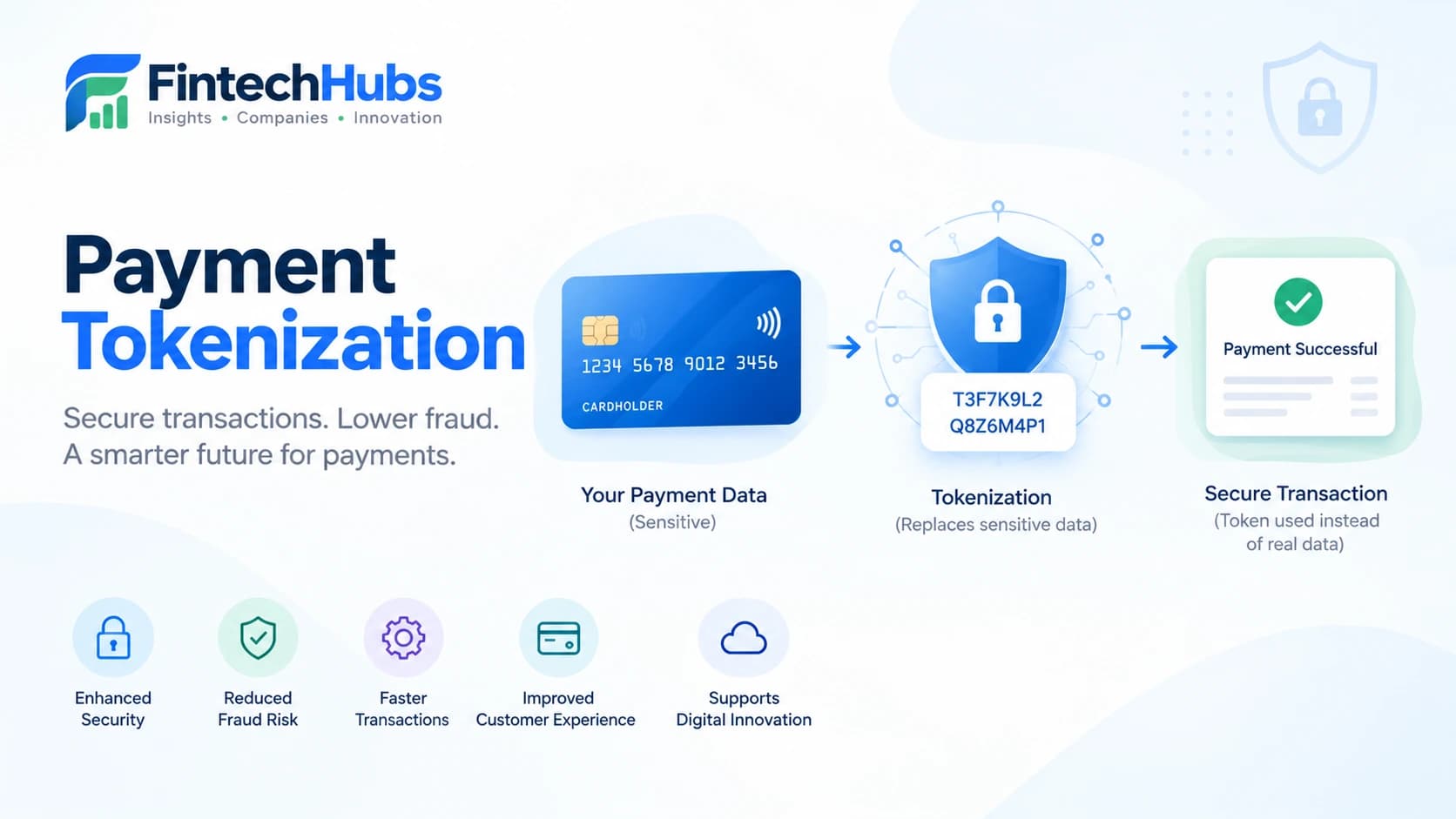
Payment tokenization is the process of replacing sensitive payment data, most commonly a primary account number such as a credit or debit card number, with a unique, randomly generated substitute value called a token. The token has no exploitable mathematical relationship to the original card number and, on its own, cannot be used to make a purchase outside the specific system, device, or merchant relationship it was issued for.
The original card number is stored securely in a highly protected system, often called a token vault, operated by a card network, token service provider, or payment processor. When a transaction needs to be processed, the token is mapped back to the real card number only within that secure environment, never being exposed to the merchant, the merchant's systems, or most of the parties handling the transaction along the way.
How Payment Tokenization Works
Step 1: Card Data Capture
A customer provides their card details, either by entering them manually, having them scanned, or adding them to a digital wallet or merchant account.
Step 2: Token Request
Instead of storing or transmitting the actual card number further than necessary, the system requesting tokenization sends the card data to a token service provider, which may be a card network, a payment processor, or a specialized tokenization vendor.
Step 3: Token Generation
The token service provider generates a unique token to represent that specific card, often tied to a specific device, merchant, or use case, and securely stores the mapping between the token and the real card number in a protected token vault.
Step 4: Token Issuance
The token is returned to the merchant, wallet provider, or application, which stores and uses this token in place of the actual card number for all future references to that payment method.
Step 5: Transaction Processing Using the Token
When a purchase is made, the token, rather than the real card number, is transmitted through the merchant's systems and payment processing chain.
Step 6: De-Tokenization for Authorization
At the appropriate point in the transaction flow, typically within the secure environment of the card network or token service provider, the token is matched back to the real card number so the transaction can be authorized and processed through normal payment network channels.
Step 7: Settlement
The transaction settles normally through existing card networks and banking infrastructure, with the token having served its purpose of protecting the actual card number throughout the parts of the journey where it was most exposed to risk.
Types of Payment Tokens
Device-Bound Tokens
Tokens tied specifically to a single device, such as those used in mobile digital wallets, meaning the token only functions when transactions originate from that specific, registered device.
Merchant-Specific Tokens
Tokens generated for use with a particular merchant, commonly used for recurring billing or stored card-on-file scenarios, where the token is valid only within that merchant's systems and cannot be used elsewhere even if somehow exposed.
Network Tokens
Tokens issued directly by a card network, which can offer broader interoperability across multiple merchants and wallet providers while maintaining strong security, and which have become an increasingly standard approach across the industry.
Single-Use Tokens
Tokens generated for one specific transaction only, becoming invalid immediately afterward, offering especially strong protection for one-time purchases where no future transactions are expected.
High-Value and Format-Preserving Tokens
Tokens designed to retain the same format or length as the original data, useful for systems that need to process data in a consistent structure without necessarily needing the underlying sensitive value.
Core Components of Tokenization Infrastructure
A token vault, the highly secured system where the mapping between tokens and actual card numbers is stored
A token service provider: The entity, often a card network or processor, responsible for generating, issuing, and managing tokens
Token generation algorithms: Producing tokens that are unique, unpredictable, and have no derivable mathematical relationship to the original data
Detokenization controls: The restricted, tightly controlled process by which a token can be matched back to its original value, limited to authorized systems and specific points in the transaction flow
Token lifecycle management systems: Handling token issuance, updates when a card is reissued, and token deactivation when no longer needed
Integration APIs: Allowing merchants, wallet providers, and payment platforms to request and use tokens within their own systems
Tokenization vs. Encryption
These two security techniques are often mentioned together but work in fundamentally different ways:
Encryption: Transforms data into an unreadable format using a mathematical algorithm and a key; the original data can be recovered by anyone who has the correct decryption key. Encrypted data, while protected, still mathematically contains the original information in a reversible form.
Tokenization: Replaces the original data entirely with a substitute value that has no mathematical relationship to it. The original data is not hidden within the token through a reversible formula; instead, it is stored separately in a secure vault, and the token itself is meaningless without access to that vault's mapping.
In practice, these two approaches are often used together within a complete payment security strategy: encryption protects data in transit and at rest where the actual sensitive values still need to exist, while tokenization eliminates the need for sensitive values to exist at all in most parts of the system.
Branches and Applications of Payment Tokenization
A. Digital Wallet Tokenization
Used by mobile and digital wallets to replace a stored card number with a device-specific token, ensuring the actual card number is never transmitted during a tap-to-pay or in-app transaction.
B. Card-on-File Tokenization
Used by merchants and subscription services to securely store a customer's payment method for future purchases without retaining the actual card number in their own systems.
C. E-Commerce Checkout Tokenization
Applied during online checkout to protect card data as it is entered and transmitted, often converting the card number to a token immediately upon entry before it reaches the merchant's broader systems.
D. Recurring Billing and Subscription Tokenization
Supporting subscription businesses that need to charge a customer's card repeatedly over time without storing or re-collecting the actual card number for each billing cycle.
E. In-App and Point-of-Sale Tokenization
Protecting card data during in-person contactless payments and in-app purchases, commonly using device-bound tokens generated through digital wallet infrastructure.
F. Network Tokenization for Card Issuers
A card network-driven approach where tokens are generated and managed at the network level, offering benefits such as automatic token updates when a physical card is reissued, reducing failed recurring payments due to expired or replaced cards.
G. Account Updater and Token Lifecycle Services
Supporting the automatic updating of tokens when the underlying card is renewed, reissued, or canceled, reducing payment failures and manual customer intervention for recurring billing relationships.
H. Cross-Border and Multi-Rail Tokenization
Extending tokenization concepts to support consistent security across different payment rails and international markets, including emerging applications beyond traditional card payments.
How Tokenization Protects Consumers
Reduced Exposure in Data Breaches
If a merchant's systems are breached, attackers typically find only tokens, which have no usable value outside their specific context, rather than real card numbers that could be used for fraud elsewhere.
Limiting the Impact of Lost or Stolen Devices
Because digital wallet tokens are often tied to a specific device, a lost or stolen phone does not expose the user's actual card number, and the associated tokens can typically be remotely deactivated without needing to cancel the physical card.
Protection Against Card Skimming and Data Interception
Because the actual card number is not transmitted during a tokenized transaction, even if transaction data were somehow intercepted, it would not reveal reusable card information.
Reduced Need to Share Sensitive Data Repeatedly
Tokenization allows consumers to make repeat purchases or set up recurring payments without needing to re-enter or expose their actual card number to multiple different merchants and systems over time.
Fewer Disruptions From Card Reissuance
With network tokenization and account updater services, a customer's stored payment methods can often update automatically when their card is renewed or replaced, reducing the disruption and manual re-entry that used to accompany a new card number.
How Tokenization Protects Merchants
Reduced Scope of Sensitive Data Handling
By using tokens instead of storing actual card numbers, merchants significantly reduce the amount of sensitive payment data within their own systems, correspondingly reducing their exposure and liability in the event of a breach.
Lower Compliance Burden
Because tokenized systems generally do not store actual card numbers, merchants can often reduce the scope and cost of complying with payment card industry security standards compared to businesses that store and manage raw card data directly.
Reduced Fraud and Chargeback Losses
Tokenization, combined with related technologies like dynamic cryptograms, helps reduce certain categories of payment fraud, which can in turn reduce the financial and administrative burden of fraud-related chargebacks.
Improved Customer Trust and Conversion
Offering secure, tokenized payment options, including digital wallets, can improve customer confidence at checkout, potentially supporting higher conversion rates compared to requiring manual entry of sensitive card details for every transaction.
More Reliable Recurring Revenue
For subscription and recurring billing businesses, network tokenization and account updater services can reduce failed payments caused by expired or reissued cards, supporting more stable, predictable recurring revenue.
Reduced Liability in Third-Party Integrations
When working with multiple payment processors, marketing platforms, or other third-party services, tokenization allows merchants to share payment references without exposing the underlying sensitive card data to every integrated system.
Key Technologies Behind Payment Tokenization
Secure token vaults: Highly protected databases storing the mapping between tokens and original card data, typically secured with strong encryption and strict access controls
Card network tokenization services: Offered directly by major card networks to generate and manage network tokens used across multiple merchants and wallet providers
Hardware security modules (HSMs): Specialized secure hardware used to protect cryptographic keys and sensitive operations involved in token generation and management
APIs and SDKs: Allowing merchants, wallet providers, and payment platforms to request tokens and integrate tokenization into their checkout and payment flows
Dynamic cryptograms: Often used alongside tokens to generate a unique, transaction-specific code, adding an additional layer of protection beyond the token itself
Token lifecycle management systems: Automating the process of updating or deactivating tokens as the underlying card changes status
Why Payment Tokenization Matters
Fundamentally Reducing the Value of Stolen Data
Tokenization changes the economics of payment data theft. A database full of tokens, unlike a database full of real card numbers, offers little to no value to an attacker, significantly reducing the incentive for certain types of data breaches targeting payment information.
Enabling Secure Digital Commerce at Scale
As digital wallets, recurring billing, and stored card-on-file purchases have become standard parts of everyday commerce, tokenization has been essential infrastructure making this convenience possible without a corresponding explosion in fraud risk.
Supporting Regulatory and Industry Compliance
Tokenization helps businesses meet payment card industry security requirements more efficiently by reducing the scope of systems that handle actual sensitive card data.
Reducing the Overall Cost of Fraud
By making stolen payment data significantly less useful to criminals, tokenization contributes to reducing the overall volume and cost of certain types of payment fraud across the broader payments ecosystem.
Building Consumer Trust in Digital Payments
As consumers have become more aware of data breaches and payment fraud, the security benefits of tokenization, even when not fully understood in technical detail by the average user, contribute to broader trust in digital wallets and online payment systems.
Industries and Use Cases
E-commerce and online retail: Protecting stored card-on-file data and securing checkout transactions
Mobile and digital wallets: Enabling secure tap-to-pay and in-app purchases through device-bound tokens
Subscription and SaaS businesses: Supporting reliable recurring billing without storing raw card data
Travel and hospitality: Securing stored payment methods for bookings, loyalty programs, and repeat guests
Financial services and banking: Protecting card data across banking apps and associated payment services
Healthcare: Securing payment information for patient billing and recurring medical payment plans
Point-of-sale and retail hardware: Protecting card data during in-person contactless and chip transactions
Tokenization and Regulatory Compliance
Tokenization intersects with several important compliance considerations for businesses handling payment data:
Payment Card Industry Data Security Standard (PCI DSS) compliance: Tokenization can significantly reduce the scope of systems subject to the full requirements of this widely adopted security standard, since systems that only handle tokens, rather than actual card numbers, generally face reduced compliance obligations.
Data breach notification requirements: Because tokenized data is generally not considered sensitive payment information on its own, a breach involving only tokens may not trigger the same notification obligations as a breach involving actual card numbers, depending on the specific jurisdiction and circumstances.
Data minimization principles: Broader data protection regulations increasingly emphasize minimizing the collection and retention of sensitive personal data, a principle tokenization directly supports by reducing the amount of actual card data a business needs to retain.
Industry-specific requirements: Certain industries and jurisdictions may have additional specific requirements around payment data handling that tokenization can help address, though businesses should confirm current requirements with qualified compliance professionals.
Challenges and Limitations
Implementation complexity: Integrating tokenization into existing payment systems, particularly for businesses with legacy infrastructure, can require significant technical investment and careful planning.
Vendor dependency: Businesses relying on a specific token service provider need to carefully evaluate that provider's security practices, reliability, and long-term viability, since tokens become a critical piece of ongoing payment infrastructure.
Interoperability considerations: Different tokenization approaches and providers are not always fully interoperable, which can create complexity for businesses working across multiple payment processors or wallet providers.
Not a complete security solution on its own: Tokenization addresses a specific category of risk, protecting the card number itself, but does not eliminate the need for broader security practices, including fraud detection, authentication, and general system security.
Token vault security remains critical: While tokens themselves are low-risk if exposed, the token vault that maps tokens back to real card numbers represents a highly sensitive, high-value target that must be protected with the strongest available security practices.
Cost considerations: Depending on the provider and implementation, tokenization services can involve ongoing costs that businesses need to weigh against the security and compliance benefits gained.
Best Practices for Businesses Implementing Tokenization
Choose reputable, well-established token service providers with strong security track records and appropriate industry certifications
Minimize the handling and storage of actual card data wherever possible, routing it to tokenization as early as feasible in the payment flow
Combine tokenization with complementary security measures, including strong authentication and fraud detection, rather than relying on it as a complete solution
Take advantage of network tokenization and account updater services where available to reduce failed recurring payments
Regularly review and update token lifecycle management practices, including processes for deactivating tokens that are no longer needed
Ensure contracts and service level agreements with token service providers clearly address security responsibilities and incident response expectations
Stay informed about evolving payment card industry security requirements and how tokenization affects the business's specific compliance scope
16. The Competitive and Vendor Landscape
The payment tokenization ecosystem includes major card networks offering their own network tokenization services, specialized tokenization and payment security vendors providing tokenization as a standalone service, payment processors and gateways that include tokenization as part of their broader payment processing offerings, digital wallet providers that rely heavily on device-bound tokenization as core infrastructure, and payment orchestration platforms that help businesses manage tokenized payment data consistently across multiple providers and payment rails.
Future Trends to Watch
Continued growth of network tokenization.: Expect continued adoption of card network-issued tokens, offering benefits like automatic updates when cards are reissued and broader interoperability across merchants and wallet providers.
Expansion beyond card payments: Tokenization concepts are increasingly being applied to other payment methods and even broader categories of sensitive data, extending the core security principle beyond its traditional card payment origins.
Deeper integration with biometric authentication: As digital wallets increasingly combine tokenization with biometric authentication, expect continued tightening of the relationship between these two complementary security layers.
Improved interoperability standards: Industry efforts toward greater standardization and interoperability between different tokenization approaches are expected to continue, reducing friction for businesses working across multiple payment providers.
AI-enhanced fraud detection working alongside tokenization: As tokenization reduces certain categories of fraud, expect continued investment in AI-driven fraud detection addressing the fraud patterns that persist or evolve in response, such as social engineering and authorized payment scams that tokenization alone cannot prevent.
Growing consumer awareness and expectation: As data breaches continue to receive public attention, expect growing consumer awareness of and preference for tokenized payment options, even without full technical understanding of how the underlying technology works.
Frequently Asked Questions
1. What is payment tokenization?
Payment tokenization is the process of replacing a sensitive card number with a unique, randomly generated substitute value called a token, which has no usable value outside its specific intended context, while the actual card number is securely stored separately in a protected token vault.
2. How is tokenization different from encryption?
Encryption transforms data into an unreadable format that can be mathematically reversed with the correct key, while tokenization replaces the data entirely with a substitute value that has no mathematical relationship to the original, which is instead stored separately in a secure vault.
3. Does tokenization mean my card number is never stored anywhere?
The actual card number is still stored, but in a highly secured token vault managed by a token service provider, rather than being stored or transmitted across the many merchant and processor systems that only need to reference the token.
4. Is tokenization only used for digital wallets like mobile payment apps?
No. While digital wallets are one of the most visible applications, tokenization is also widely used for e-commerce checkout, recurring billing and subscriptions, card-on-file storage, and in-person point-of-sale transactions.
5. What happens if a tokenized transaction is intercepted by a criminal?
Because the token itself has no usable value outside its specific context, such as the registered device or merchant relationship it was created for, intercepting a token generally does not give a criminal the ability to make fraudulent purchases elsewhere.
6. Does tokenization protect against all types of payment fraud?
No. Tokenization significantly reduces specific categories of fraud related to stolen card data, but it does not address all fraud types, such as scams that trick a legitimate cardholder into authorizing a fraudulent transaction themselves.
7. How does tokenization help businesses with compliance requirements?
Tokenization can reduce the scope of systems that handle actual sensitive card data, which can correspondingly reduce the compliance burden associated with payment card industry security standards, since systems only handling tokens generally face less extensive requirements.
8. What is network tokenization, and how is it different from merchant-specific tokenization?
Network tokenization is issued directly by a card network and can offer broader interoperability across multiple merchants and wallets, along with benefits like automatic updates when a card is reissued, while merchant-specific tokens are typically valid only within a single merchant's systems.
9. If my card is lost or stolen, do I need to update all the tokens associated with it?
With network tokenization and account updater services, tokens associated with a reissued card can often update automatically without requiring the cardholder to manually re-enter their new card details with every merchant, though this depends on the specific token service provider and merchant relationships involved.
10. Can tokenization be used for payment methods other than credit and debit cards?
Yes, increasingly. While tokenization originated primarily with card payments, the underlying concept of replacing sensitive data with a secure substitute is increasingly being applied to other payment methods and types of sensitive data handling.
Conclusion
Payment tokenization has become one of the quiet but foundational technologies that makes modern digital commerce possible at the scale and convenience consumers now expect. By replacing sensitive card numbers with context-specific substitute values, it fundamentally changes the risk calculation for both the consumers who store payment methods across dozens of apps and merchants, and the businesses that need to process and sometimes retain payment information without becoming a high-value target for data theft. Its branches, spanning digital wallet tokenization, card-on-file storage, recurring billing, and network-level tokenization, all serve the same underlying purpose: ensuring that the data worth stealing is, as often as possible, simply not present in the places criminals are most likely to look. As network tokenization continues to expand, as interoperability improves, and as tokenization increasingly works alongside biometric authentication and AI-driven fraud detection, it is positioned to remain one of the most important, if largely invisible, pillars of trust in digital payments.
This content is for informational and educational purposes only and does not constitute financial, legal, or security advice. Payment tokenization technology, standards, and regulatory requirements vary by provider and jurisdiction and change over time. Readers and businesses should consult qualified professionals regarding their specific implementation and compliance needs.
Share this article
Related Articles
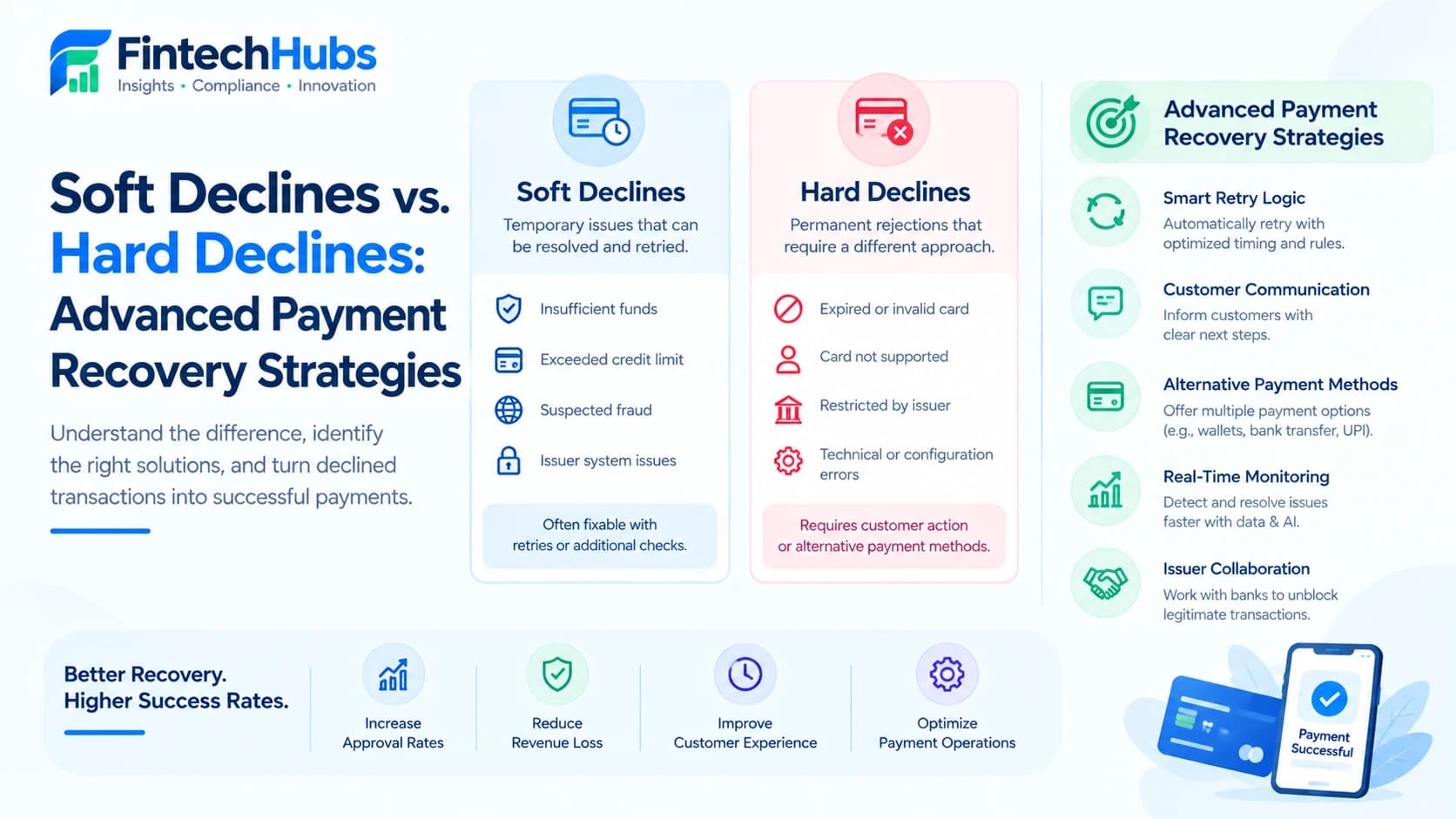
Soft vs Hard Declines: Advanced Payment Recovery Guide
Soft vs hard declines explained: Visa and Mastercard retry rules, smart retries, network tokens, 3-D Secure, dunning, recovery metrics, and 10 FAQs.
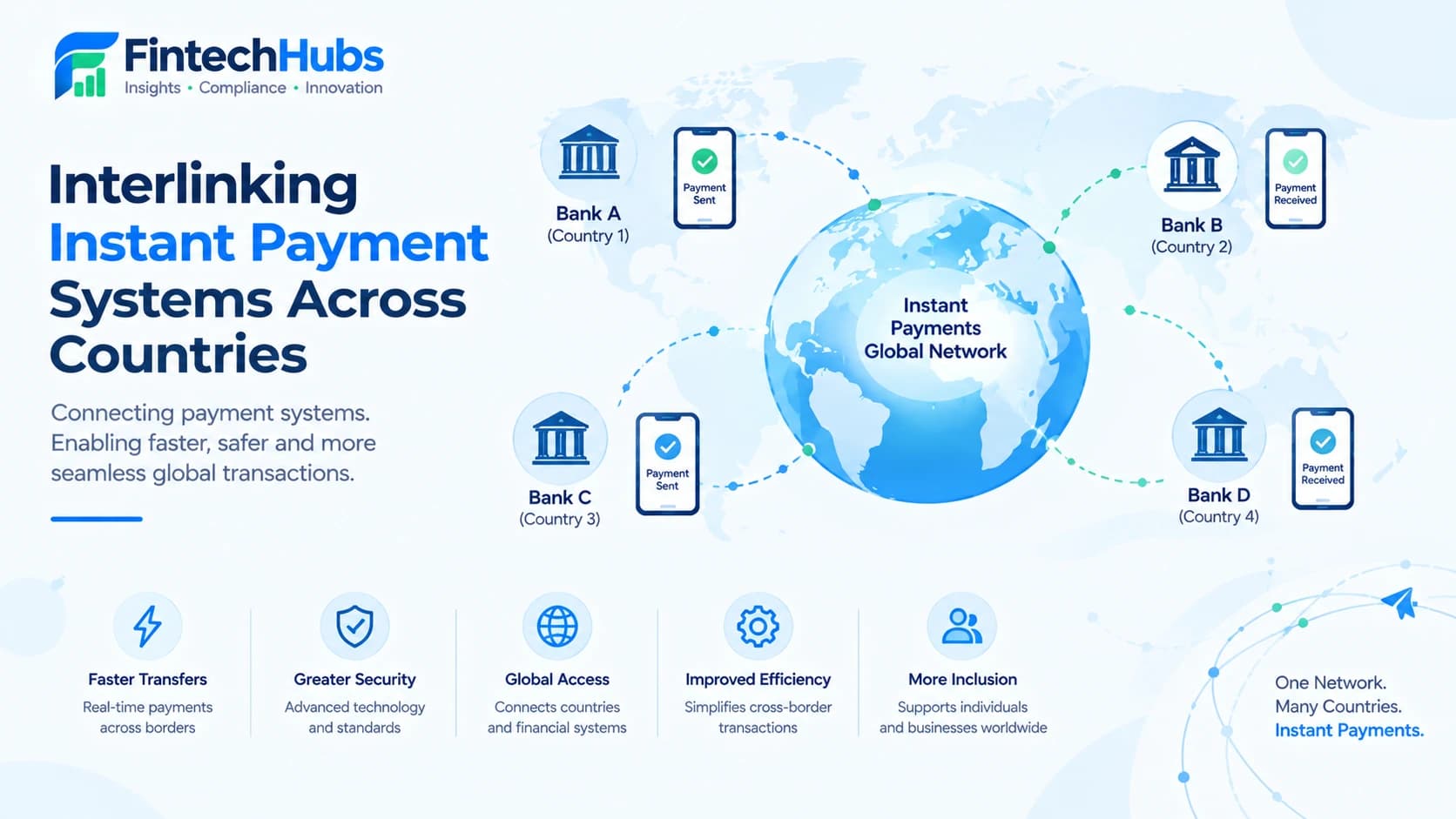
Interlinking Instant Payment Systems Across Countries
How countries link instant payment systems: bilateral links, Nexus, UPI-PayNow, risks, compliance, operations, a rollout roadmap, and 10 FAQs.
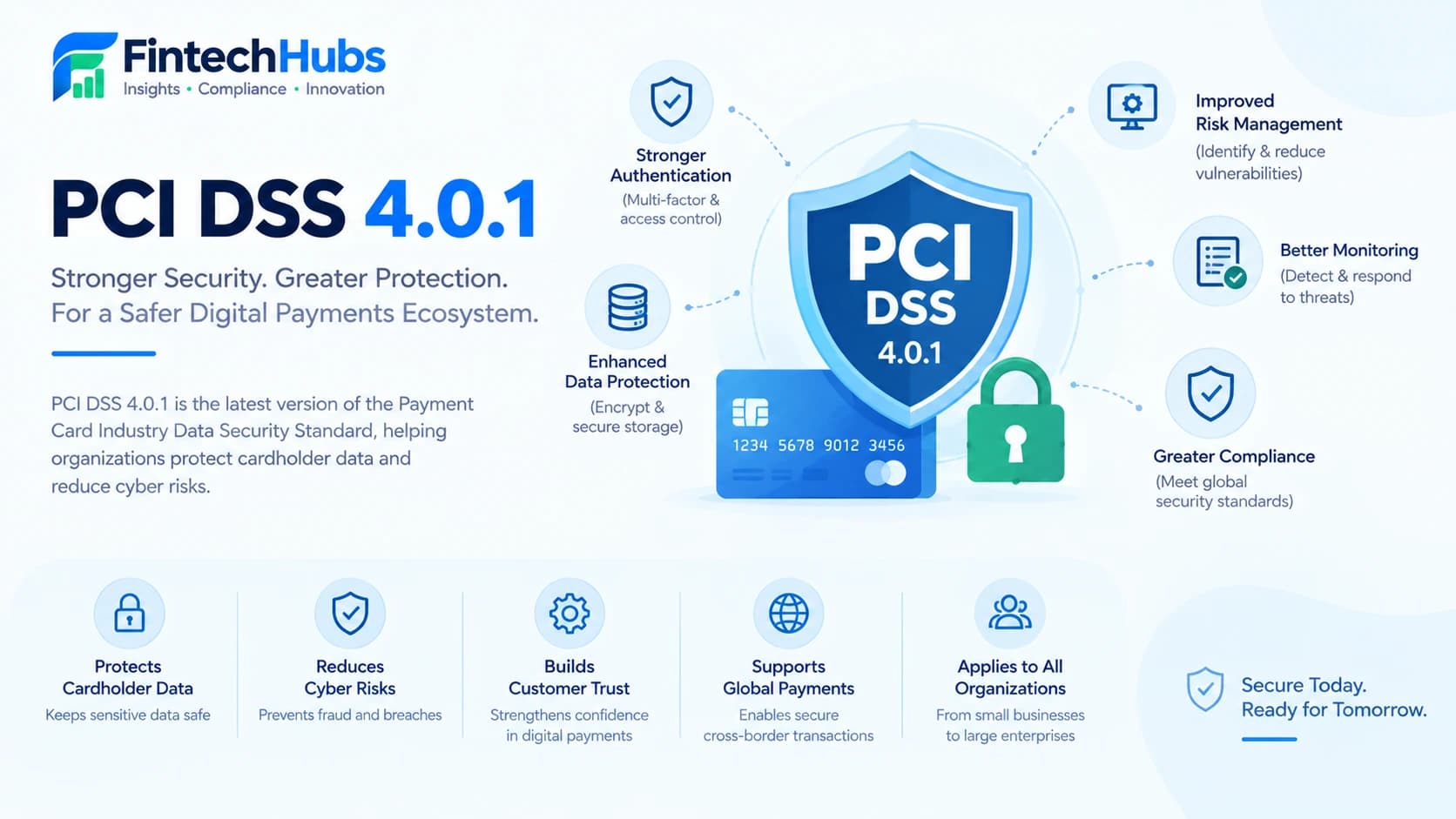
PCI DSS 4.0.1: Technical Requirements for Modern Payments
PCI DSS 4.0.1 explained: 12 requirements, MFA, payment page scripts, cloud and API compliance, scope reduction, a rollout roadmap, and 10 FAQs.