Top 20 RegTech Companies in the USA in 2026
Explore the top 20 RegTech companies in the USA in 2026, featuring leading firms in compliance, risk management, fraud prevention, and regulatory technology.
Top 20 RegTech Companies in the USA in 2026
Regulatory technology, or RegTech, has moved from a back-office cost center to a strategic category. Banks, fintechs, crypto firms, and software companies now face a steady flow of new rules on anti-money laundering (AML), identity verification, sanctions, data privacy, AI governance, and security attestation. Manual compliance cannot keep up with that volume, so software is taking over much of the work.
This article profiles 20 US-based RegTech companies that matter in 2026. It also covers what RegTech is, the regulatory forces behind demand, key trends, risks, and how buyers should evaluate vendors.
Key takeaways
Identity, fraud, and AML are converging into single platforms. Socure, Sardine, and Unit21 are examples.
Compliance-automation leaders Vanta and Drata have grown quickly, and consolidation is reshaping privacy tech.
Crypto compliance is now a distinct, well-funded segment. TRM Labs doubled its reported valuation in September 2026.
Agentic AI, meaning software agents that review alerts and run investigations, is the dominant product theme.
US AML rules are being reformed toward effectiveness rather than paperwork, and stablecoin issuers are being brought into the AML net.
What Is RegTech?
RegTech is technology that helps regulated organizations meet legal and supervisory obligations more efficiently. It covers five broad areas:
Identity verification and KYC/KYB: Confirming who customers and businesses are.
Fraud and AML monitoring: Screening transactions, sanctions and watchlists, and managing cases and filings.
Compliance automation and GRC: Continuous control monitoring, audit evidence, policy and third-party risk management.
Privacy and data governance: Consent, data mapping, subject requests and AI governance.
Regulatory reporting and surveillance: Financial and regulatory reporting, and archiving and monitoring of communications.
Why RegTech Demand Is Rising in 2026
AML reform: On April 10, 2026, FinCEN published a proposed rule to overhaul AML/CFT program requirements. It focuses supervision on program effectiveness instead of technical compliance and codifies a risk-based approach. As proposed, institutions would have 12 months after a final rule to comply.
Stablecoin regulation: FinCEN and OFAC jointly proposed AML and sanctions program requirements for stablecoin issuers under the GENIUS Act in April 2026. The law requires final regulations by July 18, 2026, and full enforcement by January 18, 2027. Check the current status of the final rules before relying on these dates. Proposed penalties for non-compliance are up to $100,000 per day.
AI-driven fraud: One industry estimate cited in coverage of Socure's September funding says AI-powered fraud attacks rose 8,000% in a year. That is a single source, so treat it with caution, but the direction is widely reported. Alert volumes are growing faster than compliance teams can hire.
Privacy and AI governance: The patchwork of US state privacy laws keeps growing, and the EU AI Act's phased obligations begin in 2026–2027. Both add documentation and risk-management duties for US companies.
Methodology
This is an editorial ranking, not an official index. Companies were assessed on:
Market position: Customer base, ARR or revenue where reported, and category leadership.
Funding and momentum: Recent rounds, valuations, and acquisitions.
Product depth and differentiation.
Regulatory relevance: How directly the product maps to current US and global rules.
Strategic influence: Whether competitors and regulators respond to its moves.
Only companies headquartered in the US, or with their primary operations there, were considered. Notable non-US names such as ComplyAdvantage, Sumsub, Fenergo, and Quantexa are excluded. Where I lack reliable current numbers, I describe the company qualitatively.
At-a-Glance Overview
# | Company | HQ | Core segment | Status |
|---|---|---|---|---|
1 | Socure | U.S.-based | Identity, fraud, and KYC/AML | Private |
2 | Persona | San Francisco | Identity verification | Private |
3 | Vanta | San Francisco | Compliance automation | Private |
4 | Chainalysis | New York | Blockchain analytics and crypto compliance | Private |
5 | TRM Labs | San Francisco | Blockchain intelligence | Private |
6 | OneTrust | Atlanta | Privacy, GRC and AI governance | Private (sale talks reported) |
7 | Drata | San Diego | Compliance automation | Private |
8 | Sardine | San Francisco | Fraud, AML and payments risk | Private |
9 | Unit21 | San Francisco | No-code fraud and AML operations | Private |
10 | Alloy | New York | Identity decisioning orchestration | Private |
11 | NICE Actimize | Hoboken, NJ | Enterprise AML and fraud | Division of NICE |
12 | Moody's Analytics | New York | KYC and entity risk data | Division of Moody's |
13 | Feedzai | San Mateo, CA | AI fraud and AML | Private |
14 | Jumio | Palo Alto, CA | Identity verification | Private |
15 | Middesk | San Francisco | Business verification (KYB) | Private |
16 | ThetaRay | New York | Cross-border payment AML | Private |
17 | Workiva | Ames, IA | Regulatory and financial reporting | Public |
18 | Smarsh | Portland, OR | Communications compliance | Private |
19 | UpGuard | Mountain View, CA | Cyber and third-party risk | Private |
20 | Hummingbird | San Francisco | AML case management | Private |
The Top 20 RegTech Companies in the USA
1. Socure
What it does: Identity verification, fraud prevention, KYC/AML and risk decisioning delivered through APIs.
Socure is the revenue and valuation leader among private identity and fraud vendors. In September 2026, it raised $156 million at a $5.2 billion valuation, led by Summit Partners, and agreed to acquire the agentic AI platform Fravity. Reported ARR was about $364 million at the end of Q2 2026, up 63% year over year. It also holds a five-year, $163 million contract with Login.gov.
Strengths: Scale, data assets, expansion across fraud and compliance modules, and signs of profitability.
Watch-outs: Pressure from bundled platforms and the integration load of recent acquisitions.
2. Persona
What it does: A configurable identity verification platform for fintech, AI, marketplaces, and other sectors.
Persona raised a $200 million Series D at a $2 billion valuation in April 2025. It reported more than 3,000 customers, including OpenAI, and over 300 million verifications in 2024. It is building a "verified identity layer" for an AI-agent era. In February 2026, researchers reported exposed code on a government-facing system of Persona's, and Discord ended a UK age-verification trial with the company within a month.
Strengths: Flexible product, strong funding, momentum beyond financial services.
Watch-outs: Privacy and security scrutiny, which matters more for identity vendors than for most software.
3. Vanta
What it does: Continuous compliance automation for SOC 2, ISO 27001 and other frameworks, plus trust centers and risk management.
Vanta raised a $150 million Series D at a $4.15 billion valuation in July 2025, led by Wellington Management. Secondary reports say it passed $300 million in ARR in April 2026 and serves more than 16,000 customers. Those figures are not independently verified.
Strengths: Category leadership, brand with startups and growth companies, integration library.
Watch-outs: Opaque pricing and add-on costs, and rising competition from Drata.
4. Chainalysis
What it does: Blockchain analytics, transaction monitoring, and investigations for exchanges, banks, and governments.
Chainalysis, founded in 2014 and based in New York, is the best-known name in crypto compliance. It was valued at $8.6 billion in 2022, though one September 2026 report puts a more recent valuation near $1.55 billion. Treat that figure as reported rather than confirmed. It is also challenging a roughly $95 million ICE contract awarded to TRM Labs.
Strengths: Deep law-enforcement adoption, broad chain coverage.
Watch-outs: A reported valuation reset and growing competition from TRM Labs.
5. TRM Labs
What it does: Blockchain intelligence for crypto crime detection, compliance, and national-security investigations.
TRM announced a $70 million Series C at a $1 billion valuation on February 4, 2026, led by Blockchain Capital. In September 2026, it said its valuation had doubled to $2 billion after an add-on from existing investors. It won an ICE contract worth about $95 million and plans an AI investigations platform launch in November.
Strengths: Rapid growth, government traction, stablecoin tracing.
Watch-outs: Contract challenges and the need to prove AI claims at scale.
6. OneTrust
What it does: Privacy automation, consent management, third-party risk, GRC, and AI governance for large enterprises.
OneTrust's last official valuation was $4.5 billion in July 2023. Reports say it has explored a private equity sale at more than $10 billion. As of the sources I reviewed, it remained independent. Peers have been consolidating: TrustArc was sold to Main Capital and Securiti was sold to Veeam.
Strengths: Breadth, large-enterprise footprint, AI governance positioning.
Watch-outs: Pricing complaints from mid-market buyers and competition from focused tools.
7. Drata
What it does: Security and compliance automation covering SOC 2, ISO 27001, HIPAA, GDPR and many other frameworks.
Drata crossed $100 million in ARR in February 2025 and bought the trust-center platform SafeBase for $250 million that month. It was valued at $2 billion in its 2022 Series C. A 2026 comparison reports 8,500 or more customers.
Strengths: Wide framework library, strong satisfaction scores in independent reviews.
Watch-outs: A smaller revenue base than Vanta.
8. Sardine
What it does: A unified platform for fraud, identity verification, payments risk and AML, with device and behavioral signals.
Founded in 2021, Sardine raised a $70 million Series C led by Activant Capital in February 2025 and has raised about $145 million in total. It markets AI agents that automate alert review, investigations and filings.
Strengths: Real-time fraud signals, convergence of fraud and AML.
Watch-outs: A smaller scale than Socure and competition for bank contracts.
9. Unit21
What it does: A no-code platform for fraud and AML rules, case management and investigations.
Founded in 2018 and based in San Francisco, Unit21 is known for examiner-ready case documentation. It now positions itself as AI risk infrastructure with agents that help with alert review and investigations.
Strengths: Configurability, audit trails for AML programs.
Watch-outs: Differentiation as larger vendors add agentic features.
10. Alloy
What it does: An orchestration layer that combines multiple identity and fraud data sources into one decisioning workflow for onboarding and monitoring.
Alloy's value is aggregation: banks and fintechs use it to route applicants across vendors such as Socure and Persona instead of building integrations themselves.
Strengths: Vendor neutrality, deep integration with banks and fintechs.
Watch-outs: The risk that data vendors bundle orchestration themselves.
11. NICE Actimize
What it does: Enterprise AML, fraud and market-surveillance software for large financial institutions.
NICE Actimize, based in Hoboken, New Jersey and founded in 1999, is a long-standing incumbent for large banks. It is part of NICE, so it has no standalone valuation.
Strengths: deep bank relationships, regulatory credibility.
Watch-outs: pressure from cloud-native challengers.
12. Moody's Analytics
What it does: KYC data, entity risk intelligence and compliance tooling inside the Moody's group.
Based in New York, Moody's Analytics supplies company ownership and risk data that feeds many KYC and KYB workflows.
Strengths: data depth and brand trust.
Watch-outs: product breadth that can feel less agile than startups.
13. Feedzai
What it does: AI-driven fraud and financial-crime prevention for banks and payment providers.
Feedzai, founded in 2009 and listed in this analysis as US-based, serves large financial institutions with machine-learning fraud and AML tooling.
Strengths: established bank customers, mature models.
Watch-outs: competition from more specialized newcomers.
14. Jumio
What it does: Document, biometric and liveness-based identity verification, with AML screening.
Based in Palo Alto, Jumio is one of the established identity-verification players. Deepfake and synthetic-identity threats have made liveness detection a key battleground.
Strengths: experience and global document coverage.
Watch-outs: pricing pressure and fast-moving well-funded rivals.
15. Middesk
What it does: Know-your-business (KYB) verification, business identity data and underwriting inputs.
Founded in 2019 and based in San Francisco, Middesk treats business identity as core infrastructure for lenders and payment companies.
Strengths: focused KYB data and API-first design.
Watch-outs: dependence on public-record data quality.
16. ThetaRay
What it does: AI-based AML and transaction monitoring, focused on cross-border payments through its Sonar product.
Founded in 2013 and based in New York, ThetaRay targets correspondent banking and cross-border flows, where false positives are costly.
Strengths: specialization in cross-border payments.
Watch-outs: a narrow focus versus broader AML suites.
17. Workiva
What it does: Cloud reporting and compliance software for SEC filings, ESG disclosure and financial reporting.
Workiva is publicly listed and based in Ames, Iowa. It is a leading platform for connected reporting, helping finance teams produce regulatory disclosures with audit trails.
Strengths: public-company customer base, workflow depth.
Watch-outs: a mature market and competition from ERP vendors.
18. Smarsh
What it does: Archiving and supervision of electronic communications for regulated firms.
Smarsh, based in Portland, Oregon, helps broker-dealers and other firms meet recordkeeping and surveillance obligations across messaging channels.
Strengths: specialization and a large regulated customer base.
Watch-outs: the rapid growth of new messaging platforms.
19. UpGuard
What it does: Cyber risk, attack-surface and third-party risk management.
UpGuard, based in Mountain View, ranks first among regtech startups in Seedtable's 2026 ranking, which scores funding and traction. Third-party risk is a growing compliance requirement for banks and software vendors.
Strengths: a strong data-driven product and funding momentum.
Watch-outs: an overlap with broader security platforms.
20. Hummingbird
What it does: Case management and collaboration tools for AML investigators and compliance teams.
Based in San Francisco, Hummingbird is an emerging company with tooling that streamlines investigations and regulatory filings. It earns a place as a representative of the newer wave of focused tools.
Strengths: targeted workflow design.
Watch-outs: small scale and the need to prove traction against larger vendors.
Segment Breakdown
Segment | Leaders on this list |
|---|---|
Identity and KYC/KYB | Socure, Persona, Alloy, Jumio, Middesk, Moody's Analytics |
Fraud and AML | Sardine, Unit21, Feedzai, NICE Actimize, ThetaRay, Hummingbird |
Crypto compliance | Chainalysis, TRM Labs |
Compliance automation and GRC | Vanta, Drata, OneTrust, UpGuard |
Reporting and surveillance | Workiva, Smarsh |
Key Trends Shaping RegTech
Agentic AI. Nearly every vendor now sells agents that review alerts, run investigations and prepare filings. The differentiator is traceability: regulators expect humans to oversee and explain decisions.
Convergence of fraud, identity and AML. Buyers want fewer vendors and shared data, which is why Socure, Sardine and Unit21 pitch unified platforms.
Consolidation. Drata bought SafeBase, Socure is buying Fravity, and the privacy-tech market has seen several sales. Expect more.
Crypto and stablecoin compliance. New AML and sanctions obligations for stablecoin issuers should broaden demand beyond exchanges.
Identity for an AI era. Deepfakes and AI agents are forcing vendors to verify both humans and software actors.
Compliance as sales enablement. Trust centers and automated attestations are now part of how software companies win enterprise deals.
Challenges and Risks
Regulatory uncertainty. Proposed rules may change before finalization, and enforcement priorities can shift.
Data security. Identity vendors hold sensitive documents, so a breach or exposure, as the February 2026 Persona report showed, can quickly damage trust.
Model risk and explainability. AI decisions must be auditable. Black-box scoring can be a liability in examinations.
False positives. Over-alerting wastes analyst time, and under-alerting creates regulatory exposure.
Valuation volatility. Reported valuations vary widely. Chainalysis is an example.
Vendor lock-in and pricing. Usage-based pricing and add-on modules can inflate costs.
How to Choose a RegTech Vendor
Map the regulation first: Identify which rules apply: BSA/AML, sanctions, state privacy laws, SOC 2, or others.
Check coverage and data quality: Ask about data sources, geographic reach and update frequency.
Test accuracy: Measure false-positive and false-negative rates on your own data.
Demand explainability: Look for audit trails, model documentation and human-in-the-loop controls.
Evaluate integration: Confirm API quality and compatibility with your core systems.
Review security and privacy: Ask for certifications, breach history and data-retention terms.
Understand total cost: Include modules, per-check fees and implementation.
Assess vendor stability: Consider funding, ownership changes and customer references.
Outlook: What to Watch Through 2027
Final AML program rule: How the final FinCEN rule treats effectiveness and technology will shape vendor demand.
GENIUS Act enforcement: Stablecoin issuers must be fully compliant by early 2027 under the statutory timeline.
OneTrust's ownership: A completed private-equity deal would reset privacy-tech valuations.
IPO candidates: Large private vendors such as Socure and Vanta are logical candidates over time, though none had announced plans in the sources I reviewed.
Agent governance: Expect regulators to define how autonomous compliance agents must be supervised.
More M&A: Acquisitions of agentic-AI startups by platform vendors are likely to continue.
Who Should Care, and Why
Compliance and risk leaders: Vendor choice now affects regulatory outcomes as well as cost.
Fintech and crypto founders: Compliance infrastructure is a prerequisite for bank partnerships and licensing.
Investors: RegTech valuations have diverged widely, so look beyond headline funding.
Job seekers: Demand is strong for professionals who combine compliance, data and AI skills.
Frequently Asked Questions (FAQs)
1. What is RegTech?
RegTech, or regulatory technology, is software that helps regulated organizations meet legal and supervisory obligations, covering areas such as KYC, AML, privacy, reporting and compliance monitoring.
2. What is the difference between RegTech and fintech?
Fintech delivers financial products and services. RegTech helps organizations, including fintechs, comply with regulations. The two overlap heavily.
3. Which is the most valuable US RegTech company?
Among those with reported figures, Vanta (about $4.15 billion in July 2025) and Socure (about $5.2 billion in September 2026) are the largest private valuations in this list. OneTrust has been reported to be in sale talks at a much higher figure, but that was not confirmed in the sources I reviewed.
4. What are KYC and KYB?
Know Your Customer (KYC) verifies individuals' identities. Know Your Business (KYB) verifies companies and their owners. Both are core parts of AML compliance.
5. How is AI changing RegTech?
Vendors now use AI agents to review alerts, investigate cases and draft filings. Regulators still expect human oversight and clear explanations of decisions.
6. Why does stablecoin regulation matter for RegTech?
Proposed rules would require stablecoin issuers to maintain AML and sanctions compliance programs, creating new demand for monitoring, screening and blockchain-analytics tools.
7. What is blockchain analytics?
It is software that traces cryptocurrency transactions and scores wallet risk. Chainalysis and TRM Labs are the leading US providers.
8. Are compliance automation tools like Vanta and Drata enough for regulatory compliance?
They automate evidence collection and control monitoring for frameworks such as SOC 2 and ISO 27001. They support compliance but do not replace legal advice, audits or sector-specific programs such as BSA/AML.
9. How much does RegTech software cost?
It varies widely. Pricing may be per check, per user, per module or custom enterprise. One 2026 comparison put crypto-compliance tools in the tens to low hundreds of thousands of euros annually for a mid-sized firm. Always get quotes based on your volumes.
10. How do I pick the right RegTech vendor?
Start with the regulations you must meet, then test accuracy on your own data, check explainability and security, compare total cost and review vendor stability.
Conclusion
US RegTech in 2026 is defined by convergence, AI automation and consolidation. Identity, fraud and AML are merging into unified platforms. Compliance automation has produced multi-billion-dollar private companies. Crypto compliance has become its own category. Regulatory change, from AML reform to stablecoin rules, will keep demand strong, but buyers should weigh accuracy, explainability and data security as carefully as features and price.
Share this article
Related Articles
OSINT Framework: Open Source Intelligence Guide
Explore the OSINT Framework to discover open source intelligence tools, data sources, investigation methods, and resources for effective online research.
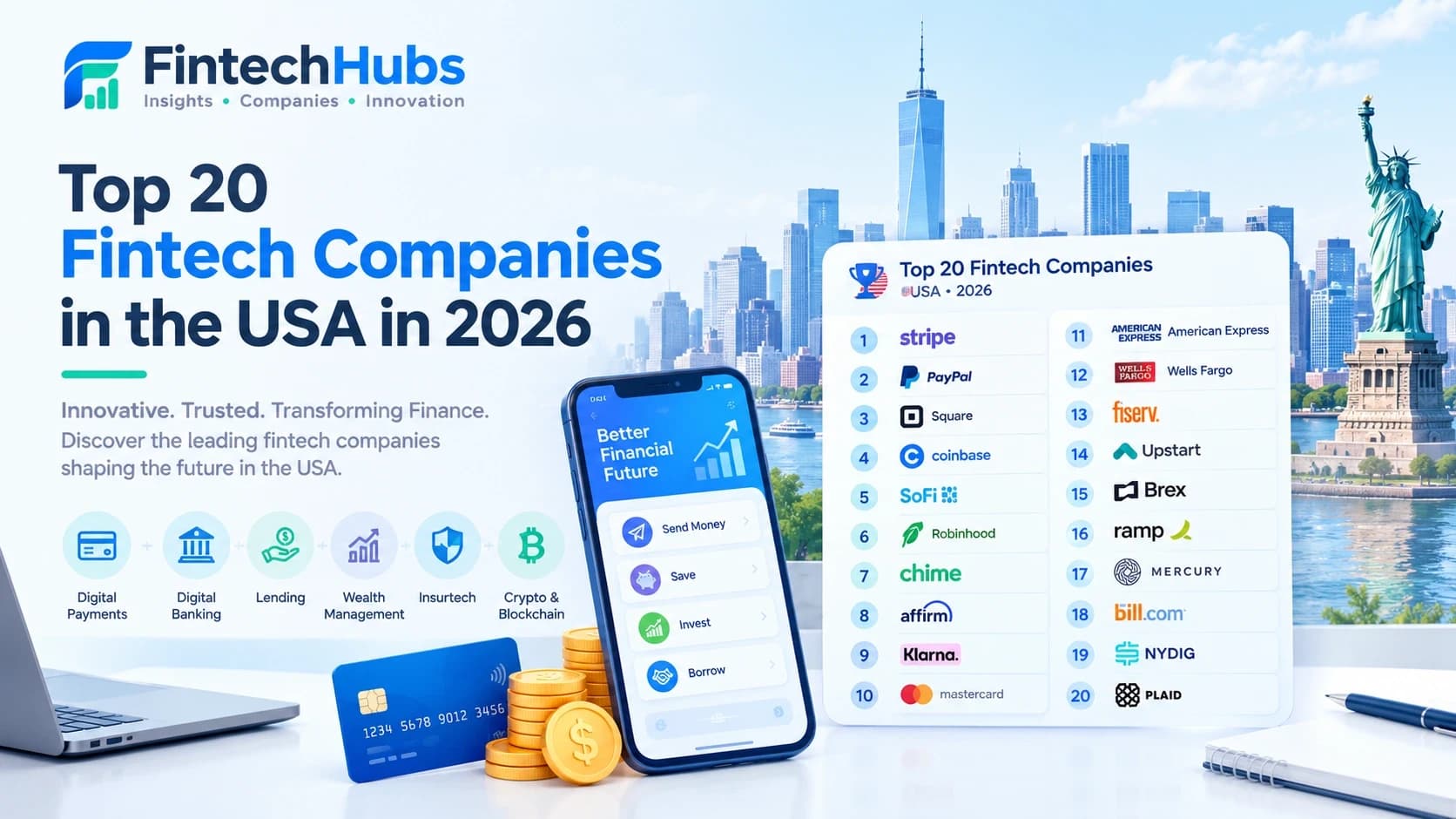
Top 20 Fintech Companies in the USA in 2026
Discover the top 20 fintech companies in the USA in 2026, including leading innovators in payments, digital banking, lending, wealthtech, and financial technology.
Sanctions Screening: Compliance & Risk Management Guide
Learn how sanctions screening helps businesses detect restricted entities, reduce financial crime risks, and maintain regulatory compliance.