Compliance Orchestration in Financial Services Explained
Discover how compliance orchestration unifies KYC, AML, screening, and monitoring into one workflow. Learn benefits, key components, and how to implement it.
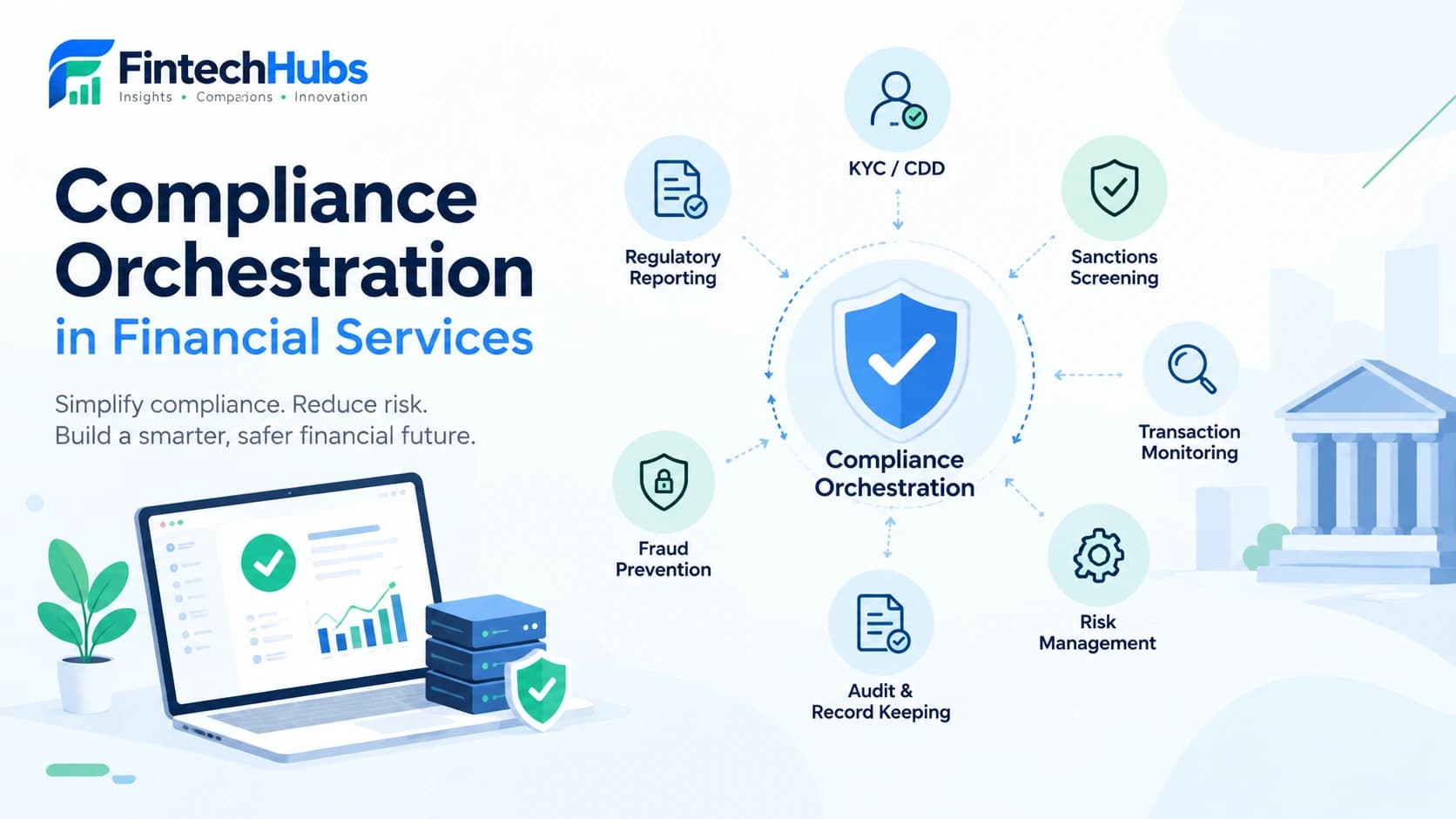
Compliance Orchestration in Financial Services: A Guide to Automated Compliance
An original, royalty-free article for compliance officers, risk leaders, operations teams and technology decision-makers in banks, fintechs, insurers, payment firms and asset managers.
Executive Summary
Financial institutions run on rules. Anti-money laundering (AML), sanctions, know your customer (KYC), fraud, conduct, privacy, tax reporting and operational resilience requirements all demand evidence that controls work. Over time, most institutions have answered each new obligation with a new tool, a new team or a new spreadsheet. The result is a patchwork: screening in one system, transaction monitoring in another, case handling in a third, reporting in a fourth, and people stitching them together by email.
Compliance orchestration is the discipline of coordinating those systems, data, rules, and people into a single, governed, automated flow. Rather than replacing every control, it sits above them: routing information to the right place, triggering the right checks at the right time, escalating the right cases to the right people, and capturing a complete audit trail along the way.This guide explains what compliance orchestration is, why it matters, how it differs from basic automation, the architecture and capabilities involved, practical use cases, an implementation roadmap, governance and metrics, common pitfalls, and answers to ten frequently asked questions.
What Is Compliance Orchestration?
Compliance orchestration is the coordinated design and execution of compliance processes across multiple systems, data sources, teams, and regulatory obligations, managed through a central layer that controls workflow, decisions, data movement, and evidence.
An easy way to picture it is an orchestra conductor. Individual instruments (screening engines, identity verification vendors, transaction monitoring platforms, case management tools, reporting systems) are each capable on their own. The conductor does not play any of them; it decides who plays what, in which order, and how they stay in time with each other.
Core characteristics include:
End-to-end workflow control: A single view of a compliance process from trigger to resolution, even if it crosses many systems.
Integration-first design: Connection to internal systems of record and external data providers through APIs and standard interfaces.
Rules and decision logic: Configurable policies that decide which checks run, which thresholds apply, and when a human must step in.
Human-in-the-loop handling: Tasks, approvals, and escalations assigned to named roles with deadlines.
Built-in evidence and audit: Every action, data point, and decision is recorded automatically.
Orchestration vs Automation vs Integration
These terms are often used interchangeably, but they are not the same.
Concept | What it does | Typical limitation |
|---|---|---|
Integration | Moves data between two or more systems | Does not decide what should happen next |
Automation | Performs a defined task without manual effort (for example, auto-screening a name) | Works in isolation; a single task, not a whole process |
Orchestration | Coordinates many automated and manual tasks into one governed process | Requires clear process design and strong data foundations |
Automation makes a step faster. Orchestration makes the whole process coherent, measurable and auditable.
Why Financial Institutions Need It
3.1 Regulatory burden keeps growing
Supervisors expect institutions to manage financial crime, sanctions, consumer protection, data privacy, outsourcing, operational resilience and increasingly digital-asset and AI-related risks. Each topic brings reporting duties, record-keeping and evidence expectations.
3.2 Fragmented technology and data
Most firms hold customer, transaction and risk data across numerous systems built over many years or acquired through mergers. Without orchestration, compliance staff become the integration layer, copying information between screens.
3.3 Rising cost and manual effort
Manual data gathering, duplicate checks and rework consume a large share of compliance capacity. Analysts spend time on administration instead of judgement.
3.4 Customer expectations
Onboarding delays and repeated document requests are among the most common causes of customer drop-off. Compliance must be effective without being slow.
3.5 Pressure for demonstrable control
Regulators increasingly ask not only whether a control exists but whether it operated consistently and can be evidenced. Orchestration makes consistency and evidence a by-product of the process.
Key Capabilities of a Compliance Orchestration Platform
Process modelling: Visual design of workflows, with versioning and approval of changes.
Policy and rules engine: Externalised decision logic that compliance teams can maintain with proper change control.
Connector layer: Pre-built and custom connections to core banking, CRM, onboarding, screening, monitoring, document, identity and reporting tools.
Data management: Normalisation, entity resolution and lineage so that every decision can be traced to its inputs.
Case and task management: Assignment, prioritisation, service levels, escalation and collaboration.
Risk scoring: Consistent, explainable scoring that can be recalculated when inputs change.
Document and evidence handling: Collection, validation, storage and retrieval of supporting records.
Notifications and customer communication: Secure, templated messaging to customers and internal teams.
Audit trail: Time-stamped, tamper-evident logs of every step, decision and user action.
Reporting and analytics: Dashboards, management information and regulatory report preparation.
Access control and segregation of duties: Role-based permissions aligned to the three lines of defence.
AI-assisted features: Document extraction, alert prioritisation, narrative drafting and summarisation, operating under model governance.
Reference Architecture
A typical orchestration architecture has five layers.
Layer | Purpose | Examples |
|---|---|---|
Experience | Where people interact | Analyst workbench, customer portal, management dashboards |
Orchestration | Controls process flow | Workflow engine, rules engine, case management, task queues |
Intelligence | Adds analytical capability | Risk scoring, machine learning models, document AI |
Integration | Connects systems and data | APIs, event streams, message queues, data connectors |
Systems of record and sources | Provide and store the underlying data | Core banking, CRM, KYC and screening vendors, transaction monitoring, registries, data warehouse |
A cross-cutting governance layer covers security, audit logging, model risk management, configuration control and data protection.
Use Cases Across the Compliance Lifecycle
6.1 Customer onboarding and KYC
Orchestration coordinates identity verification, document checks, sanctions and politically exposed person (PEP) screening, adverse media review, beneficial ownership discovery and risk rating. Straightforward, low-risk customers can pass through automatically, while higher-risk applications are routed for enhanced due diligence and senior approval.
6.2 Ongoing monitoring and perpetual KYC
Trigger events, such as changes in ownership, address or behaviour, or new screening hits, initiate targeted reviews instead of waiting for a fixed calendar date. Orchestration is the mechanism that detects the trigger, selects the right workflow and keeps the customer record current.
6.3 Sanctions and watchlist screening
Name and payment screening alerts are enriched with customer context, de-duplicated, prioritised and routed. Decisions and rationale are recorded for later review, and list updates can trigger re-screening of affected populations.
6.4 Transaction monitoring and suspicious activity reporting
Alerts from monitoring systems become structured cases that pull in KYC(know your Customer) data, previous alerts and customer communication. Investigators work in one place, and the preparation, approval, and filing of suspicious activity or transaction reports follows a controlled workflow with deadlines.
6.5 Fraud and financial crime convergence
Fraud, AML and cyber teams often hold overlapping views of the same customer or network. Orchestration can share signals between them, reducing duplicate investigation and improving detection of linked behaviour.
6.6 Regulatory reporting and change management
Data is gathered from source systems, validated, reconciled and prepared for submission, with sign-offs captured. When a regulation changes, affected policies, controls and workflows are identified and updated through managed change.
6.7 Third-party and vendor risk
Onboarding and periodic assessment of suppliers, including due diligence questionnaires, certification checks and exit planning, follow a consistent workflow.
6.8 Control testing and assurance
Orchestration can schedule control tests, collect evidence automatically, record exceptions and track remediation to closure, supporting second and third line oversight.
6.9 Conduct, complaints and customer protection
Complaints, vulnerable-customer indicators and conduct events are routed, tracked against deadlines, analysed for root cause and reported to governance forums.
Benefits
Consistency: The same policy applies the same way every time, reducing variation between analysts and teams.
Speed: Onboarding and investigations move faster because data gathering and routing are automatic.
Lower operating cost: Reduced manual effort and rework, with capacity redirected to higher-value judgement.
Stronger evidence: Complete, time-stamped records are produced as work happens, simplifying audits and regulatory examinations.
Better risk detection: Connected data and shared signals reveal patterns that isolated tools miss.
Agility: Policy changes are implemented centrally and roll out quickly across processes.
Improved customer experience: Fewer repeated requests and shorter waiting times.
Scalability: Growth in customers, products, or jurisdictions does not require proportional growth in headcount.
Actual results depend on starting maturity, data quality and implementation discipline, so institutions should set and measure their own baselines rather than rely on generic benchmarks.
Regulatory Context
Compliance orchestration is an operating approach, not a regulatory requirement. It supports obligations that appear in many frameworks, for example:
Financial crime: The FATF Recommendations, national AML and counter-terrorist financing laws, and sanctions regimes require risk-based controls, ongoing monitoring and record-keeping.
Operational resilience and outsourcing: Frameworks such as the EU Digital Operational Resilience Act (DORA) and supervisory expectations on third-party risk require firms to manage technology and vendor dependencies.
Data protection: Laws such as the GDPR require lawful, proportionate and secure handling of personal data, which affects how orchestration platforms store, share and retain information.
Model risk and AI: Supervisors expect governance, validation and explainability for analytical models, and AI-specific regulation is emerging in a number of jurisdictions.
Governance and accountability: Many regimes emphasise senior management responsibility, three lines of defence and demonstrable effectiveness of controls.
Important: requirements vary by country, licence type and change over time. This article provides general information only and is not legal advice. Institutions should consult their regulators’ current guidance and qualified advisers.
Implementation Roadmap
Phase 1: Define scope and objectives
Identify the processes with the greatest pain, risk, or cost, such as onboarding, alert handling, or regulatory reporting.
Set measurable goals: turnaround time, cost per case, backlog, audit findings, or customer drop-off.
Appoint an accountable executive sponsor and a cross-functional team.
Phase 2: Map the current state
Document processes as they actually run, including manual workarounds.
Inventory systems, data sources, vendors, controls, and the regulatory obligations each supports.
Identify duplicated steps, handoffs, and gaps.
Phase 3: Design the target state
Redesign processes around risk-based routing, straight-through processing where safe, and clear human decision points.
Define data requirements, quality standards, and ownership.
Decide what to buy, build or configure, and assess vendors for security, resilience and regulatory fit.
Phase 4: Build the foundations
Establish integration with priority systems of record and data providers.
Configure the workflow, rules and case management capabilities.
Set up audit logging, access control and environments for development, testing and production.
Phase 5: Pilot
Select one process or segment, run in parallel with existing operations and compare outcomes.
Test edge cases, failure handling and regulatory scenarios.
Gather feedback from analysts and customers.
Phase 6: Scale
Extend to additional processes, products and jurisdictions in prioritised waves.
Retire redundant tools and manual steps once controls are proven.
Train staff and update policies, procedures and risk and control self-assessments.
Phase 7: Operate and improve
Monitor performance indicators and model behaviour.
Review rules and thresholds regularly and after regulatory or typology changes.
Run periodic independent assurance and report to senior governance forums.
Governance, Controls and Metrics
Automation without governance only moves risk faster. Strong governance for orchestration includes:
Clear ownership: A named owner for each workflow, rule set and data source.
Change management: Requests, testing, approval and rollback for any change to rules, thresholds or workflows.
Model risk management: Documentation, validation, bias testing, drift monitoring and explainability for analytical and AI models.
Segregation of duties: Separation between those who build or change rules, those who approve them, and those who operate cases.
Resilience planning: Fallback procedures if the platform or a connected vendor is unavailable.
Data governance: Lineage, retention, access, and privacy controls.
Independent assurance: Internal audit and compliance testing of the orchestrated processes.
Useful metrics include:
Average and percentile turnaround time for onboarding, alerts, and cases
Straight-through processing rate and manual intervention rate
Alert-to-case conversion and false positive rate
Backlog and ageing of open items
Service level and regulatory deadline adherence
Cost per onboarding, alert, and case
Quality assurance error rates and rework
Audit and regulatory findings
Customer drop-off and time to complete onboarding
System availability and integration failure rates
Common Challenges and How to Address Them
Challenge | Why it happens | Mitigation |
|---|---|---|
Poor data quality | Inconsistent, duplicated or incomplete source data | Invest in data cleansing, entity resolution and ownership before automating |
Legacy integration | Older systems lack modern interfaces | Use middleware, phased integration and prioritise high-value connections |
Automating a broken process | Existing inefficiency is simply digitised | Redesign the process first, then automate |
Over-customisation | Heavy bespoke build slows change and raises cost | Favour configuration over code and keep a clear standards library |
Alert fatigue | Poorly tuned rules flood analysts | Tune thresholds, use risk-based prioritisation and measure outcomes |
Vendor lock-in | Deep dependency on one platform | Use open standards and APIs, and plan exit strategies |
Change resistance | Staff fear loss of control or role | Involve users early, train thoroughly and show benefits |
Regulatory scepticism | Supervisors want to understand automated decisions | Engage early, document design and keep explainability and human oversight |
Privacy and security risk | Centralised data raises exposure | Apply least privilege, encryption, monitoring and data minimisation |
Unclear ownership | Cross-functional processes lack an accountable owner | Define roles under the governance framework from the start |
Build vs Buy: Selection Criteria
When evaluating platforms or building in-house, consider:
Breadth and depth of pre-built connectors
Flexibility of workflow and rules configuration without heavy coding
Quality of audit trail, lineage and reporting
Security certifications, data residency options and resilience
Scalability, performance and availability
Support for explainable analytics and AI governance
Total cost of ownership, including integration, licences, change and support
Vendor financial stability, roadmap and regulatory track record
Ease of use for compliance staff, not only for engineers
Exit provisions and data portability
Many institutions adopt a hybrid approach: buy a core orchestration platform and specialised components, and build bespoke integrations or rules where they provide genuine differentiation.
The Role of AI in Compliance Orchestration
Artificial intelligence can enhance orchestration in several ways: extracting data from documents, summarising adverse media, ranking alerts by likelihood of true risk, drafting case narratives for human review, detecting anomalies in behaviour and answering policy questions for staff. Used well, it increases analyst capacity and consistency.
The guardrails matter just as much as the capability. Institutions should keep humans accountable for material decisions, test models for accuracy and bias, monitor performance over time, record inputs and outputs for audit, restrict sensitive data exposure, and be able to explain to regulators and customers how outcomes were reached.
Best Practices
Start with a business problem: Not a technology, and tie the programme to measurable outcomes.
Fix data first: Because orchestration amplifies whatever quality it receives.
Redesign before you automate: Remove unnecessary steps and handoffs.
Use a risk-based approach: Automating low-risk decisions and focusing people on complex ones.
Keep humans in the loop: Where judgement, ethics, or regulatory accountability require it.
Build for change: With configurable rules, version control, and rapid, safe deployment.
Engage regulators and audit early: Sharing design principles and test evidence.
Design for the user: Since analyst and customer experience determine adoption and effectiveness.
Measure continuously: And use the data to tune rules, staffing and processes.
Plan for resilience: Including fallback procedures and vendor contingency.
The Future of Automated Compliance
Several trends are likely to shape compliance orchestration over the coming years:
Real-time and event-driven compliance: Where controls respond to events as they happen rather than in batches.
Regulatory technology convergence: Combining KYC, fraud, transaction monitoring, and sanctions into unified risk views.
Digital identity and verifiable credentials: Reducing repeated verification and document collection.
Machine-readable regulation: Making it easier to translate rule changes into updated controls.
Responsible AI: With stronger expectations for transparency, testing, and accountability.
Secure data collaboration: Including privacy-enhancing technologies that allow insight sharing without exposing raw data.
Embedded compliance in product design: So controls are built into products and journeys from the start.
Frequently Asked Questions (FAQs)
1. What is compliance orchestration in simple terms?
It is the coordination of all the systems, data, rules, and people involved in a compliance process through one controlled workflow. Instead of staff moving between tools and copying information manually, the orchestration layer triggers the right checks, routes tasks, and records everything for audit.
2. How is compliance orchestration different from compliance automation?
Automation handles individual tasks, such as running a screening check. Orchestration manages the whole process across many tasks and systems, deciding what happens next, involving people when required, and keeping a complete record. Automation is a building block of orchestration.
3. Does orchestration replace existing compliance systems?
Usually not. It sits above existing screening, monitoring, case, and reporting tools, connecting them. Some institutions retire redundant tools over time, but the primary goal is coordination rather than replacement.
4. Which processes should we orchestrate first?
Start where pain, risk, and volume are highest and where data is reasonably accessible. Customer onboarding, alert and case handling, and regulatory reporting preparation are common starting points because they involve many handoffs and measurable outcomes.
5. Is compliance orchestration a regulatory requirement?
No. Regulators do not require orchestration by name. It is a way to meet obligations such as risk-based controls, ongoing monitoring, record-keeping, and demonstrable effectiveness more consistently. Local requirements vary, so check current guidance.
6. Will regulators accept automated decisions?
Regulators generally accept automation provided institutions retain accountability, can explain how decisions are made, apply appropriate human oversight to significant outcomes, test and monitor models, and keep complete records. Early dialogue with supervisors is advisable.
7. What role does AI play, and is it necessary?
AI can improve document handling, alert prioritisation, summarisation and anomaly detection, but orchestration delivers value even with rules-based logic alone. Where AI is used, it needs strong model governance, validation and explainability.
8. What are the biggest risks and challenges?
The most common are poor data quality, automating inefficient processes, legacy integration difficulty, alert overload, over-customisation, vendor lock-in, and weak governance. Each can be reduced through process redesign, phased delivery, data investment, and clear ownership.
9. How do we measure success?
Track turnaround time, straight-through processing rate, cost per case, false positive rate, backlog, deadline adherence, quality assurance results, audit findings and customer drop-off, comparing against a baseline set before implementation.
10. How long does implementation take and what does it cost?
Timelines and cost vary widely with scope, data readiness, system landscape, and vendor choice. A focused pilot can take a few months, while enterprise-wide rollout may take a year or more. A phased approach with clear milestones helps control cost and risk.
Conclusion
Compliance orchestration turns a collection of disconnected tools and manual steps into a coherent, governed system. It does not remove the need for expert people, strong policies or sound data. It gives them a platform on which to work faster, more consistently and with better evidence. Institutions that approach it as a phased, business-led transformation, anchored in data quality, thoughtful process design, strong governance and open dialogue with supervisors, are best placed to reduce cost and risk while meeting rising regulatory expectations.
Disclaimer: This article is provided for general informational purposes only and does not constitute legal, regulatory, or compliance advice. Regulatory requirements differ by jurisdiction and change over time. Readers should consult qualified advisers and current official guidance before making decisions. This original work may be freely used, adapted and republished.
Share this article
Related Articles
ComplyAdvantage vs Dow Jones AML Screening: Features, Data, and Use Cases
Compare ComplyAdvantage and Dow Jones AML screening solutions, including sanctions screening, PEP checks, adverse media, integrations, pricing, and key selection factors.
What Is KYC? Know Your Customer Explained
Learn what Know Your Customer (KYC) means, how the verification process works, and why it matters for fraud prevention, AML compliance, and financial security.
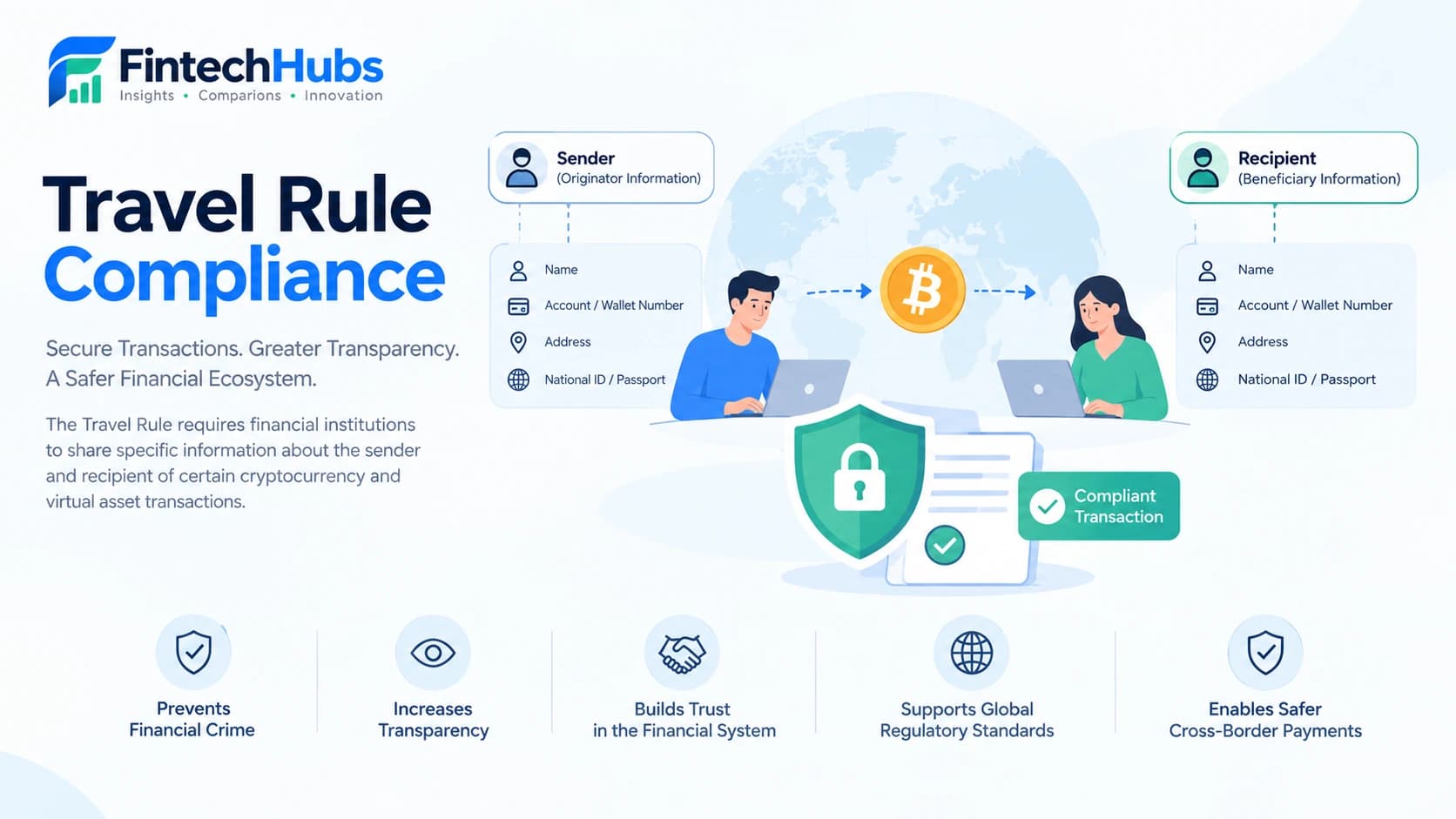
Travel Rule Compliance: Requirements, Challenges & Solutions
Learn about Travel Rule compliance requirements, key challenges, and solutions for crypto businesses. Discover how VASPs can strengthen AML compliance and meet regulatory obligations.