
Identity Verification: How It Works and Why It Matters
A complete guide to identity verification — how it works, key branches, biometrics, liveness detection, digital identity, challenges, and 10 essential FAQs.
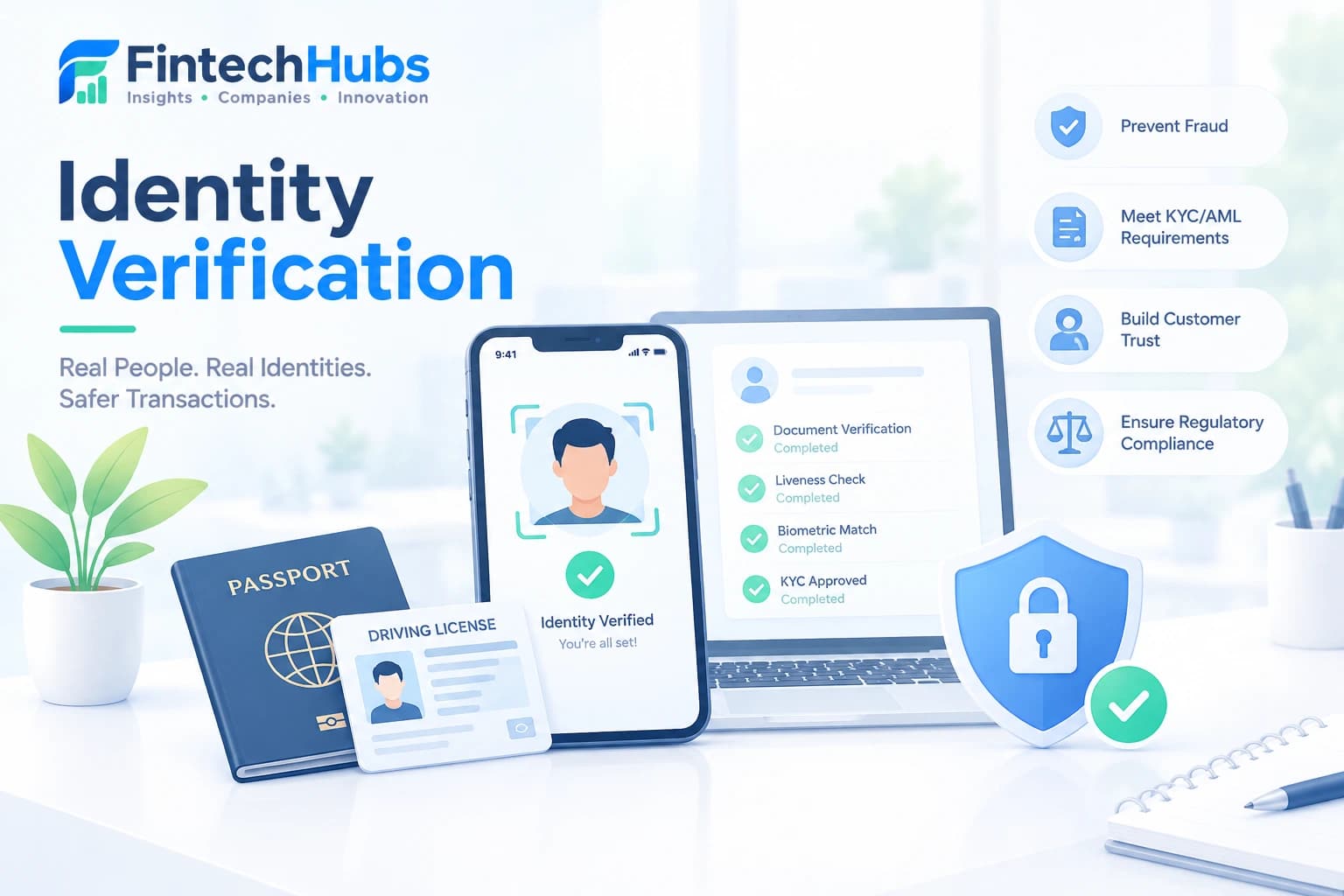
Identity Verification: How It Works and Why It Matters
Every time someone opens a bank account, applies for a loan, signs up for a crypto exchange, rents an apartment online, or even creates a new social media account, a quiet but critical question gets asked behind the scenes: is this person really who they claim to be? Identity verification is the process and technology built to answer that question confirming that an individual's claimed identity matches their real-world identity, with enough confidence to allow a transaction, account, or relationship to proceed safely.
What used to mean presenting a physical ID card to a bank teller has evolved into a sophisticated, largely automated discipline combining document analysis, biometrics, database checks, and artificial intelligence often completing in seconds what once took days. This guide provides a complete look at identity verification: how it works, its levels of assurance, its major branches, why it matters, and where the field is heading.
2. What Is Identity Verification?
Identity verification is the process of confirming that a person is genuinely who they claim to be, typically by checking their claimed identity against trusted evidence government-issued documents, biometric data, official databases, or a combination of these. It's distinct from, but closely related to, authentication (confirming that the person accessing an account right now is the same person who originally set it up).
Identity verification typically happens at key moments: when someone opens a new account, applies for credit, makes a high-value transaction, or needs to prove their identity to access a regulated service. The goal is to establish sufficient confidence in a person's real identity to allow the relationship or transaction to proceed while minimizing the risk of fraud, impersonation, or illegal activity.
3. Why Identity Verification Became So Important
Several forces have driven identity verification from a manual, occasional process into a sophisticated, real-time digital discipline:
The shift to digital, remote onboarding: As more services moved online, businesses lost the ability to visually inspect a physical ID in person, requiring new digital verification methods.
Rising identity fraud: Criminals increasingly use stolen or fabricated identity information to open fraudulent accounts, access credit, or launder money, making robust verification essential.
Regulatory requirements: Financial institutions and many other regulated industries are legally required to verify customer identity as part of anti-money laundering and consumer protection obligations.
Consumer expectations for speed: People expect to open accounts and access services in minutes, not days, pushing identity verification toward fast, largely automated processes.
The growth of the digital economy: As more of daily life banking, shopping, working, socializing happens online, reliable digital identity verification has become foundational infrastructure rather than a niche security feature.
4. How Identity Verification Works
Step 1: Identity Claim
The process begins when a person provides identifying information their name, date of birth, address, and typically a government-issued ID document.
Step 2: Document Verification
The submitted ID document (passport, driver's license, national ID card) is analyzed for authenticity, checking security features, formatting consistency, and signs of tampering or forgery, often using computer vision and machine learning.
Step 3: Biometric Matching
Many systems require the person to take a live selfie or short video, which is compared against the photo on their ID document to confirm the document belongs to the person presenting it, often paired with "liveness detection" to prevent the use of a photo or video of someone else.
Step 4: Database and Watchlist Checks
The claimed identity is cross-referenced against government or third-party databases to confirm it corresponds to a real, valid identity, and screened against relevant watchlists such as sanctions lists or known fraud databases.
Step 5: Risk Scoring
Based on the results of these checks, the system generates a risk score or confidence level, which determines whether the identity is verified automatically, requires additional review, or is rejected.
Step 6: Ongoing Monitoring
For many use cases, identity verification isn't a one-time event — accounts may be periodically re-verified or continuously monitored for signs that the identity information no longer matches expected behavior.
5. Levels of Identity Assurance
Not all identity verification needs to be equally rigorous. Common levels include:
Basic verification: confirming self-reported information is internally consistent and matches basic public records, suitable for low-risk interactions
Document-based verification: validating a government-issued ID document's authenticity, a common standard for most financial account openings
Biometric verification: adding a live selfie or biometric match to confirm the document belongs to the person presenting it
Enhanced verification: combining multiple methods along with additional background and database checks, typically reserved for higher-risk situations or higher-value transactions
Businesses typically calibrate the level of verification required to the risk level of the specific transaction or relationship, rather than applying maximum scrutiny to every interaction.
6. Branches of Identity Verification
A. Document Verification
Technology focused on authenticating government-issued identity documents, checking for forgery, tampering, and formatting consistency with known genuine document templates from the issuing country.
B. Biometric Verification
Using unique physical characteristics facial recognition, fingerprints, iris scans, or voice patterns to confirm identity, typically by matching a live capture against a stored or document-based reference.
C. Liveness Detection
A specialized branch ensuring that a biometric capture (like a selfie) comes from a live person physically present, rather than a photo, video, or deepfake, protecting against spoofing attacks.
D. Database and Registry Verification
Cross-referencing claimed identity information against government records, credit bureaus, or other authoritative databases to confirm the identity corresponds to a real, valid record.
E. Knowledge-Based Verification
Verifying identity by asking questions only the real individual would likely be able to answer correctly, based on personal history or financial records a method that has become less common as data breaches have made such information more accessible to fraudsters.
F. Digital Identity and Reusable Identity Verification
An emerging branch focused on creating verified digital identities that individuals can reuse across multiple services, rather than completing a full verification process separately with every new provider.
G. Age Verification
A specialized use case confirming a person meets a minimum age requirement, relevant for age-restricted products, services, and content, often using document or biometric-based age estimation.
H. Business and Entity Verification
Extending identity verification principles to confirm the legitimacy of businesses, including verifying company registration, beneficial ownership, and the identity of individuals authorized to act on a business's behalf.
I. Continuous and Behavioral Identity Verification
Moving beyond one-time verification at onboarding, this branch uses ongoing behavioral signals how someone types, navigates, or transacts to continuously confirm that account activity remains consistent with the verified identity.
J. Decentralized and Self-Sovereign Identity
An emerging approach where individuals control their own verified identity credentials directly, sharing only the specific pieces of information needed for a given interaction rather than repeatedly handing over full documents to every service they use.
7. Key Technologies Behind Modern Identity Verification
Optical character recognition (OCR): extracting and validating text data from ID documents automatically
Computer vision and machine learning: detecting forged or tampered documents and analyzing document security features
Facial recognition and biometric matching algorithms: comparing a live capture against a document photo
Liveness detection technolog: distinguishing a real, live person from a photo, video, or synthetic deepfake
Optical and NFC chip reading: extracting data directly from the embedded chips in modern passports and ID cards for higher-assurance verification
AI-driven risk scoring models: combining multiple verification signals into a single confidence assessment
Blockchain and distributed ledger technology: explored for building portable, tamper-evident digital identity credentials.
8. Why Identity Verification Matters
Preventing Fraud and Financial Crime
Robust identity verification is one of the most effective tools for preventing identity theft, synthetic identity fraud, and the creation of fraudulent accounts used for money laundering or other crimes.
Meeting Legal and Regulatory Requirements
Financial institutions and many other regulated businesses are legally required to verify customer identity as part of broader anti-money laundering and consumer protection obligations.
Enabling Trust in Digital Services
As more services move entirely online, reliable identity verification allows businesses to extend trust to customers they'll never meet in person, which is foundational to the modern digital economy functioning at all.
Protecting Individuals from Impersonation
Strong identity verification protects real individuals from having their identity fraudulently used by someone else to open accounts, access credit, or commit crimes in their name.
Enabling Faster, Better Customer Experiences
Modern automated identity verification allows legitimate customers to open accounts and access services in minutes rather than days, replacing what used to be a slow, manual, in-person process.
Supporting Financial Inclusion
Digital identity verification can extend services to people who may lack traditional documentation or easy access to physical bank branches, provided verification systems are designed with appropriate flexibility.
9. Identity Verification Across Industries
While financial services remain the most heavily regulated user of identity verification, the technology has expanded well beyond banking:
Financial services: account opening, loan applications, investment platforms, and cryptocurrency exchanges
Healthcare: confirming patient identity for telehealth services and prescription access
Travel and hospitality: check-in processes, car rentals, and age-restricted services
Gig economy and marketplace platforms: verifying drivers, sellers, and service providers
Online gaming and gambling: age verification and responsible gambling compliance
Government services: digital ID programs for accessing public benefits and services
E-commerce: reducing fraud in high-value online purchases and account creation
10. Challenges and Limitations
Balancing security and user friction: Overly rigorous verification processes can frustrate legitimate users and cause abandonment, while insufficient checks let fraud through.
Deepfakes and synthetic media: As AI-generated images, video, and voice become more convincing, liveness detection and biometric systems must continuously evolve to stay ahead of increasingly sophisticated spoofing attempts.
Privacy concerns:Identity verification requires handling highly sensitive personal data, raising legitimate questions about how that data is stored, used, and protected from breaches.
Accessibility and inclusion gaps: Verification systems reliant on specific document types or smartphone capabilities can inadvertently exclude people who lack standard documentation or modern devices.
Cross-border inconsistency: Different countries issue vastly different ID document formats and maintain different levels of accessible official records, complicating verification for international users.
False rejections: Legitimate users can sometimes be incorrectly rejected due to poor image quality, unusual lighting, or document formats a system wasn't trained to recognize, creating real customer friction.
11. Best Practices for Businesses
Calibrate verification rigor to actual risk level rather than applying maximum friction to every interaction
Combine multiple verification methods (document, biometric, database checks) rather than relying on a single signal
Regularly update systems to detect emerging spoofing and deepfake techniques
Offer accessible verification paths for users who may lack standard documentation
Maintain strong data security and minimize retention of sensitive identity data beyond what's necessary
Provide clear human review and appeal paths for users incorrectly rejected by automated systems
12. How Consumers Can Protect Their Identity
Only share identity documents and personal information with services you trust and that clearly need it
Use strong, unique passwords and enable multi-factor authentication on accounts holding sensitive identity data
Monitor for signs of identity theft, such as unfamiliar accounts or unexpected credit inquiries
Be cautious of unsolicited requests for identity documents or personal information, especially under pressure or urgency
Report suspected identity theft promptly to relevant institutions and authorities
13. The Competitive and Vendor Landscape
The identity verification ecosystem includes specialized identity verification vendors offering document and biometric verification as a service, broader fraud prevention and KYC platform providers that include identity verification as one component of a larger compliance suite, biometric technology specialists focused specifically on facial recognition and liveness detection, digital identity infrastructure providers building reusable, portable identity credentials, and government-backed digital ID programs in various countries offering official verified digital identity as public infrastructure.
14. Future Trends to Watch
Reusable digital identity becoming mainstream: reducing the need to repeat full verification with every new service
Continued advancement in deepfake detection: as the arms race between synthetic media generation and detection technology intensifies
Growth of decentralized, self-sovereign identity models: giving individuals more direct control over their own verified credentials
Expansion of government-backed digital ID programs: providing an official, trusted foundation for private-sector verification
Greater use of passive, continuous verification: reducing reliance on one-time checkpoints in favor of ongoing behavioral confirmation
Increased regulatory attention to biometric data privacy: as the use of facial recognition and other biometric verification expands
15. Frequently Asked Questions
1. What is the difference between identity verification and authentication? Identity verification confirms that a person is genuinely who they claim to be, typically at account opening. Authentication confirms that the person currently accessing an account is the same person who was originally verified, typically through passwords, biometrics, or multi-factor authentication during ongoing use.
2. How long does digital identity verification usually take? Modern automated identity verification often completes within seconds to a few minutes, though cases requiring manual review due to unclear documents or elevated risk factors can take longer.
3. Is biometric identity verification safe and private? Reputable providers use encryption and strict data handling practices to protect biometric data, and many jurisdictions have specific legal requirements governing its collection and storage. However, consumers should always review a service's privacy practices, since biometric data is particularly sensitive.
4. Why do some legitimate users get rejected during identity verification? False rejections can occur due to poor-quality document photos, unusual lighting during a selfie capture, uncommon document formats a system isn't trained to recognize, or database records that don't perfectly match submitted information.
5. What is liveness detection, and why is it necessary? Liveness detection confirms that a biometric capture, like a selfie, comes from a real, live person physically present at the time of verification, rather than a photo, video, or deepfake — an increasingly important defense as synthetic media becomes more convincing.
6. Can identity verification be completed without a smartphone? Many systems are optimized for smartphone use due to camera quality and convenience, but alternative paths — including desktop webcam verification or in-person verification options — are often available, particularly for institutions serving broader populations.
7. What happens to my identity documents after verification? This varies by provider and jurisdiction, but reputable services typically store identity data securely, retain it only as long as legally required or necessary, and are subject to data protection regulations governing its use and eventual deletion.
8. How does identity verification help prevent money laundering? By confirming the true identity of customers at onboarding, institutions can accurately assess risk, screen against sanctions and watchlists, and maintain a reliable record connecting account activity to a real, verified individual — a foundational requirement for effective anti-money laundering programs.
9. What is reusable or portable digital identity? It refers to a verified identity credential that an individual can use across multiple services without repeating the full verification process each time, similar to how a physical ID can be shown to multiple different organizations without needing to be reissued.
10. Are deepfakes a serious threat to identity verification systems? Yes, increasingly so. As AI-generated images, video, and voice become more realistic, identity verification providers are investing heavily in more sophisticated liveness detection and anomaly detection specifically designed to catch synthetic media attempting to spoof biometric checks.
16. Conclusion
Identity verification has evolved from a simple visual check of a physical ID card into a sophisticated, largely automated discipline combining document analysis, biometrics, database checks, and artificial intelligence. Its branches spanning document verification, biometric matching, liveness detection, digital and reusable identity, and continuous behavioral verification all serve the same essential purpose: establishing enough confidence in a person's real identity to allow trust-based digital relationships and transactions to proceed safely. As identity fraud tactics grow more sophisticated, particularly with the rise of deepfakes and synthetic media, identity verification technology will need to keep evolving in parallel, remaining one of the most foundational and continuously important pillars of the digital economy.
This content is for informational and educational purposes only and does not constitute legal, financial, or security advice. Readers and businesses should consult qualified professionals regarding their specific identity verification and compliance obligations.
Share this article
Related Articles
Regulatory Change Management: A Complete Guide
Learn how regulatory change management works — horizon scanning, impact assessment, key branches, best practices, future trends, and 10 essential FAQs.
Transaction Monitoring: A Complete Guide to Financial Security
A complete guide to transaction monitoring, covering how it works, AML compliance, AI detection, best practices, common challenges, and 10 key FAQs.

Regulatory Reporting Automation: Simplifying Financial Compliance
Discover how regulatory reporting automation simplifies financial compliance — key benefits, technologies, challenges, best practices, and 10 FAQs.