Digital Wallet Infrastructure: How Mobile Wallets Work
Learn how digital wallets process, secure, and authenticate payments, tokenization, biometric authentication, key technologies, use cases, and 10 FAQs.
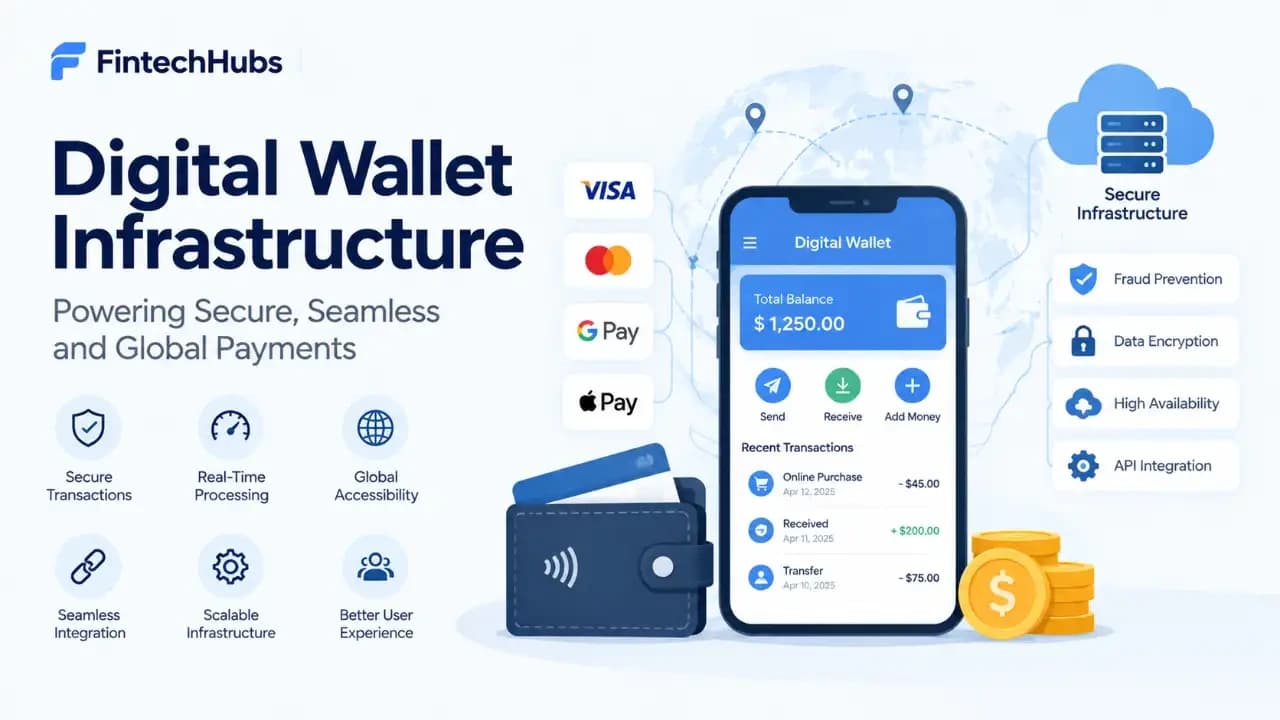
Digital Wallet Infrastructure: How Mobile Wallets Process, Secure, and Authenticate Payments
Tapping a phone against a terminal to pay for coffee, authorizing an online purchase with a glance at a camera, or sending money to a friend with a few taps has become so routine that it is easy to forget how much infrastructure sits behind that single gesture. Digital wallets, the mobile and software-based systems that store payment credentials and let people pay with a phone, watch, or browser rather than a physical card, have become one of the most widely used pieces of financial technology in the world. Behind their simplicity lies a layered system of tokenization, encryption, secure hardware, and authentication technology working together in the span of a second or two.
This guide provides a complete, professional look at digital wallet infrastructure: what it is, the different types of digital wallets, how they process a transaction from tap to settlement, how they keep payment data secure, how they authenticate users, their major branches and capabilities, and where the technology is heading.
What Is Digital Wallet Infrastructure?
Digital wallet infrastructure refers to the underlying systems and technology that allow a digital wallet, a mobile app, smartwatch feature, or browser-based tool, to securely store payment credentials and use them to complete transactions, whether in a physical store, online, or peer-to-peer. This infrastructure spans several layers: the wallet application itself, the secure storage and tokenization of payment credentials, the authentication methods confirming the user's identity, and the underlying connections to card networks, banks, and payment processors that ultimately move the money.
A digital wallet does not typically store actual card numbers in a form that can be directly used elsewhere. Instead, it relies on a security technique called tokenization, which replaces sensitive payment details with a unique, limited-use digital substitute, discussed in more detail in the security section of this guide.
Types of Digital Wallets
Closed-Loop Wallets
Wallets that can only be used within a specific merchant's ecosystem, such as a retailer's own branded app that stores a prepaid balance or loyalty-linked payment method usable only with that merchant.
Open-Loop Wallets
Wallets linked to a user's actual bank account, debit card, or credit card, usable broadly across many merchants and payment contexts, such as major mobile device-based wallets supported by smartphone manufacturers.
Semi-Closed Wallets
Wallets that can be used across a defined network of affiliated merchants or partners, rather than being limited to one merchant or being universally accepted, common in some regional payment ecosystems.
Peer-to-Peer (P2P) Wallets
Wallets primarily designed for sending money between individuals, often linked to a bank account or debit card, and sometimes also usable for merchant payments.
Cryptocurrency Wallets
Wallets designed to store and transact with digital assets such as cryptocurrencies, using fundamentally different underlying technology, namely private cryptographic keys, rather than the tokenized card infrastructure used by traditional digital wallets.
Super App Wallets
Wallets embedded within broader "super apps" that combine payments with messaging, ride-hailing, shopping, and other services, particularly prominent in some Asian markets, functioning as a central financial hub within a much larger application.
How Digital Wallets Process Payments
Step 1: Card or Account Provisioning
When a user adds a payment card or bank account to a digital wallet, the wallet provider communicates with the card network or bank to verify the card and, in most modern implementations, request a token to represent it rather than storing the actual card number.
Step 2: Tokenization
The card network or token service provider issues a unique digital token tied to that specific card and device, which stands in for the real card number during transactions, ensuring the actual card details are never transmitted or stored on the device or at the merchant.
Step 3: Transaction Initiation
When the user makes a payment, whether tapping their phone at a point-of-sale terminal, completing an online checkout, or sending money to another person, the wallet retrieves the relevant token rather than the underlying card number.
Step 4: Authentication
Before the transaction proceeds, the wallet confirms the user's identity, typically through a biometric check such as a fingerprint or face scan, or a device passcode, discussed further in the authentication section below.
Step 5: Secure Transmission
The token, along with a dynamically generated transaction-specific cryptogram or code, is transmitted to the merchant's payment terminal or checkout system, typically using near-field communication for in-person payments or secure APIs for online transactions.
Step 6: Token Translation and Processing
The payment is routed through the card network or payment processor, which translates the token back to the actual underlying card details in a secure environment, then processes the transaction through the normal card payment flow.
Step 7: Authorization and Settlement
The transaction proceeds through standard authorization and settlement processes, with the merchant and card networks never having directly handled the user's actual card number during the transaction.
Core Components of Digital Wallet Infrastructure
The wallet application: The consumer-facing software where payment methods are stored and transactions are initiated
Tokenization services: Replacing sensitive card data with secure, limited-use digital tokens
Secure storage environments: Including hardware-based secure elements or software-based secure enclaves that protect stored credentials and cryptographic keys on the device
Authentication systems: Verifying the user's identity before authorizing a transaction
Near-field communication (NFC) or QR code technology, enabling in-person, contactless payment interactions
APIs and SDKs: Allowing wallets to integrate with merchant checkout systems, banks, and card networks
Backend processing and network connectivity: Linking the wallet to the broader card network and banking infrastructure needed to complete transactions
How Digital Wallets Secure Payment Data
Tokenization
As described above, tokenization is the foundational security technique behind most modern digital wallets, replacing actual card numbers with device- and merchant-specific tokens that have no value if intercepted outside their intended context.
Dynamic Cryptograms
Rather than reusing the same credential repeatedly, many digital wallet transactions generate a unique, one-time cryptographic code for each transaction, meaning that even if a single transaction's data were somehow intercepted, it could not be reused for a future fraudulent transaction.
Secure Hardware Elements
Many devices store payment credentials and cryptographic keys within a dedicated, isolated piece of hardware, separate from the device's main operating system and applications, making it significantly more difficult for malicious software to access sensitive payment data.
Encryption
Data transmitted between the wallet, the merchant, and the payment networks is encrypted, protecting it from interception during transmission.
Device-Level Security Integration
Digital wallets typically rely on and integrate with the broader security features of the device itself, including device passcodes, biometric systems, and operating system-level security protections.
Remote Deactivation
If a device is lost or stolen, most digital wallet systems allow the associated tokens to be remotely suspended or deactivated without needing to cancel and reissue the underlying physical card.
How Digital Wallets Authenticate Users
Biometric Authentication
Many digital wallets use fingerprint or facial recognition to confirm the user's identity before authorizing a payment, offering a fast, convenient method that is difficult to replicate compared to a password.
Device Passcodes
As a fallback or alternative to biometrics, digital wallets typically also accept a device passcode to confirm the user's identity and authorize transactions.
Two-Factor and Multi-Factor Authentication
For certain actions, such as adding a new card to a wallet or completing an unusually large transaction, additional verification steps, such as a one-time code sent to the user's phone or email, may be required.
Risk-Based and Adaptive Authentication
More advanced wallet systems may apply adaptive authentication, adjusting the level of verification required based on the perceived risk of a specific transaction, such as its amount, location, or how it compares to the user's typical behavior.
Continuous Device-Level Security
Beyond the moment of a specific transaction, digital wallets benefit from the broader, ongoing security posture of the device itself, including screen lock requirements and operating system security updates.
Branches and Capabilities of Digital Wallet Infrastructure
A. In-Store Contactless Payments
Enabling users to pay at physical point-of-sale terminals by tapping their device, using near-field communication technology to securely transmit payment information.
B. Online and In-App Checkout
Allowing users to complete online purchases quickly using stored payment credentials, often significantly reducing checkout friction compared to manually entering card details.
C. Peer-to-Peer Transfers
Supporting instant or near-instant transfers of money between individuals, often integrated directly into the wallet alongside merchant payment capabilities.
D. Loyalty and Rewards Integration
Combining payment functionality with loyalty program membership, digital coupons, and rewards tracking within a single wallet experience.
E. Digital Identity and Document Storage
An expanding capability in many wallet ecosystems, allowing users to store digital versions of identification documents, tickets, boarding passes, and other credentials alongside payment methods.
F. Transit and Micropayments
Supporting fast, low-value transactions such as public transit fares, where speed and reliability at the point of transaction are especially important.
G. Cross-Border and Multi-Currency Support
Allowing some digital wallets to hold or transact in multiple currencies, supporting international travel and cross-border commerce without requiring a separate physical card for each currency.
H. Business and Merchant-Facing Wallet Tools
Infrastructure allowing businesses to accept digital wallet payments at checkout, including the point-of-sale hardware and software integrations required to process contactless transactions.
I. Embedded and White-Label Wallet Infrastructure
Technology allowing non-financial companies to build their own branded digital wallet experience on top of underlying infrastructure provided by a specialized wallet technology vendor, rather than building the entire system from scratch.
Key Technologies Behind Digital Wallets
Near-field communication (NFC): Enabling secure, short-range wireless communication between a device and a payment terminal for in-person transactions
Tokenization platforms: Operated by card networks and specialized token service providers to generate and manage secure payment tokens
Secure elements and trusted execution environments: Dedicated hardware or software-isolated environments that protect sensitive credentials on a device
Biometric authentication systems: Including fingerprint and facial recognition technology integrated at the device level
QR code generation and scanning: An alternative to NFC used widely in certain markets for both in-person and online wallet payments
Cloud-based wallet platforms: Supporting wallets that store tokenized credentials in the cloud rather than solely on the device, often used in web-based or multi-device wallet experiences
APIs and software development kits (SDKs): Allowing merchants and other businesses to integrate digital wallet payment acceptance into their own apps and websites
Why Digital Wallet Infrastructure Matters
Enhanced Security Compared to Physical Cards
Because tokenization ensures actual card numbers are rarely transmitted or stored by merchants, digital wallet transactions can be significantly more resistant to certain forms of payment fraud compared to traditional card swipes or manual entry.
Faster, More Convenient Transactions
Digital wallets typically make both in-person and online checkout faster, reducing friction for consumers and, in many cases, improving conversion rates for merchants.
Reduced Fraud Losses
The combination of tokenization, dynamic cryptograms, and biometric authentication meaningfully reduces several common categories of payment fraud compared to magnetic stripe or manually entered card transactions.
Supporting Financial Inclusion
In some markets, digital wallets have expanded access to digital payments for populations that may not have easy access to traditional banking infrastructure, particularly where mobile phone penetration outpaces traditional banking access.
Enabling New Payment Experiences
Digital wallet infrastructure underpins a growing range of payment experiences beyond simple purchases, including peer-to-peer transfers, loyalty integration, and digital identity, consolidating multiple everyday functions into a single device.
Supporting Merchant Efficiency
Faster checkout and reduced fraud can translate into operational efficiency and cost savings for merchants, alongside the potential for improved customer experience and loyalty.
Industries and Use Cases
Retail and point-of-sale commerce: Enabling fast, contactless in-store payments
E-commerce: Streamlining online checkout with stored, tokenized payment credentials
Transit systems: Supporting fast, high-volume fare payments in public transportation
Banking and financial services: Offering digital wallet capabilities as part of broader mobile banking experiences
Peer-to-peer payment services: Enabling individuals to send and receive money instantly
Travel and hospitality: Supporting cross-border payments and, increasingly, digital document storage like boarding passes
Gig economy and marketplace platforms: Enabling fast payouts to workers and sellers through linked digital wallets
Government and public services: Exploring digital wallet infrastructure for benefit disbursements and digital identity programs
Digital Wallets vs. Traditional Card Payments
Understanding digital wallets benefits from a direct comparison with the traditional card payments they often complement or replace:
Traditional card payments: Involve the physical card's actual number being read, whether through a magnetic stripe, chip, or manual entry, and transmitted toward payment processing, creating more opportunities for that sensitive data to be exposed or intercepted.
Digital wallet payments: Rely on tokenization, meaning the actual card number is never transmitted during the transaction; instead, a limited-use token tied to the specific device and, often, the specific transaction is used, significantly reducing the value of that data if intercepted.
Authentication also differs meaningfully: A traditional card transaction may rely on a signature, PIN, or simply possession of the physical card, while digital wallet transactions commonly require biometric or passcode-based authentication at the device level before a payment can be authorized.
Speed and convenience: Are generally improved with digital wallets, particularly for online checkout, where stored, verified payment and shipping information can turn a multi-field checkout form into a single tap or click.
Challenges and Limitations
Device dependency: Digital wallets require the user to have their phone or other device, along with sufficient battery charge, which can be a limitation in some situations compared to always-available physical cards.
Merchant acceptance gaps: While adoption has grown significantly, not all merchants, particularly smaller or older point-of-sale systems, support contactless or digital wallet payments.
Fragmentation across wallet providers: Multiple competing wallet ecosystems, often tied to specific device manufacturers or operating systems, can create a fragmented experience for both consumers and merchants.
Onboarding friction: Adding and verifying a new card to a digital wallet, while generally straightforward, can still present a barrier for some users compared to simply using a physical card.
Security dependent on device security: Because digital wallets rely heavily on device-level security, a compromised device, such as one with outdated software or weak passcode protection, can represent a weaker link in the overall security chain.
Privacy considerations: Digital wallets can generate rich data about user spending and location patterns, raising ongoing questions about how that data is collected, used, and protected by wallet providers.
Limited functionality for certain transaction types: Some transaction types, such as very large payments or specific business-to-business use cases, may still rely on traditional payment methods rather than consumer-oriented digital wallets.
Regulatory and Compliance Considerations
Digital wallet infrastructure operates within a regulatory environment shaped by several overlapping areas:
Best Practices for Businesses Supporting Digital Wallets
Ensure point-of-sale hardware and online checkout systems support the major digital wallet platforms relevant to the business's customer base
Clearly communicate digital wallet acceptance to customers, since awareness can meaningfully affect adoption at checkout
Work with payment processors and acquirers experienced in digital wallet transaction processing to ensure smooth integration and troubleshooting support
Maintain strong compliance with relevant payment card industry security standards across all accepted payment methods, including digital wallets
Monitor digital wallet-specific transaction and fraud data separately where possible, since fraud patterns can differ from traditional card transactions
Stay current with evolving digital wallet capabilities, such as expanding support for loyalty integration or buy-now-pay-later options within wallet checkout flows
Consider the specific digital wallet preferences and usage patterns of target markets, since adoption and preferred wallet providers vary significantly by region
The Competitive and Vendor Landscape
The digital wallet ecosystem includes major device manufacturer-affiliated wallets built into smartphone and smartwatch operating systems, bank-issued and bank-affiliated wallet apps offered directly by financial institutions, independent peer-to-peer payment wallet providers, super app ecosystems that embed wallet functionality within much broader consumer platforms, white-label and embedded wallet infrastructure providers that let other businesses build their own branded wallet experiences, and card networks and token service providers that supply the underlying tokenization infrastructure many wallets rely on.
Future Trends to Watch
Expansion of digital identity within wallets: Digital wallets are increasingly expected to store not just payment credentials but digital identification documents, tickets, and other credentials, consolidating more of daily life into a single secure application.
Growth of embedded and white-label wallet infrastructure: More non-financial businesses are expected to build branded wallet experiences on top of underlying infrastructure providers, rather than relying solely on device manufacturer or bank-provided wallets.
Deeper integration with instant and account-to-account payments: Digital wallets are increasingly expected to support direct bank account-based payments alongside traditional card-based transactions, broadening the underlying payment rails available within a single wallet interface.
Continued advancement in biometric and passive authentication: Expect continued improvement in the speed, accuracy, and security of biometric authentication methods used to authorize wallet transactions.
Growing use of digital wallets for emerging payment models: Digital wallets are expected to play an increasing role in supporting newer payment models such as buy-now-pay-later options and subscription management, integrated directly into the checkout experience.
Expanding cross-border wallet interoperability: As international travel and commerce continue to grow, expect continued development toward greater interoperability between digital wallet ecosystems across different countries and regions.
Increased regulatory attention to wallet providers: As digital wallets take on a larger role in everyday financial life, expect continued regulatory attention to data privacy, security standards, and consumer protection requirements specific to wallet providers.
Frequently Asked Questions
1. What is a digital wallet?
A digital wallet is a mobile app, smartwatch feature, or browser-based tool that securely stores payment credentials and allows users to make payments without needing a physical card, using technology such as tokenization and near-field communication.
2. Is it safe to store my card information in a digital wallet?
Digital wallets are generally considered quite secure because they typically do not store the actual card number; instead, they use tokenization to generate a unique digital substitute, combined with device-level authentication and encryption to protect transactions.
3. What is tokenization, and why is it important for digital wallets?
Tokenization replaces a sensitive card number with a unique, limited-use digital token tied to a specific device and often a specific transaction, meaning that even if the token were somehow intercepted, it would have little to no value for a fraudster to exploit elsewhere.
4. How do digital wallets authenticate that it's really me making a payment?
Most digital wallets use biometric authentication, such as a fingerprint or facial scan, or a device passcode, to confirm the user's identity before authorizing a transaction, with some systems applying additional verification for higher-risk transactions.
5. What is the difference between a digital wallet and a traditional debit or credit card?
A traditional card transaction typically involves the actual card number being transmitted during the payment process, while a digital wallet transaction uses a tokenized substitute for the card number, generally making the transaction more resistant to certain types of fraud.
6. Can digital wallets be used for sending money to other people, not just making purchases?
Yes, many digital wallets include peer-to-peer transfer functionality, allowing users to send money directly to friends and family, often linked to the same underlying bank account or card used for merchant payments.
7. What happens if I lose my phone with my digital wallet on it?
Most digital wallet systems allow the associated payment tokens to be remotely suspended or deactivated, and because the actual card number typically is not stored on the device, losing a phone does not expose the underlying card details the way losing a physical card might.
8. Do all stores and online merchants accept digital wallet payments?
Acceptance has grown significantly but is not universal; some smaller merchants or older point-of-sale systems may not yet support contactless or digital wallet payments, though adoption continues to expand across most markets.
9. What data do digital wallet providers collect about my transactions?
This varies by provider, but digital wallets can generate data about spending patterns, transaction locations, and usage habits, making it important for users to review the specific privacy practices and data handling policies of their chosen wallet provider.
10. Are digital wallets regulated the same way as banks?
Not exactly. Digital wallet providers are subject to a combination of payment security standards, data privacy laws, and, particularly for wallets offering money transfer or stored-value functionality, money transmission licensing requirements, which can differ from the regulatory framework applied directly to banks, though specific requirements vary significantly by jurisdiction and the exact services offered.
Conclusion
Digital wallet infrastructure has transformed a simple tap or click into a sophisticated, multi-layered security and authentication process that, for most users, remains almost entirely invisible. Its branches, spanning in-store contactless payments, online checkout, peer-to-peer transfers, loyalty integration, and increasingly digital identity storage, all rest on the same foundational technologies: tokenization to protect sensitive payment data, biometric and device-level authentication to confirm user identity, and secure hardware and encryption to protect data in transit and at rest. As digital wallets continue to expand into new use cases, deepen their integration with instant payment rails, and take on a growing role in digital identity, they are positioned to remain one of the most consequential and rapidly evolving pieces of everyday financial infrastructure.
This content is for informational and educational purposes only and does not constitute financial, legal, or security advice. Digital wallet technology, security practices, and regulations vary by provider and jurisdiction and change over time. Readers and businesses should consult qualified professionals regarding their specific implementation and compliance needs.
Share this article
Related Articles
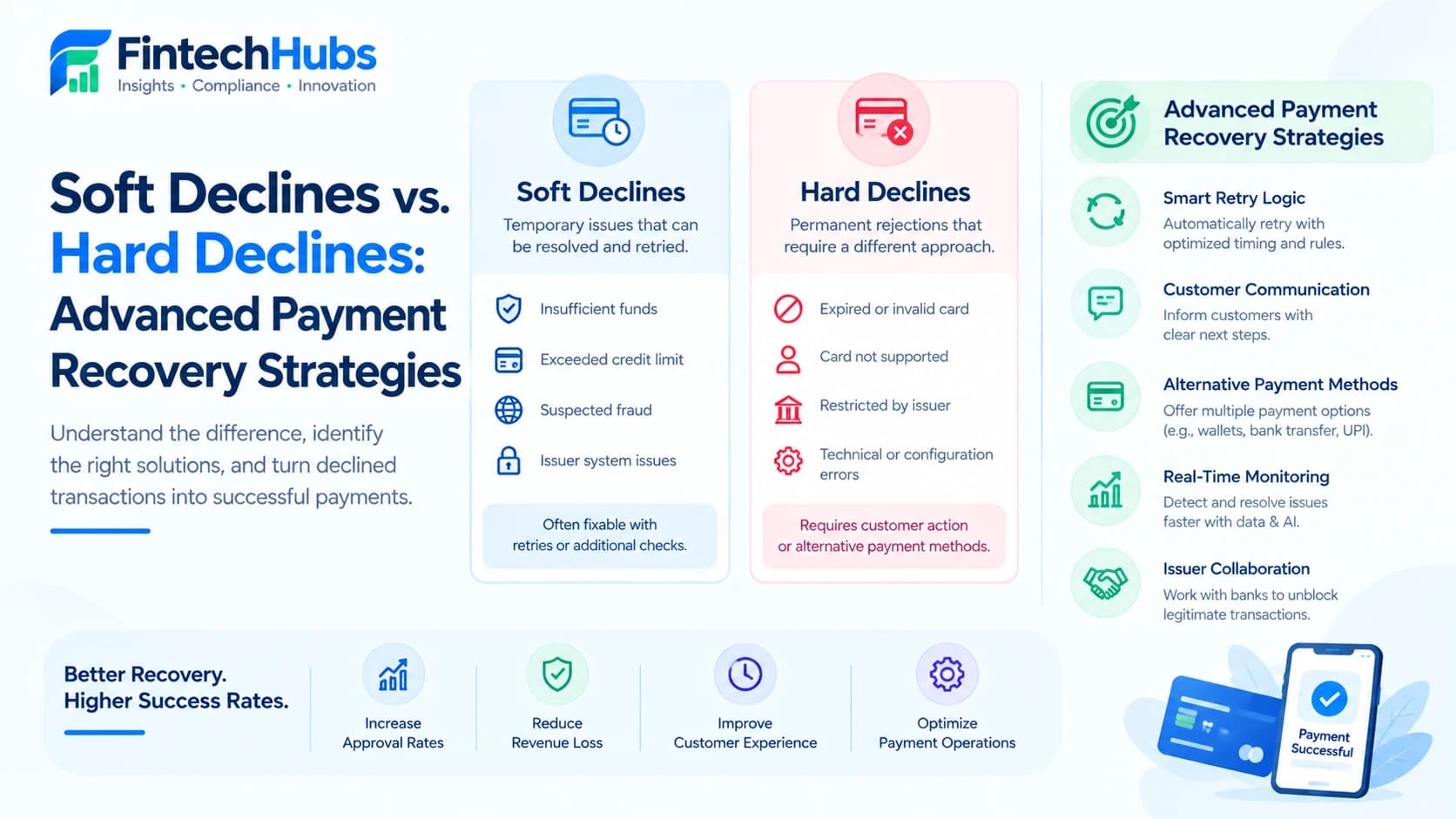
Soft vs Hard Declines: Advanced Payment Recovery Guide
Soft vs hard declines explained: Visa and Mastercard retry rules, smart retries, network tokens, 3-D Secure, dunning, recovery metrics, and 10 FAQs.
Interlinking Instant Payment Systems Across Countries
How countries link instant payment systems: bilateral links, Nexus, UPI-PayNow, risks, compliance, operations, a rollout roadmap, and 10 FAQs.
PCI DSS 4.0.1: Technical Requirements for Modern Payments
PCI DSS 4.0.1 explained: 12 requirements, MFA, payment page scripts, cloud and API compliance, scope reduction, a rollout roadmap, and 10 FAQs.