Top 10 Fintech Companies in India: Services & Comparison
Compare the top 10 fintech companies in India, from PhonePe and Razorpay to Groww and Zerodha. See services, features, and how to choose the right platform.
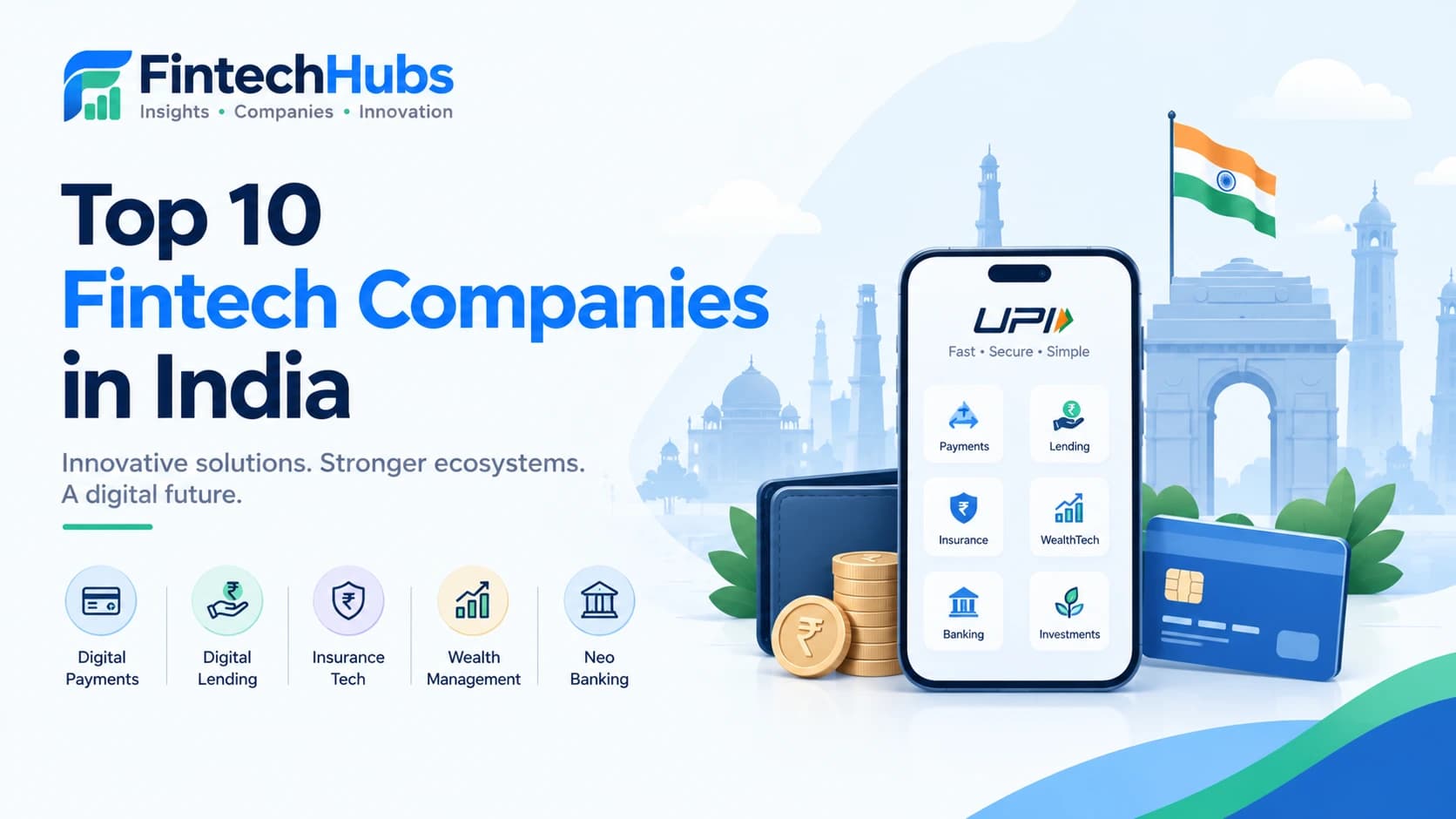
Top 10 Fintech Companies in India: Services, Features & Comparison
India has become one of the most active fintech markets in the world. A combination of public digital infrastructure, widespread smartphone adoption, and a large population moving from cash to digital finance has produced companies that serve hundreds of millions of users across payments, investing, insurance, lending, and merchant services.
This guide profiles ten of the most prominent fintech companies operating in India, compares their services and core features, and explains the infrastructure, regulation, and trends shaping the sector. It is written for readers who want a clear, neutral overview of who the major players are and what each one does.
This article is for general informational and educational purposes only. It is not an endorsement, ranking, or recommendation of any company, and it is not financial, investment, or legal advice. Company details, ownership, and listing status change over time; verify current information on each company's official website and regulatory filings.
India's Fintech Landscape at a Glance
Indian fintech spans several overlapping segments:
Digital payments: UPI apps, payment gateways, point-of-sale terminals
Investing and wealth: discount brokerages, mutual fund platforms
Insurance technology: online marketplaces for insurance and credit products
Lending: digital lending, buy-now-pay-later, credit-score tools
Merchant and business services: payouts, banking APIs, SaaS for finance teams
Credit and rewards: credit card bill payment and membership platforms
Many of the largest companies started in one segment and expanded into adjacent ones, so the boundaries are blurred.
What Makes India a Global Fintech Hub
Public digital infrastructure: Systems such as the Unified Payments Interface (UPI), Aadhaar-based identity verification, and the Account Aggregator framework give private companies shared rails to build on.
Scale of the user base: A very large, young, mobile-first population adopts new financial products quickly.
Low-cost payments: Interoperable real-time payments reduced the cost of digital transactions and encouraged merchants of every size to accept them.
Supportive regulators: The Reserve Bank of India (RBI) and the Securities and Exchange Board of India (SEBI) have created licensing categories and sandboxes for fintech activity.
Deep talent and investor interest : 0A strong engineering base and sustained venture funding built a pipeline of well-capitalised companies.
How We Selected the Companies
The ten companies below were chosen for breadth of public recognition, scale of operations, range of services, and relevance to different fintech segments. The list is intended to illustrate the diversity of Indian fintech rather than serve as a ranking. It is presented in no order of preference, and many other strong companies exist that are not covered here.
Comparison Table: Top 10 Fintech Companies in India
# | Company | Primary Segment | Core Services | Best Known For |
|---|---|---|---|---|
1 | PhonePe | Payments | UPI payments, merchant payments, insurance, investments | Large UPI consumer and merchant network |
2 | Paytm (One97 Communications) | Payments | Wallet, UPI, merchant QR and devices, payment gateway | Early mass-market digital wallet and merchant tools |
3 | Razorpay | Payments infrastructure | Payment gateway, payouts, business banking, lending | Developer-friendly payment stack for businesses |
4 | Groww | Investing | Stocks, mutual funds, other investment products | Simple, app-first investing for new investors |
5 | Zerodha | Investing | Discount brokerage, trading platforms, education | Low-cost broking and investor education |
6 | CRED | Credit and rewards | Credit card payments, rewards, lending products | Premium, rewards-driven credit card users |
7 | PB Fintech (Policybazaar) | Insurtech | Insurance and credit comparison and distribution | Online insurance marketplace |
8 | Pine Labs | Merchant payments | POS terminals, payment acceptance, merchant financing | Offline retail and enterprise merchant payments |
9 | Cashfree Payments | Payments infrastructure | Payment gateway, payouts, verification APIs | Payouts and API-based finance operations |
10 | BharatPe | Merchant fintech | Merchant QR, POS, merchant lending, payments | Small-merchant payments and credit |
Individual Company Profiles
6.1 PhonePe
Built around the UPI network, PhonePe offers consumer payments, bill payments, merchant acceptance, and a growing set of insurance and investment products inside a single app. It is widely associated with the expansion of UPI across both consumers and small merchants. Its parent is backed by a major global retailer, and public reports have indicated plans for a stock market listing; check current filings for status.
6.2 Paytm (One97 Communications)
Paytm began as a mobile wallet and expanded into UPI, merchant QR codes and card machines, a payment gateway, and financial distribution services. It is a publicly listed company in India. Its regulatory journey, including restrictions placed on its payments bank affiliate in 2024, is a well-known example of how closely Indian fintech is tied to compliance.
6.3 Razorpay
Razorpay provides online payment acceptance, payouts, business banking, and lending products aimed at companies of all sizes. It is known for developer-friendly APIs and a broad merchant base among startups and enterprises. News reports in mid-2026 indicated the company had confidentially filed for an initial public offering; confirm the current status from official sources.
6.4 Gross
Gross started as a mutual fund investing platform and expanded into direct stock trading and other investment products, with a simple interface designed for first-time investors. It became a publicly listed company in India in late 2025.
6.5 Zerodha
Zerodha is one of India's largest discount stockbrokers by active clients, known for its flat low-fee model, trading platforms, and investor education content. It is widely cited as a largely self-funded company rather than one built on large venture rounds.
6.6 CRED
CRED focuses on credit card bill payments and a rewards ecosystem aimed at customers with strong credit profiles, and has expanded into lending and other financial services. It is regularly cited as an example of a brand-led fintech that targets a specific customer segment.
6.7 PB Fintech (Policybazaar)
PB Fintech operates online marketplaces for insurance and credit products, helping users compare plans and buy policies digitally. It is publicly listed in India and is one of the best-known insurtech platforms in the country.
6.8 Pine Labs
Pine Labs provides point-of-sale devices, payment acceptance technology, and merchant financing, with a focus on offline retail and large enterprise merchants. It became a publicly listed company in India in late 2025.
6.9 Cashfree Payments
Cashfree offers payment gateway services, vendor and marketplace payouts, and verification APIs. It is commonly used by businesses that need automated, high-volume money movement such as payouts to sellers, drivers, or partners.
6.10 BharatPe
BharatPe serves small and medium merchants with a unified QR code, card and POS devices, and merchant-focused loans. It is a recognisable example of fintech built specifically for neighbourhood retailers.
Profiles are a general summary based on public information. Always confirm current services, ownership, and listing status with official company sources.
Fintech Segments in India
7.1 Payments and UPI
The largest and most visible segment, covering consumer apps, merchant QR acceptance, and online payment gateways.
7.2 Investing and Wealthtech
Discount brokers and mutual fund platforms that lowered the cost and complexity of investing for retail users.
7.3 Insurtech
Platforms that digitise comparison, purchase, and servicing of insurance products.
7.4 Digital Lending
Platforms offering personal, merchant, and credit-line loans, often using alternative data for underwriting and subject to digital lending guidelines.
7.5 Merchant and B2B Fintech
Companies offering payouts, business accounts, expense management, and finance automation for businesses.
7.6 RegTech and Infrastructure
Identity verification, e-KYC, fraud detection, and compliance tools used by fintechs and banks.
Core Infrastructure Powering Indian Fintech
UPI: for instant, interoperable account-to-account payments.
Aadhaar and e-KYC: for digital identity verification at onboarding.
Account Aggregator framework: for consent-based sharing of financial data.
RuPay and card networks: for card payments and tokenisation.
Open APIs from banks: that let fintechs build on top of bank accounts.
Digital public goods: that reduce the cost of building financial products.
Why Indian Fintech Matters
Digital finance expands access to savings, credit, insurance, and investment for people and small businesses that were previously underserved by traditional channels. Lower transaction costs help merchants formalise their businesses and build financial histories. Because India's fintech model combines public infrastructure with private innovation, it is widely studied by other emerging markets.
Benefits for Consumers and Businesses
Convenience: Payments, investing, and insurance from a single phone.
Lower costs: Low-fee brokerage and near-zero-cost digital payments.
Financial inclusion: Easier onboarding for first-time users through digital identity.
Speed: Instant settlement for many payment types.
Access to credit: Data-driven lending products for individuals and small merchants.
Better tools for businesses: Payouts, reconciliation, and analytics through APIs.
Challenges and Limitations
Regulatory change: Rules can tighten quickly, as past actions against specific entities have shown.
Profitability pressure: Free or low-fee payments make monetisation difficult.
Fraud and cybersecurity: High transaction volumes attract scams and social-engineering attacks.
Consumer protection and data privacy: Handling sensitive financial and personal data carries legal and reputational risk.
Digital lending oversight: Lending apps face close scrutiny on disclosures, recovery practices, and data use.
Concentration risk: A small number of apps handle a large share of UPI volume, which regulators monitor.
Digital literacy gaps: Not all users are equally prepared to recognise scams or manage digital credit responsibly.
Regulatory Environment
Several regulators shape the sector:
Reserve Bank of India (RBI): Payments, payment aggregators, prepaid instruments, digital lending, and banks.
Securities and Exchange Board of India (SEBI): Brokers, mutual funds, and investment advisers.
Insurance Regulatory and Development Authority of India (IRDAI): Insurance intermediaries and products.
National Payments Corporation of India (NPCI): Operates UPI and other retail payment systems.
Data protection law: India's data protection framework governs how personal data may be collected and used.
Rules vary by activity and change often. Companies and users should consult current official guidance.
How to Choose the Right Fintech Platform
Check regulatory status: Confirm the entity holds the licence or registration relevant to the service.
Read the fee schedule: Look beyond headline pricing to charges on withdrawals, delayed payments, or premium features.
Review security features: Look for multi-factor authentication, transaction alerts, and clear dispute processes.
Understand data use: Read how personal and financial data is stored and shared.
Compare support quality: Reliable grievance redressal matters when something goes wrong.
Match the product to the need: A merchant needing payouts and a first-time investor need very different platforms.
Future Trends
Wider use of the Account Aggregator framework: For consent-based lending and wealth products.
Expansion of UPI features: Such as credit on UPI and international acceptance.
More public listings: As large fintechs mature and seek long-term capital.
AI-driven underwriting, support, and fraud detection.
Embedded finance: Inside e-commerce, mobility, and software platforms.
Stronger compliance technology: As regulatory expectations grow.
Cross-border payment links: Connecting Indian systems with those of other countries.
Frequently Asked Questions
1. What is a fintech company?
A fintech company uses technology to deliver or improve financial services such as payments, lending, investing, and insurance.
2. Which segment of Indian fintech is the largest?
Digital payments, driven by UPI, is generally the largest and most visible segment by transaction volume.
3. Are Indian fintech companies regulated?
Yes. Depending on the service, they fall under the RBI, SEBI, IRDAI, or a combination, and must follow data protection and consumer protection rules.
4. What is UPI?
The Unified Payments Interface is a real-time payment system run by NPCI that lets users send money between bank accounts through mobile apps.
5. Is it safe to use fintech apps in India?
Regulated, reputable apps use encryption and authentication, but users should enable security features, avoid sharing OTPs or PINs, and watch for phishing and scam calls.
6. How do fintech companies make money?
Common sources include merchant fees, brokerage and subscription fees, distribution commissions, interest on lending, and interchange or partnership revenue.
7. Which Indian fintech companies are publicly listed?
Several are, including Paytm, PB Fintech, and, as of late 2025, Groww and Pine Labs. Others have reportedly been preparing listings. Check current stock exchange filings for the latest status.
8. What is the difference between a payment gateway and a UPI app?
A payment gateway helps online businesses accept payments across methods, while a UPI app is a consumer-facing tool for sending and receiving money.
9. Can foreign companies operate in Indian fintech?
Many do through partnerships, investments, or locally licensed entities, subject to Indian regulations on licensing, data localisation, and foreign investment.
10. What should I check before trusting a lending app?
Verify that it works with a regulated lender, read the full cost of borrowing, and review how your data will be used. Avoid apps that demand excessive permissions.
Conclusion
India's fintech sector shows how public digital infrastructure and private innovation can reinforce each other. From UPI payment apps and payment gateways to low-cost brokerages, insurance marketplaces, and merchant tools, the companies profiled here illustrate the breadth of services now available to consumers and businesses. As regulation matures and technology advances, the sector is likely to keep expanding into credit, wealth, and cross-border payments, while placing greater emphasis on security, transparency, and compliance.
Disclaimer: This article is provided for general informational and educational purposes only. Company mentions are not endorsements or rankings, and the content is not financial, investment, or legal advice. Details about ownership, services, and listing status may change; verify them directly with official sources before making any decision.
Share this article
Related Articles
AML Screening Explained: Process, Types, Tools and Best Practices
Learn what AML screening is, why it matters, how the process works, what lists and checks are involved, common challenges, and how to build an effective screening program.
FinTech Software Development: Solutions, Benefits & Trends
Fintech software development explained: services, architecture, PCI DSS and DORA compliance, delivery process, pricing models, partner checklist, and FAQs.

Predictive Financial Analytics: AI Forecasting in 2026
Learn how predictive financial analytics and AI are transforming forecasting in 2026, from cash flow and credit risk to scenario planning and best practices.